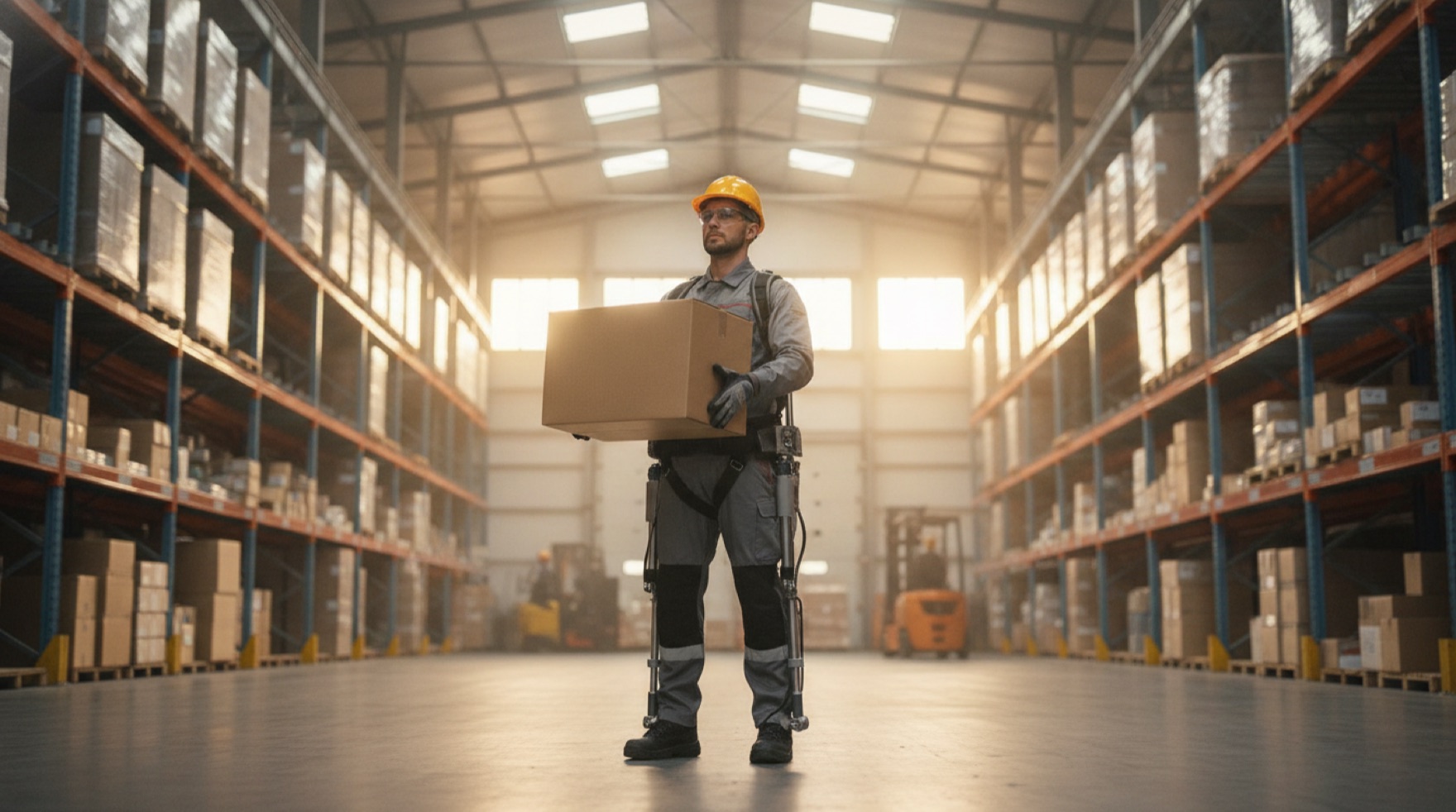
The short version: An industrial exoskeleton is a wearable frame that takes part of a physical load off your body. Back-support suits help with repeated lifting and bending. Arm-support suits hold your arms up during overhead work. Some are passive, using springs or elastic, and some are powered. They work best on one specific, repeated task, and only when they fit both the person and the job.
Walk a factory floor or a big distribution center in 2025 and you are more likely than ever to see someone wearing one. The category has grown from a lab curiosity into gear you can order from a catalog, and the confusion that comes with any new tool has grown right alongside it.
It helps to start with a simple fact: most industrial exoskeletons do one of two jobs.
Two jobs, two kinds of suit
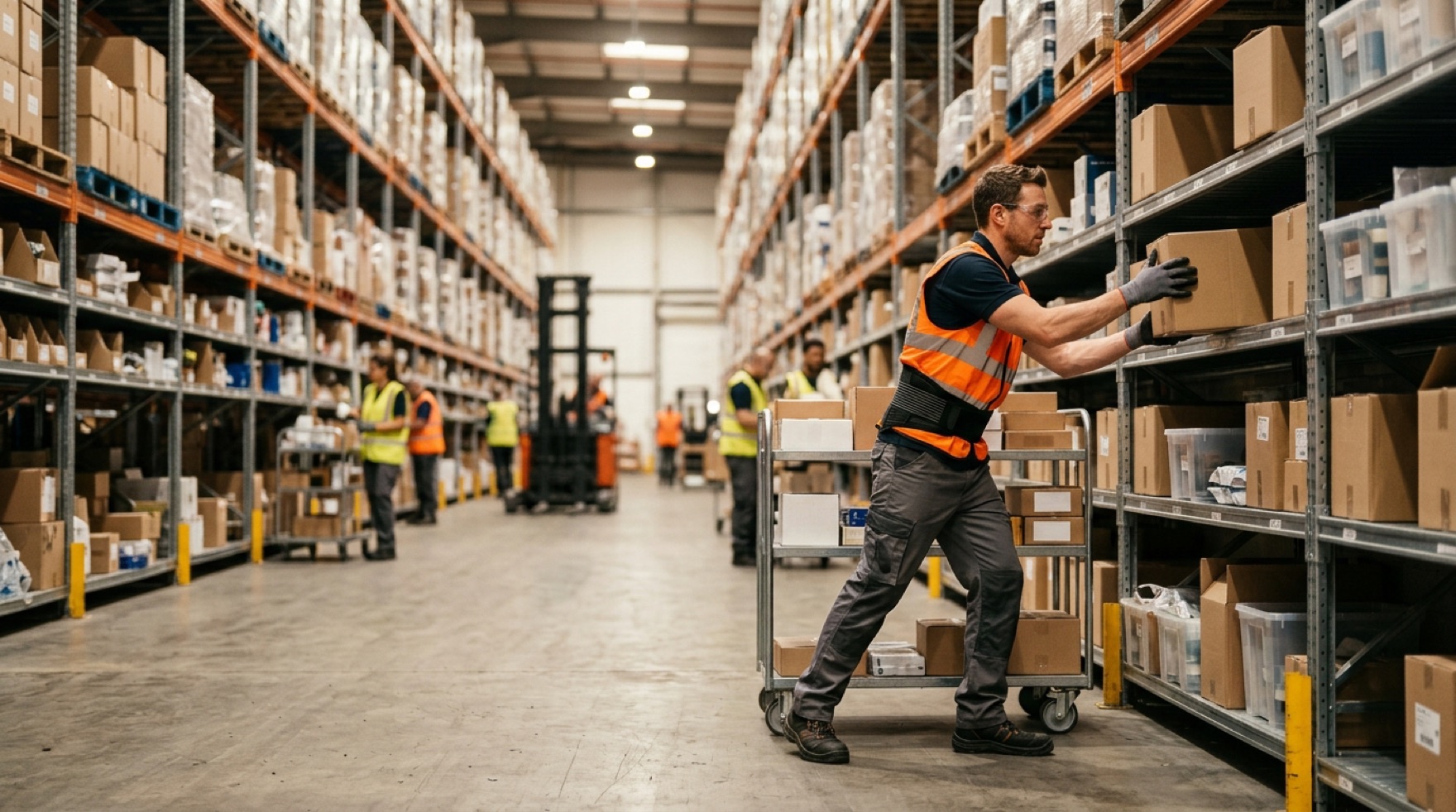
Back-support exoskeletons target lifting and bending. They sit like a harness across the chest and thighs, and when you hinge forward they store energy and hand some of it back as you stand, so your lower back does less of the work. These fit jobs with a lot of repeated bending: moving freight, picking orders, stocking shelves.
Arm-support, or overhead, exoskeletons target the shoulders. They hold your arms up so you can run a tool above your head without your deltoids carrying the full weight the whole time. Picture an installer wiring a ceiling or a fabricator grinding overhead. The suit does not lift the tool for you. It holds your arm's position so your shoulder is not fighting gravity all shift.
Passive or powered
The other thing worth knowing is what is doing the work inside the suit.
Passive suits use springs, elastic bands, or gas struts. No motor, no battery, nothing to charge. They are lighter, cheaper, and simpler, and they are where most workplaces start.
Powered suits add motors and sensors that read your movement and push at the right moment. They can assist more and adapt to the task, but they weigh more, cost more, and need charging and upkeep. For most lifting and overhead jobs, a passive suit is the sensible first try.
| The job in front of you | The suit that tends to fit |
|---|---|
| Repeated lifting and bending (freight, order picking) | Back-support, usually passive |
| Sustained overhead work (installing, welding, grinding) | Arm-support, usually passive |
| Heavy or variable assist over long cycles | A powered suit, if the budget and upkeep are there |
What the research actually shows
The evidence is young, but the direction is encouraging.
For overhead work, a study of a passive shoulder exoskeleton found that deltoid muscle activity dropped by between 22 and 61 percent depending on the task, and workers used about 11 to 12 percent less oxygen doing the same job. Less muscle effort and less fatigue across a shift is exactly what you want when the wear you are trying to avoid is a worn-out shoulder.
For lifting, researchers testing a back-support suit measured how much lighter a load feels while wearing it and found an apparent weight reduction of roughly 37 to 42 percent in the tasks they studied, with back muscle activity falling to match. They went a step further and connected that figure to the NIOSH Lifting Index, a yardstick many ergonomists already use, so the benefit can be checked against a familiar tool rather than a vendor's brochure.
The question that matters: where does the load go?
Every one of these devices redirects force. The honest question is where it ends up.
A well-matched back suit takes load off your spine. A well-matched arm suit takes it off your shoulders. The catch is that some of that force can land on your chest, hips, or thighs where the harness presses, and a suit built for standing and lifting can get in the way when the same worker sits, climbs a ladder, or walks a long stretch. The goal is a real drop in total strain, not a trade that swaps a sore back for sore hips.
This is where a shared rulebook helps. ASTM Committee F48, formed in 2017, brings makers, researchers, and government labs together to write common terms and test methods for how exoskeletons are described, measured, and kept safe. It is a sign the field is maturing, and a good reason to ask any vendor exactly how their numbers were produced.
Before you roll them out
A few checks separate a suit that gets worn from one that lives in a locker.
Match the suit to the task. A back suit on an overhead job, or the reverse, helps no one. Find the one task where the strain is real and repeated, and fit the tool to that.
Fit the suit to the person. Bodies differ, and a suit that pinches or rubs comes off by lunch. Size it, adjust it, and let people try it on real work before you buy a fleet.
Train and ease in. New gear changes how you move. Start with short stints, let workers build up, and pay attention to what they report early on.
Keep it voluntary and keep listening. The people wearing these know within a day whether the suit helps. Their feedback is your best data. When a suit fits a real task and a willing worker, it can take a genuine bite out of the wear that builds up over a career.