The short answer: Most warehouse falls happen on the same level, not from height, and the baseline duty to prevent them is 29 CFR 1910.22, OSHA's general requirements for walking-working surfaces. It requires employers to keep aisles, pick faces, and floors clean, orderly, and free of hazards such as spills, loose objects, and protruding items, to keep floors dry to the extent feasible with drainage and dry standing areas where wet processes occur, and to inspect and maintain surfaces and correct hazards before workers use the surface again. In OSHA's rulemaking data, same-level falls accounted for far more lost-workday fall injuries than falls to a lower level, which is why the housekeeping in the aisle matters as much as any guardrail.
Are most warehouse falls really on the same level?
Yes. Same-level slips and trips, not falls from height, cause the majority of fall injuries that keep workers off the job. In the preamble to its Walking-Working Surfaces final rule, OSHA reported that "falls on the same level accounted for 68 percent of all falls resulting in lost-workday injuries," while "falls to a lower level accounted for only 24 percent," a breakdown published in the 2016 final rule. Falls to a lower level are more often fatal, but for the day-to-day injuries that pull a picker off the floor, the aisle surface is the bigger exposure.
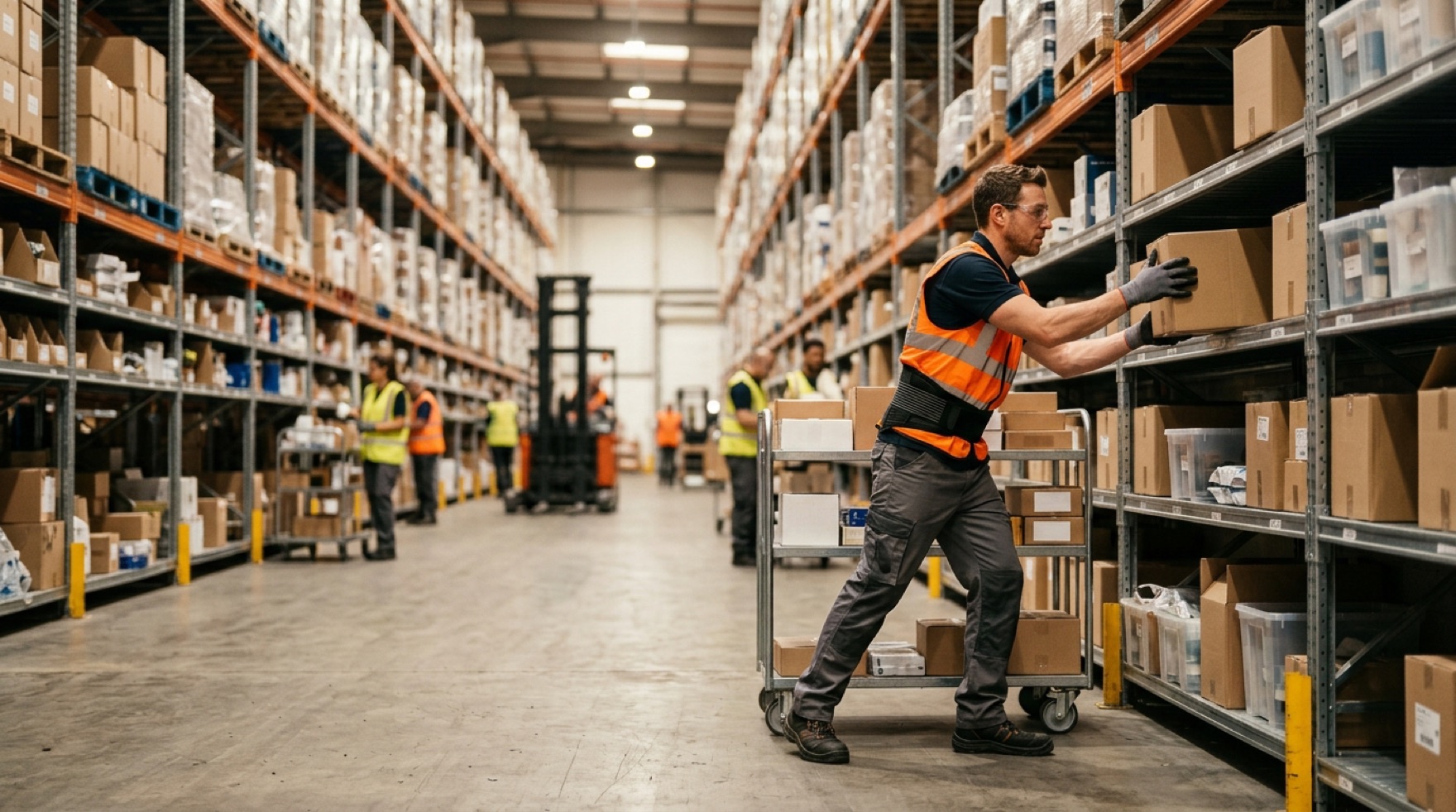
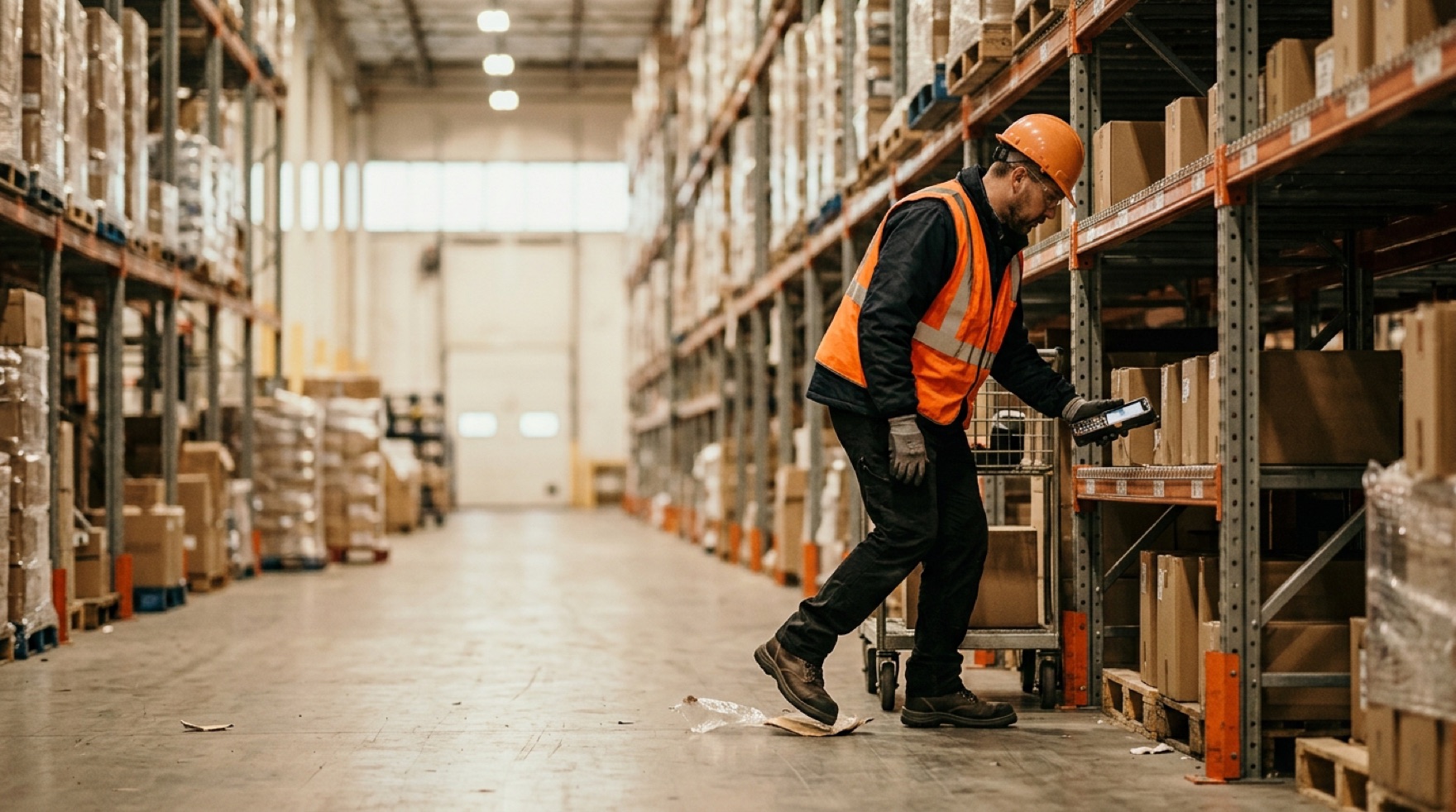
For a pick operation that means the risk is spread across every aisle and pick face, not concentrated at a few raised edges. A wet patch tracked in from a dock, a discarded strapping band, a broken pallet board, a stretch-wrap tail, a case that slid off a flow rack: each is an ordinary same-level trip or slip, and each is exactly the kind of hazard 29 CFR 1910.22 is written to keep out of the walking surface. The control is unglamorous and constant, which is why it lapses.
What does 29 CFR 1910.22 require for warehouse floors?
The standard sets four baseline duties for every walking-working surface, and together they describe a clean, dry, sound, and inspected floor. Under 29 CFR 1910.22, the employer must keep surfaces "in a clean, orderly, and sanitary condition" (1910.22(a)(1)), maintain each floor "in a clean and, to the extent feasible, in a dry condition" with drainage and dry standing areas such as false floors, platforms, or mats where wet processes are used (1910.22(a)(2)), and keep surfaces "free of hazards such as sharp or protruding objects, loose boards, corrosion, leaks, spills, snow, and ice" (1910.22(a)(3)).
The other two duties are about strength and upkeep. The surface must be able to support the maximum intended load (1910.22(b)), which in a warehouse reaches the rack, the mezzanine, and the dock as much as the floor. And surfaces must be "inspected, regularly and as necessary, and maintained in a safe condition" (1910.22(d)(1)), with any hazardous condition corrected, or the area guarded, before an employee uses the surface again (1910.22(d)(2)). That last clause is the operational heart of it: finding a hazard is not the requirement, removing it or blocking off the area before the next picker walks through is.
Where do same-level falls actually happen in a warehouse?
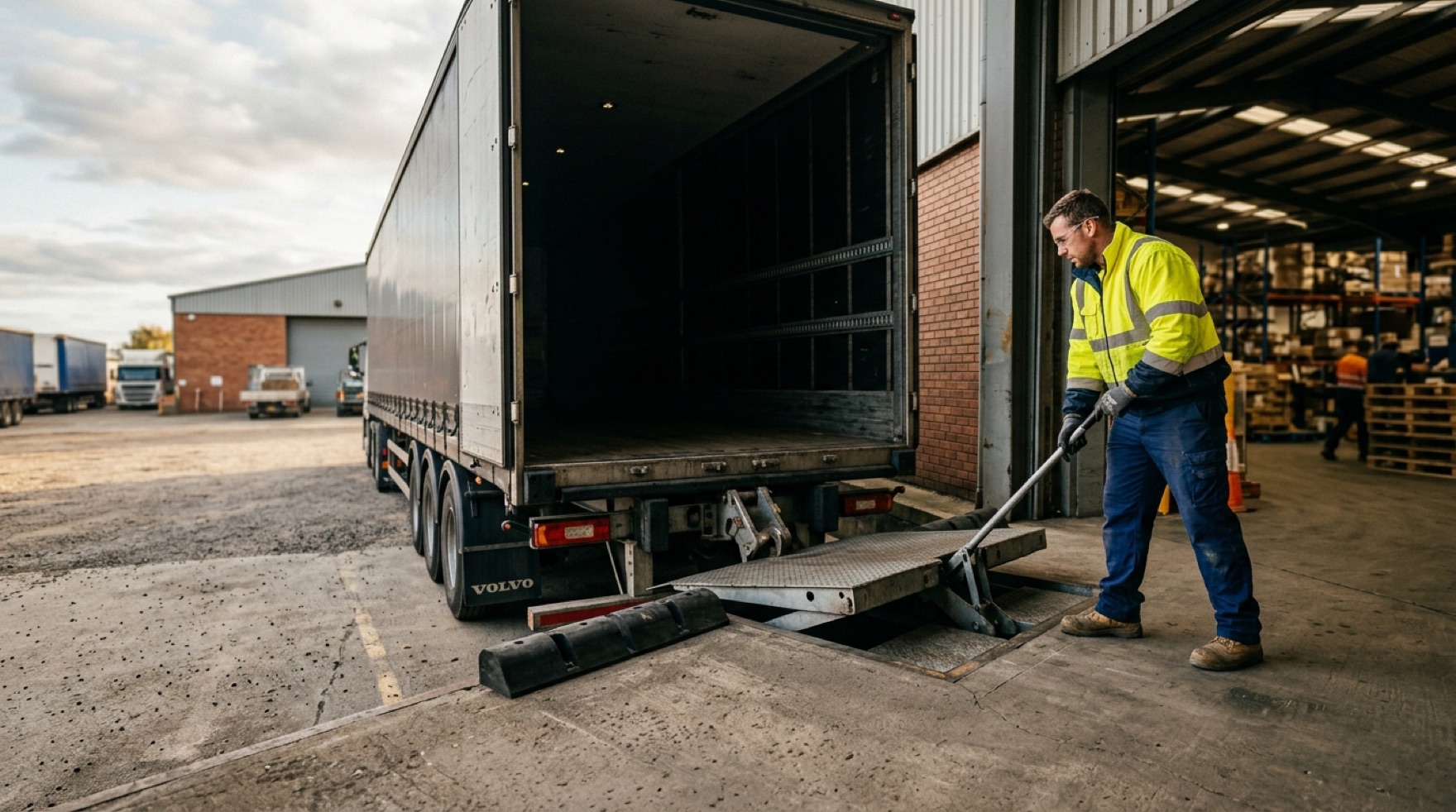
They cluster where contamination meets traffic: the dock apron, the ends of aisles, the pick face, and any spot where a wet or worn surface meets a foot. A same-level fall is rarely one cause. It is usually a surface that lost its traction meeting footwear that lost its tread, at a moment the walker was carrying something and could not catch themselves. Investigations of these falls tend to find both halves of that pairing.
A Michigan investigation makes the pairing concrete. In MIFACE Case 523, a 53-year-old commissary production worker was carrying an empty tray back to his station across a concrete floor kept damp by the refrigerated, food-safe environment when he slipped, fell backward, struck the back of his head, and died a week later. The floor had been textured to resist slipping and the firm required slip-resistant footwear, but the investigators found the soles of the worker's shoes had worn smooth over time, and MIOSHA cited the employer for permitting damaged protective footwear to be used. The setting is a food commissary rather than a pick aisle, but the same-level fall mechanism transfers directly: a damp walking surface plus a slip-resistant sole worn smooth stops being slip resistant, and a worker carrying a load has no free hand to arrest the fall. The transferable point is that keeping the floor as dry as feasible under 1910.22(a)(2) and keeping footwear tread intact are two halves of one control, and letting either lapse is enough.
How do you keep the aisle safe, not just clean once?
Treat the walking surface as an inspected control on a schedule, not a housekeeping afterthought, and pair the floor with the footwear. The standard's inspection duty under 1910.22(d)(1) becomes real when someone owns a walk of the aisles, dock, and pick faces each shift, with the authority to pull an aisle out of use until a spill is cleaned or a broken pallet board is removed, which is what 1910.22(d)(2) requires before the next worker passes. Cleaning a spill "when someone gets to it" is the gap these falls fall through.
Then close the footwear half. Slip-resistant footwear is a genuine control on the damp aprons and dock areas where dry floors are not always feasible, but only while the tread is intact, which the Michigan case shows can wear away unnoticed. Build sole condition into the same routine that inspects the floor, so a worn-smooth boot is caught before it meets a wet patch. Keep the fastest-contaminated zones, dock aprons, wash-down areas, freezer thresholds, dry with drainage and mats as 1910.22(a)(2) allows, mark them, and keep aisles clear of the strapping, wrap, and debris that turn a routine walk into a trip. None of this is complex. It is a surface kept clean, dry, and sound, inspected on a schedule, and walked in footwear that still has a tread, which is precisely what 29 CFR 1910.22 is written to produce.