Order Picking & Stocking
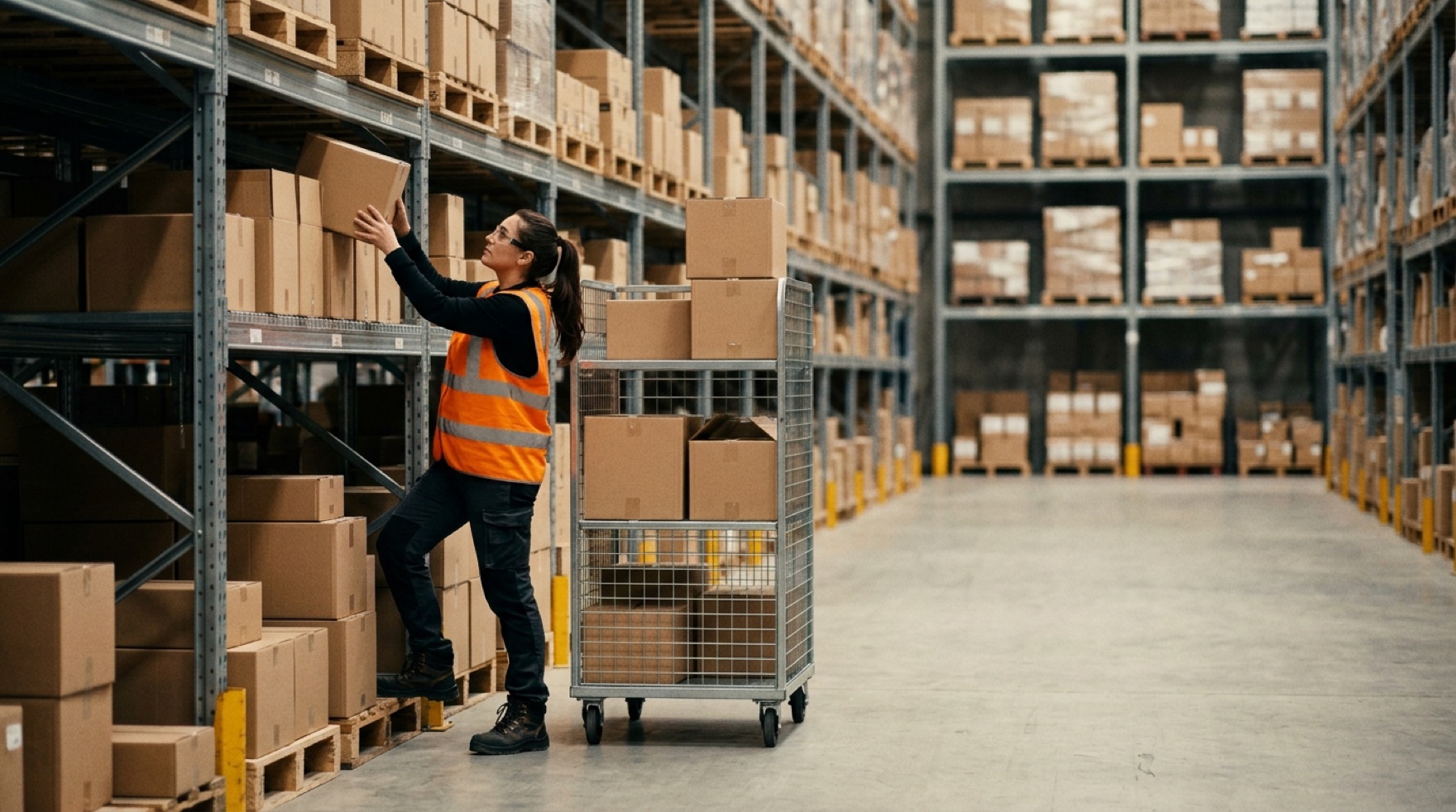
Every shift is thousands of reaches, lifts, and steps down the pick path.
Order picking and stocking is high-volume manual handling. A picker walks miles of pick path and moves hundreds of cases a shift, so the dominant risks are cumulative rather than dramatic: musculoskeletal strain from repetitive lifting and reaching, same-level falls on cluttered or wet floors, and struck-by contact with the forklifts and reach trucks that share the aisle.
The pick face is where the injuries concentrate. Repetitive lifting from the floor and overhead reaching to the top beam load the lower back and shoulders through the whole shift, and the strain builds quietly until a routine lift becomes a claim. Because the work is paced by rate targets, workers rarely slow down to reset their posture, which is why task design matters more than any reminder to lift correctly.
Layered on top of that ergonomic load are two environmental risks. Cluttered staging lanes, shrink wrap, and spills turn the walking surface into a same-level fall hazard, and the same aisles carry powered trucks moving within feet of people on foot. The controls that move the injury rate are the ones designed into the operation: slotting fast movers into the power zone, keeping aisles clear, and separating pedestrians from truck traffic. PPE and training catch what those engineering and administrative controls miss.
The hazards, and the controls that move the needle
Ordered by the hierarchy of controls — eliminate and engineer first, then treat matting, footwear, and PPE as the layers that catch what remains.
Repetitive lifting and reaching at the pick face
Sustained lifting from floor level and reaching to high beams loads the back and shoulders across a full shift. Overexertion and repetitive motion are the leading source of lost-time claims in picking operations.
- Slot fast movers into the power zone between knee and shoulder height
- Provide lift assists, tilt tables, and adjustable-height carts
- Screen tasks with the NIOSH Lifting Equation at the design stage
- Rotate pickers and build in recovery time across the shift
- Train safe handling and provide grip-friendly case designs
Same-level falls on cluttered aisles
Shrink wrap, banding, spilled product, and staged pallets in the walkway are the routine trip and slip hazards of a busy pick path. Same-level falls remain one of the most frequently recorded warehouse injuries.
- Keep pick paths and staging lanes clear as a standing rule
- Designate and mark pedestrian walkways separate from work zones
- Clean spills promptly and control tracked-in water at dock doors
- Maintain lighting so floor hazards stay visible
- Provide slip-resistant footwear for the surface conditions
Forklift and reach-truck traffic in the aisle
Pickers on foot share narrow aisles with counterbalance and reach trucks that cannot always see them. Struck-by contact with a powered truck is among the most severe injury events in the warehouse.
- Physically separate pedestrian routes from truck aisles where possible
- Install barriers, gates, and marked crossings at conflict points
- Use proximity detection, blue spot lights, and speed limiting
- Enforce right-of-way rules that give pedestrians priority
- Require high-visibility apparel in shared-traffic zones
Falls from ladders and order pickers at height
Reaching top-beam stock puts workers on rolling ladders and order-picker platforms above the floor. A fall from either is a serious-injury event that engineering and fall protection are meant to prevent.
- Use order pickers with a working platform rather than climbing racking
- Provide and require a body harness and lanyard on the order picker
- Maintain and inspect ladders; remove damaged units from service
- Set stock so routine picks stay within safe reach
- Train the three-point rule and load limits for ladder use
The programs that anchor the floor
Slotting and power-zone design
Placing high-velocity items between knee and shoulder height removes the deep bends and overhead reaches that drive most strain claims. Slotting is reviewed as demand shifts, not set once and forgotten.
Housekeeping and aisle discipline
A clear, well-lit pick path is the control that most directly lowers same-level falls. Staging lanes, banding, and wrap are removed continuously, not at the end of the shift.
Traffic management plan
A current map of pedestrian and vehicle routes, crossings, and blind corners is the backbone of struck-by prevention. It is reviewed after every layout or racking change.
Ergonomic task screening
New and changed pick tasks are screened with the NIOSH Lifting Equation before they go live, so lift assists and slotting are chosen against the assessment rather than added after an injury.
In-depth guidance
View all 3 →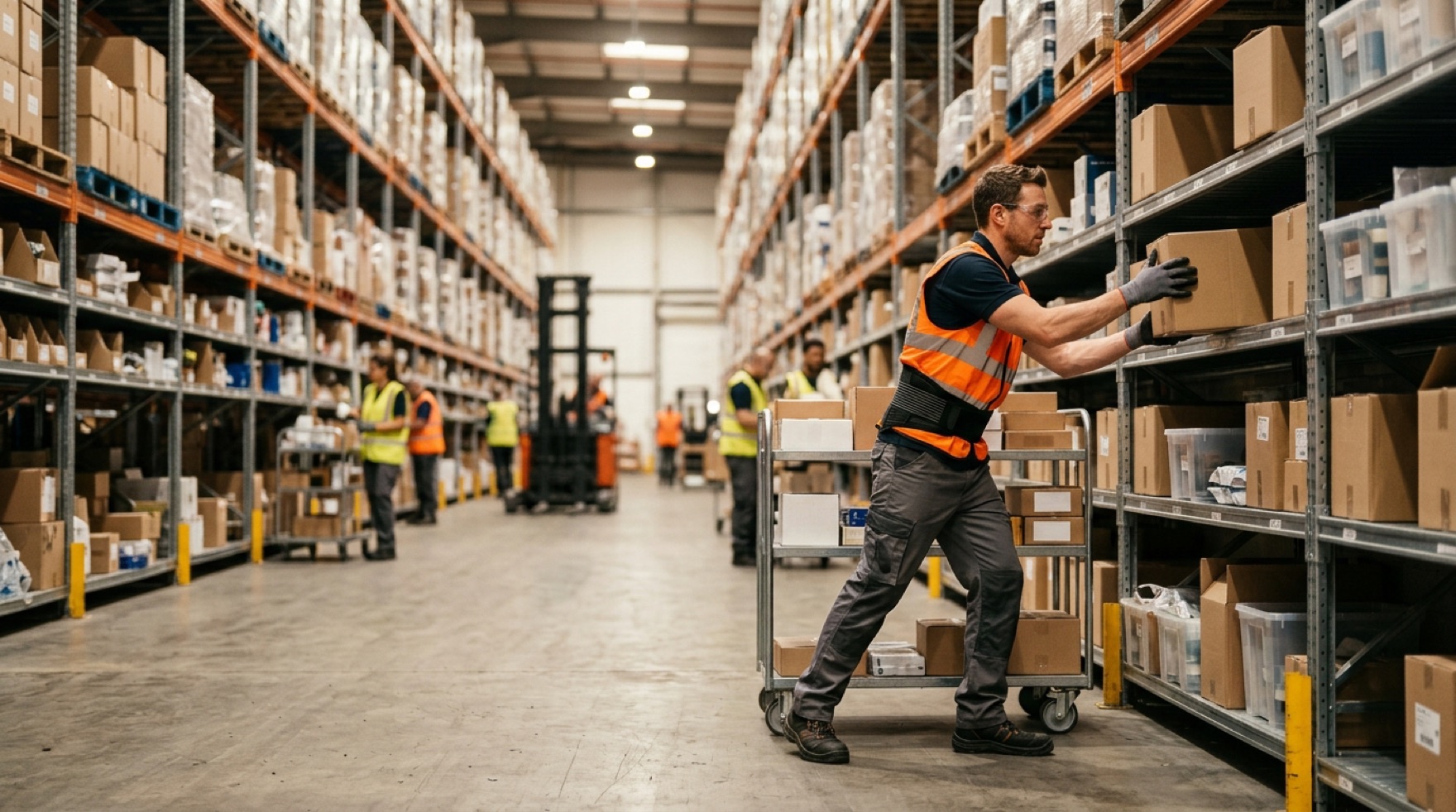
Warehouse Ergonomics for Order Pickers
Order picking concentrates the exact combination that causes back and shoulder injuries: loads lifted from the floor and above the shoulder, reached out over a rack beam, twisted onto a conveyor, hundreds of times a shift. OSHA has no numeric lifting limit, so the controls come from the NIOSH Lifting Equation, ISO 11228-1, and the General Duty Clause. Here is what actually reduces the risk on a pick line.
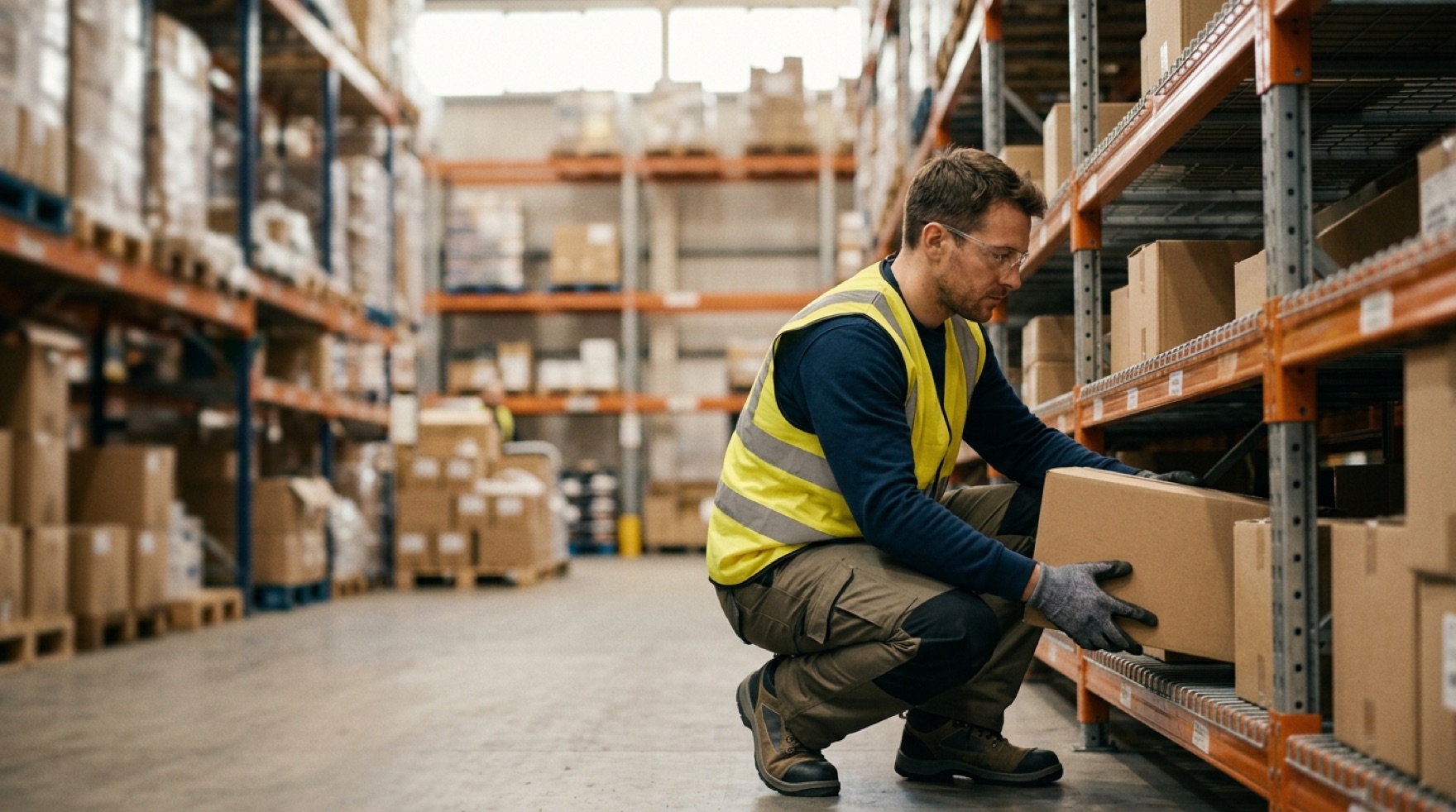
Safe Manual Lifting for Pickers: the NIOSH Lifting Equation
The NIOSH Lifting Equation turns a vague question, is this lift too heavy, into a number you can act on. It starts from 51 pounds, cuts that limit down for every way the real lift is worse than ideal, and compares the result to what the worker actually lifts. Here is how to run it on a pick task, step by step, with a worked example and what the lifting index is telling you.
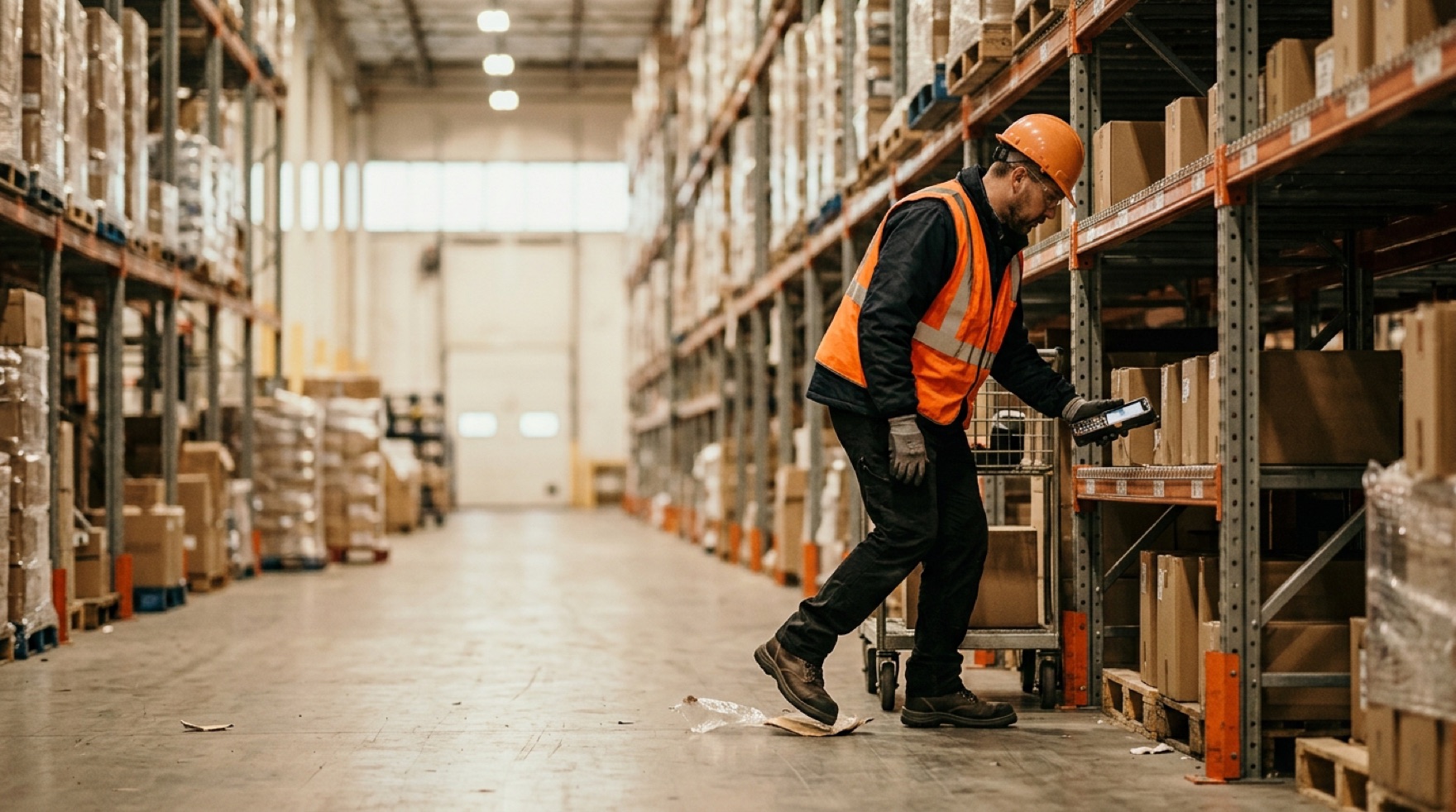
Slips, Trips & Falls in Warehouse Aisles & Pick Faces
The fall that hurts an order picker is usually not from height. It is the same-level slip or trip in the aisle: a wet spot near a dock, a strapping band on the floor, a stretch-wrap tail, a worn boot sole on a damp concrete floor. OSHA's 29 CFR 1910.22 sets the baseline for keeping those surfaces safe. Here is what the standard requires and where the failures actually happen.
Picking hazard self-assessment
Walk your pick faces, aisles, and staging lanes against the ergonomic, fall, and traffic risks that drive warehouse claims.
Start the assessment →Manual handling and warehouse guides
Practical guidance on slotting, safe lifting, and pedestrian-truck separation for high-volume picking operations.
Browse the guides →
Stay ahead of safety.
New articles, free templates, and regulatory updates in your inbox. No spam — unsubscribe anytime.