
Forklift Operation
A counterbalanced truck is a fast, heavy machine that shares the floor with people.
Forklift operation concentrates severe-injury potential into a single machine: a counterbalanced truck weighing several tons, traveling at speed and lifting loads overhead near people on foot. The defining hazards are pedestrian struck-by, tip-over that crushes the operator, and loads that fall from the forks, all compounded by the carbon monoxide and battery risks of the trucks themselves.
Most serious forklift incidents are not exotic. They are a pedestrian stepping into a blind aisle, a load lifted too high on a turn, or a truck driven off a dock edge. Because the energy involved is so high, the margin for a small error is thin, which is why the standard treats operation as a competency to be evaluated rather than a task anyone can pick up.
Operator training and a re-evaluation on a fixed cycle are the baseline, but the environment carries as much of the risk. Aisle layout, floor condition, dock controls, and pedestrian separation determine whether a moment of inattention becomes a near miss or a fatality. Internal-combustion trucks add carbon monoxide indoors, and electric trucks add the hydrogen and acid hazards of battery charging, so the truck itself has to be managed alongside how it is driven.
The hazards, and the controls that move the needle
Ordered by the hierarchy of controls — eliminate and engineer first, then treat matting, footwear, and PPE as the layers that catch what remains.
Pedestrian struck-by in shared aisles
The forklift and the person on foot occupy the same space, and the operator's view is blocked by the load and the mast. Pedestrian struck-by is the forklift hazard most likely to be fatal.
- Separate pedestrian and truck routes with barriers and marked crossings
- Control blind corners with mirrors, gates, and reduced speed
- Fit proximity detection, blue spot lights, and travel alarms
- Sound the horn at intersections and give pedestrians right of way
- Require high-visibility apparel in operating areas
Tip-over and load instability
Turning with a raised load, overloading, or traveling on a grade shifts the truck's center of gravity past the stability triangle. Operators who try to jump clear of a tipping truck are often caught beneath it.
- Match the truck and attachment to the load; never exceed the data plate
- Travel with the load low and tilted back, and slow into turns
- Keep the operator restraint fastened and stay inside on a tip-over
- Inspect and maintain floors, ramps, and dock plates
- Complete a documented pre-shift inspection every shift
Carbon monoxide from internal-combustion trucks
Propane and diesel trucks operated indoors or in enclosed docks can build carbon monoxide to hazardous levels. The OSHA permissible exposure limit is 50 ppm as an 8-hour time-weighted average.
- Use electric trucks in enclosed spaces where feasible
- Provide mechanical ventilation and maintain engine tuning
- Monitor carbon monoxide in enclosed operating areas
- Limit idling and enclosed-trailer running time
- Train operators on early carbon monoxide symptoms
Battery charging and changing
Charging lead-acid traction batteries releases explosive hydrogen and exposes workers to acid and stored electrical energy. Battery changes also introduce a heavy manual-handling and crush hazard.
- Ventilate charging areas and prohibit ignition sources
- Provide eyewash, acid-resistant PPE, and spill neutralizer
- Use mechanical battery-handling equipment, not manual lifting
- Follow safe charging and connection procedures for the truck type
- Keep the charging area clear and post the required signage
The programs that anchor the floor
Operator training and evaluation
Operation requires formal training, a practical evaluation, and re-evaluation at least every three years or after an incident or observed unsafe operation. The certification is truck-type and workplace specific, not a general license.
Pre-shift inspection
Every shift starts with a documented inspection of brakes, steering, forks, mast, tires, horn, and restraint. A truck that fails is tagged out until repaired, not run until it can be fixed later.
Traffic and pedestrian separation plan
A current map of routes, crossings, blind corners, and speed zones is the backbone of struck-by prevention. Right-of-way rules give pedestrians priority at every conflict point.
In-depth guidance
View all 5 →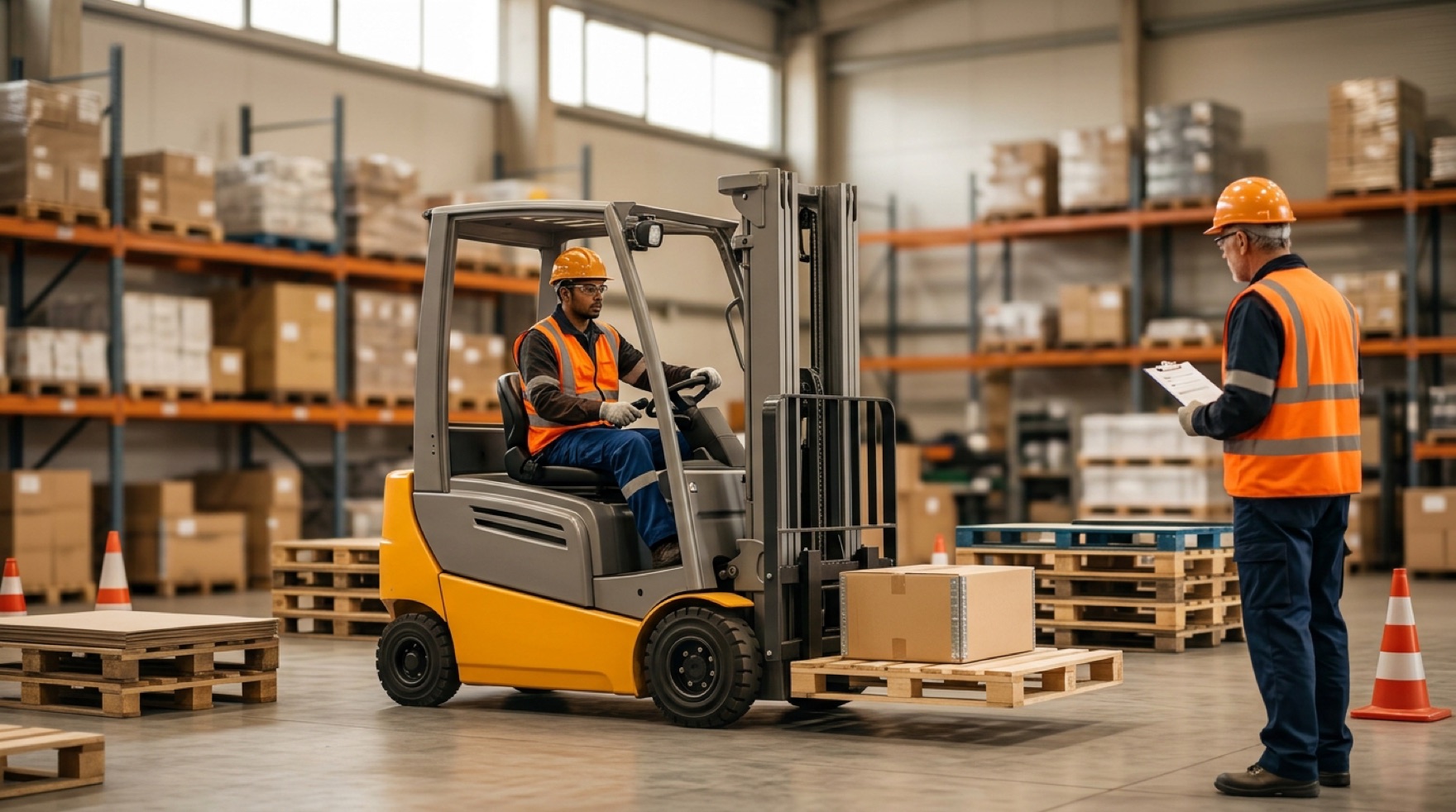
Forklift Operator Training & Certification (29 CFR 1910.178)
OSHA does not let anyone climb onto a forklift and drive. 29 CFR 1910.178(l) makes the employer prove each operator is competent through training, practical exercises, and a workplace evaluation, then certify it by name and re-check it at least every three years. Here is exactly what the standard requires, and why a certificate is not the same as competence.

Forklift & Pedestrian Separation: Traffic Management That Works
A forklift striking a person on foot is one of the most common ways a powered industrial truck kills someone, and it almost never comes down to a single careless moment. It comes down to whether the walkway, the blind corner, and the right-of-way rule were engineered before the shift started. Here is how to separate trucks and people in the order that actually reduces struck-by risk.

The Forklift Pre-Shift Inspection Checklist (29 CFR 1910.178)
OSHA requires a forklift to be examined before it goes into service and at least daily, or after each shift on round-the-clock operations. This is the grouped pre-shift checklist that examination should cover, and the one rule that makes it count: a truck with any safety defect comes out of service until it is fixed.
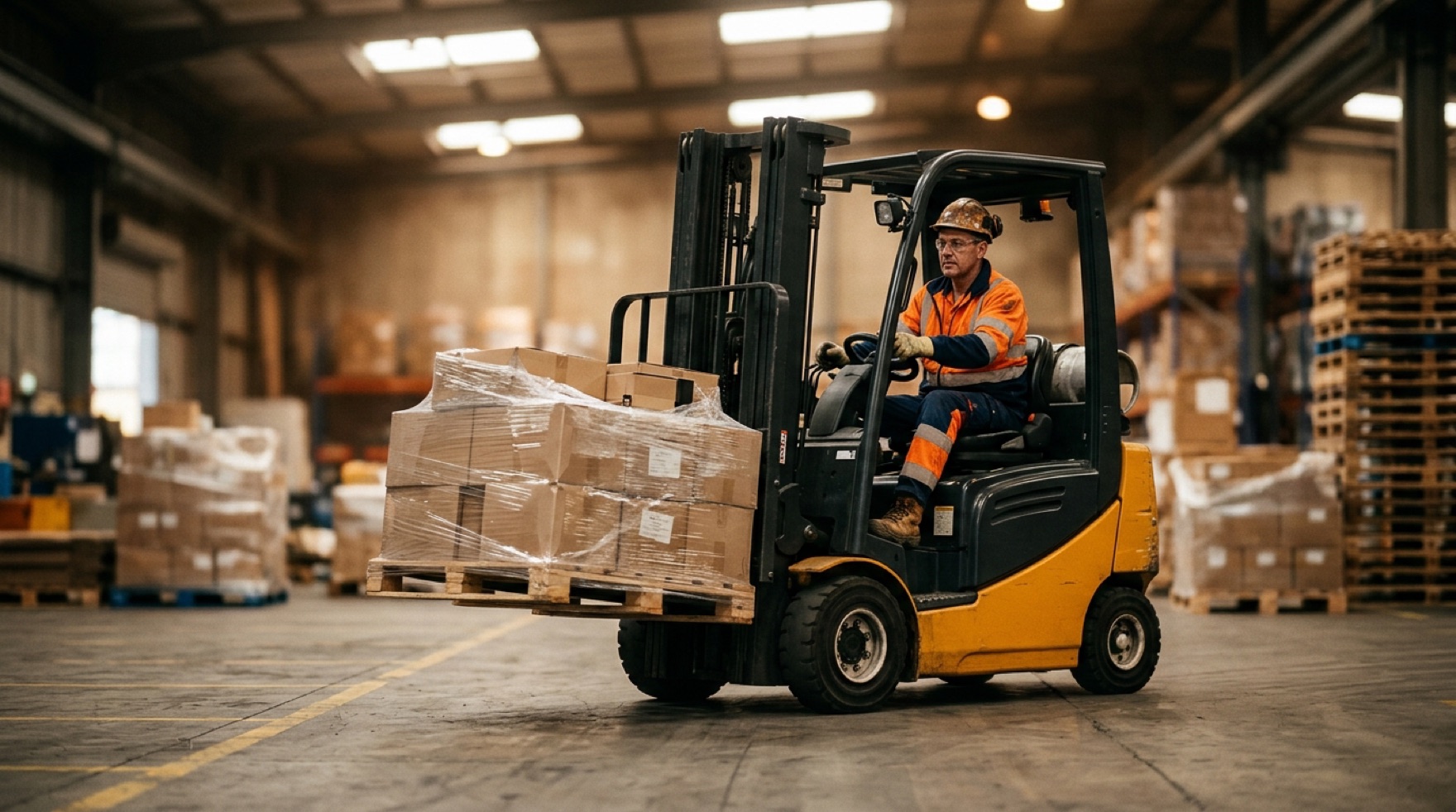
Forklift Tip-Over & Load Stability: The Stability Triangle
A forklift stays upright only while the combined center of gravity of the truck and its load stays inside a triangle formed by three points on the chassis. Turning, speed, grades, and a raised load all push that center of gravity toward the edge. Here is how the stability triangle works, a worked example of load center, and why staying in the seat is the survivable choice.
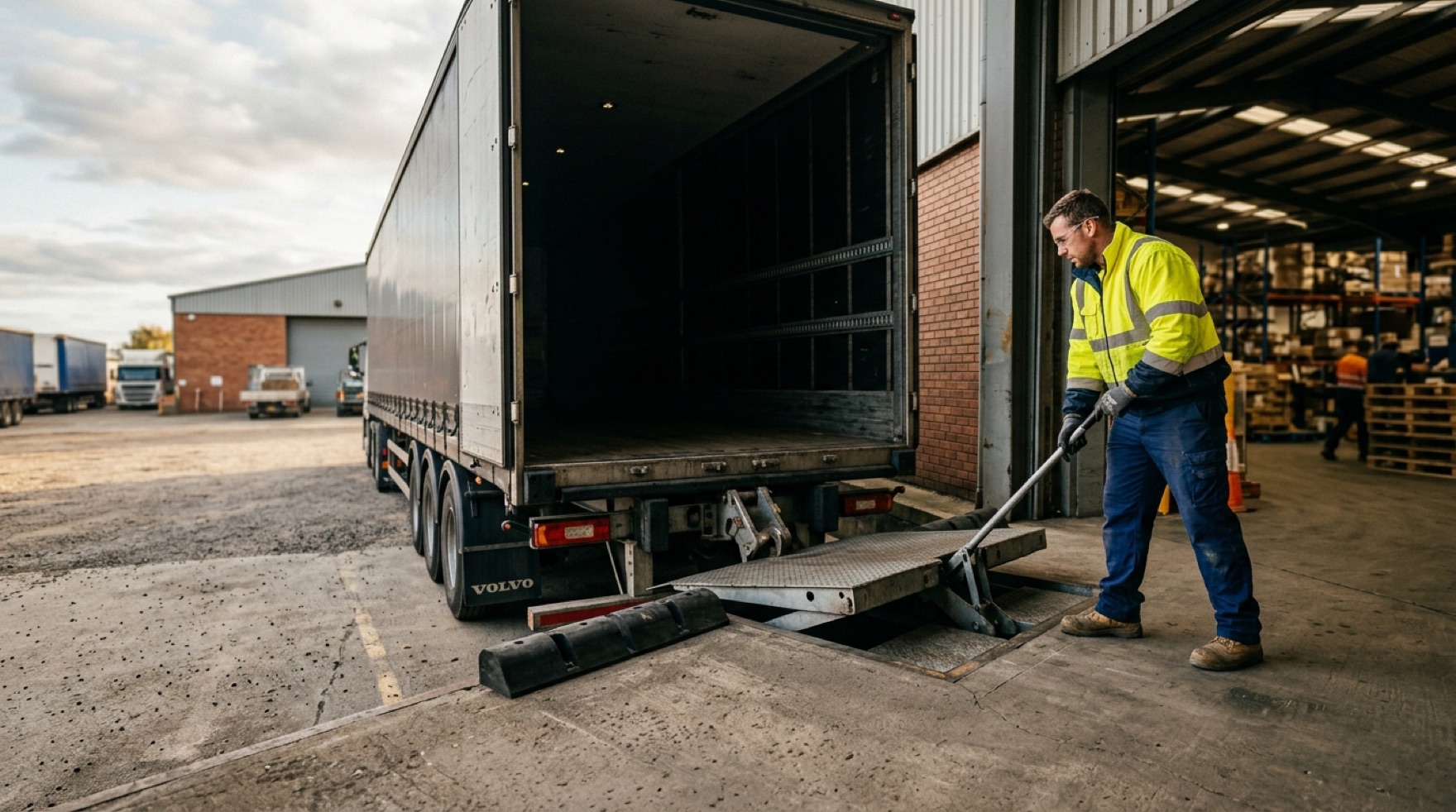
Loading Dock Safety: Dock Plates, Levelers & Trailer Restraints
Almost every serious loading dock injury happens in the same place: the gap between the dock and the trailer. A trailer creeps or pulls away, a dockboard shifts, or a truck runs off an unguarded edge. This is the checklist for closing that gap, built around the three OSHA standards that govern it: 29 CFR 1910.176, 1910.26, and 1910.178(k).
Forklift program self-assessment
Check your training records, inspection routine, traffic separation, and charging-area controls against the powered-truck standard.
Start the assessment →Certification and re-evaluation calendar
Track operator evaluations and the three-year re-evaluation cycle so certifications never lapse.
Open the calendar →
Stay ahead of safety.
New articles, free templates, and regulatory updates in your inbox. No spam — unsubscribe anytime.