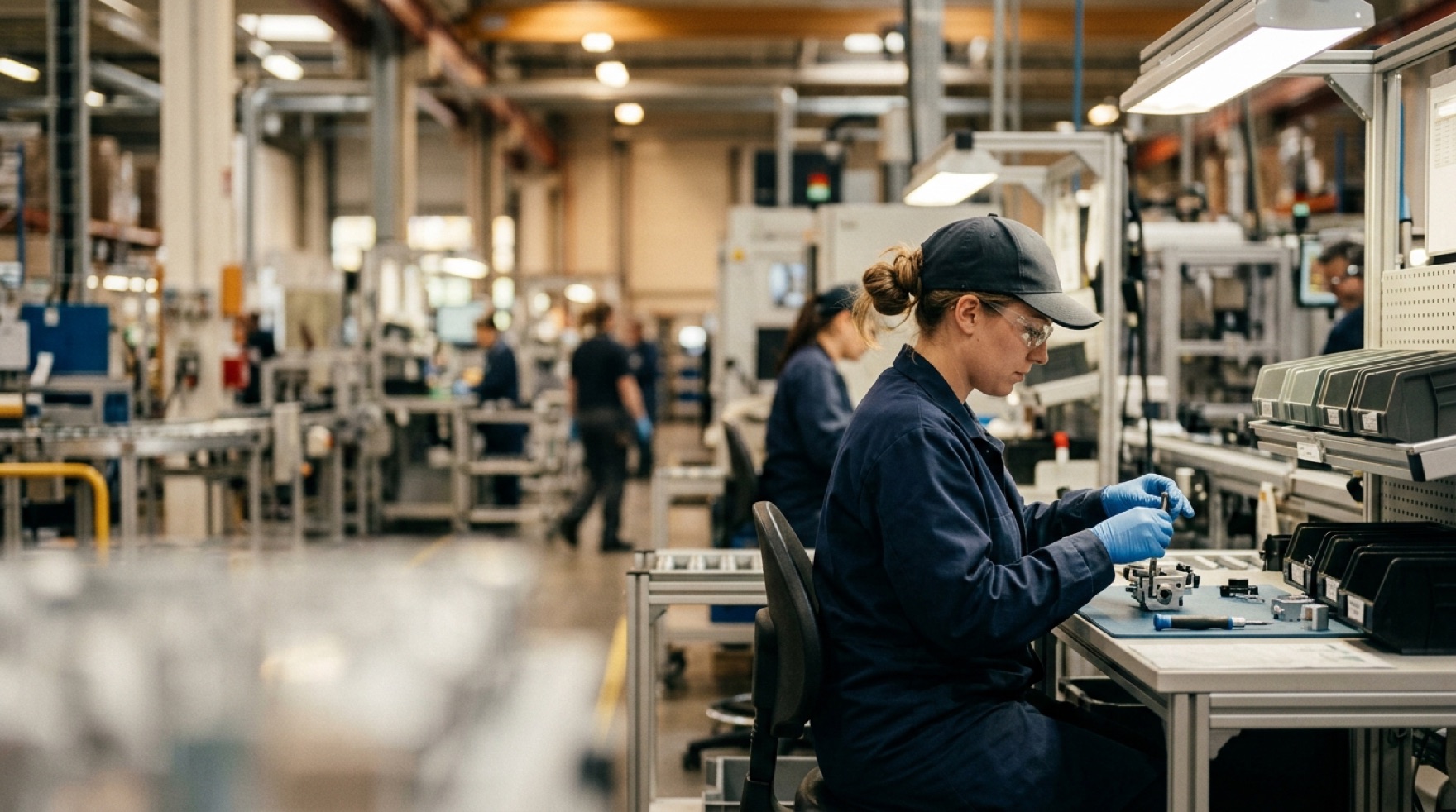
Assembly & Subassembly
The line runs to takt time, and repetition is the hazard that adds up.
Assembly and subassembly work is defined by repetition at a fixed workstation paced to takt time. The dominant hazard is cumulative rather than acute: repetitive motion and sustained postures that produce musculoskeletal disorders over weeks and months. Torque tools, small presses, and adhesives add point-of-operation and chemical exposures on top of the ergonomic load.
An assembly station is engineered for throughput, and unless ergonomics is designed in, the body absorbs the cost. Repetitive reaching, gripping, and fastening in a short cycle, repeated thousands of times a shift, drives carpal tunnel syndrome, tendinitis, and shoulder and neck strain. Because each motion looks harmless, the risk is easy to underrate until it shows up as a cumulative-trauma claim.
The workstation is the control point. Bench height, reach envelope, tool weight, and fixture position decide whether the worker holds a neutral posture or fights the layout all day. Torque tools add reaction-arm and pinch hazards, small presses add point-of-operation risk, and adhesives and solvents add a chemical exposure that hazard communication and ventilation manage. Designing the station to the worker, then rotating tasks to vary the load, does more than any single fix bolted on afterward.
The hazards, and the controls that move the needle
Ordered by the hierarchy of controls — eliminate and engineer first, then treat matting, footwear, and PPE as the layers that catch what remains.
Repetitive motion and cumulative trauma
Short-cycle assembly repeats the same reaches, grips, and fastening motions thousands of times a shift. The result is carpal tunnel syndrome, tendinitis, and shoulder strain that build silently and dominate the lost-time log.
- Redesign the task to cut force, repetition, and awkward reaches
- Set bench height and reach envelope to a neutral posture
- Provide balanced, low-vibration torque tools and reaction arms
- Rotate jobs and build recovery time into the cycle
- Screen stations with recognized ergonomic assessment tools
Point-of-operation contact with presses and tools
Small presses, riveters, and powered fasteners at the station carry pinch and amputation energy at the point of operation. A hand in the wrong place during a cycle is the injury these guards prevent.
- Fix and interlock guards at the point of operation
- Fit two-hand controls or presence-sensing on press operations
- Lock out stored energy before clearing a jam
- Maintain guards and prohibit their removal to speed the cycle
- Train the specific hazards of each tool at the station
Adhesive and solvent exposure
Assembly adhesives, primers, and cleaning solvents release vapors and contact hazards at the bench. Skin sensitization and inhalation are the routine exposures a hazard communication program manages.
- Substitute lower-hazard adhesives and water-based cleaners
- Provide local exhaust ventilation at the application point
- Maintain safety data sheets and label all secondary containers
- Provide chemical-resistant gloves matched to the product
- Train workers on the specific products under the HazCom standard
Standing fatigue at fixed stations
Static standing on hard floors for a full shift produces lower-limb fatigue and venous pooling. It is an ergonomic problem that anti-fatigue matting eases but does not solve on its own.
- Provide sit-stand options and suitable seating where the task allows
- Fit anti-fatigue matting at stations that must remain standing
- Rotate tasks and schedule micro-breaks
- Set floor and footwear to reduce contact stress
- Adjust station height so posture stays neutral
The programs that anchor the floor
Ergonomic design at the station
New and changed stations are screened for reach, force, repetition, and posture before they go live. Matting, rotation, and tool selection are chosen against the assessment rather than added after a cumulative-trauma claim appears.
Job rotation and recovery
Rotating workers across tasks with different demands spreads the load off any single tendon or joint. Recovery time inside the cycle is a control, not lost productivity.
Machine guarding and energy control
Presses and powered tools keep their guards, and any reach past a guard starts with lockout of stored energy. The minor-servicing exception is narrow, so when in doubt, lock out.
In-depth guidance
View all 4 →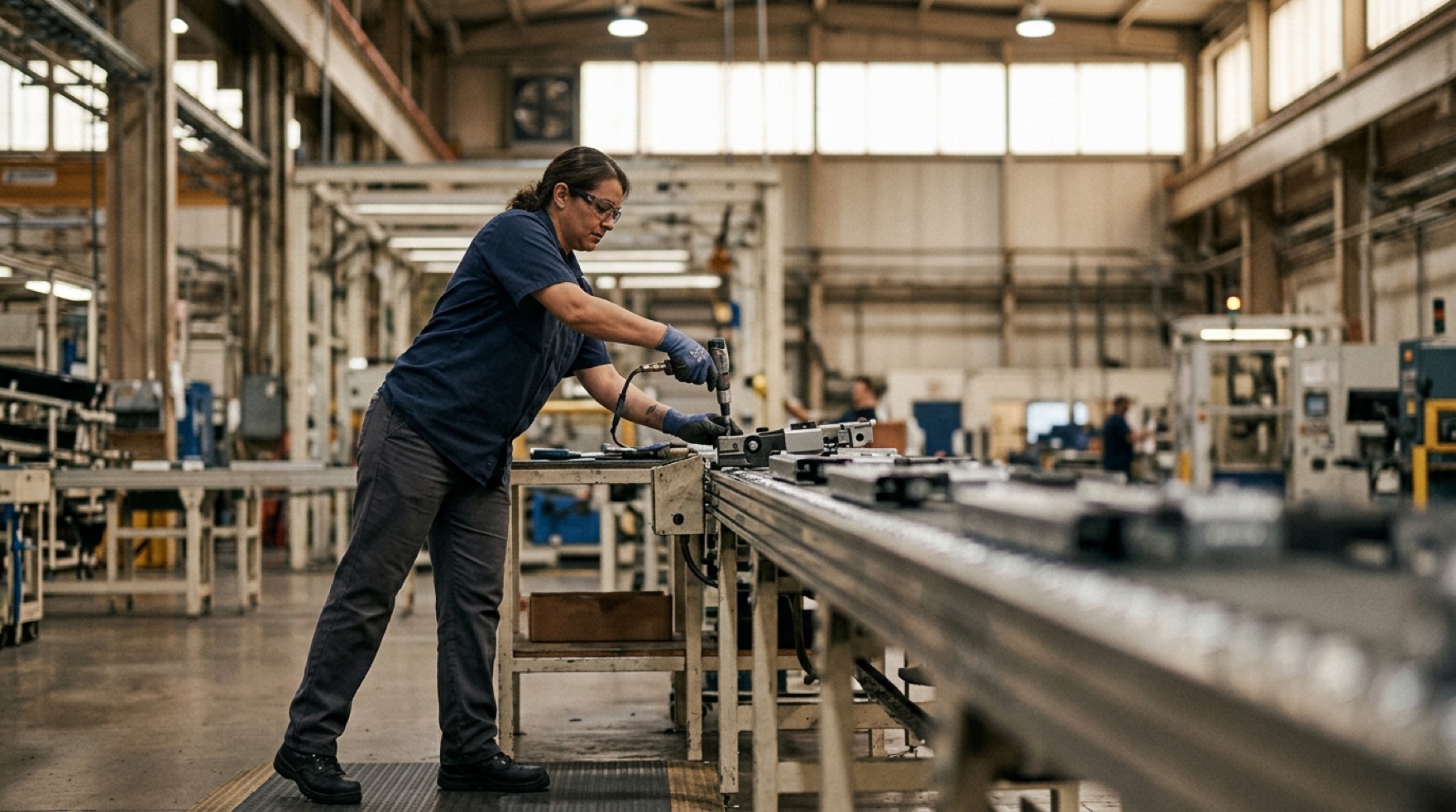
Assembly-Line Ergonomics: Standing, Reach & Repetition
Standing for a full shift, reaching past a comfortable envelope, and repeating the same motion hundreds of times each carry a musculoskeletal cost, and on an assembly line they usually arrive together. Here is how the three combine, how to set bench height and the reach envelope for the task, and where repetition becomes the hazard that outranks the others.
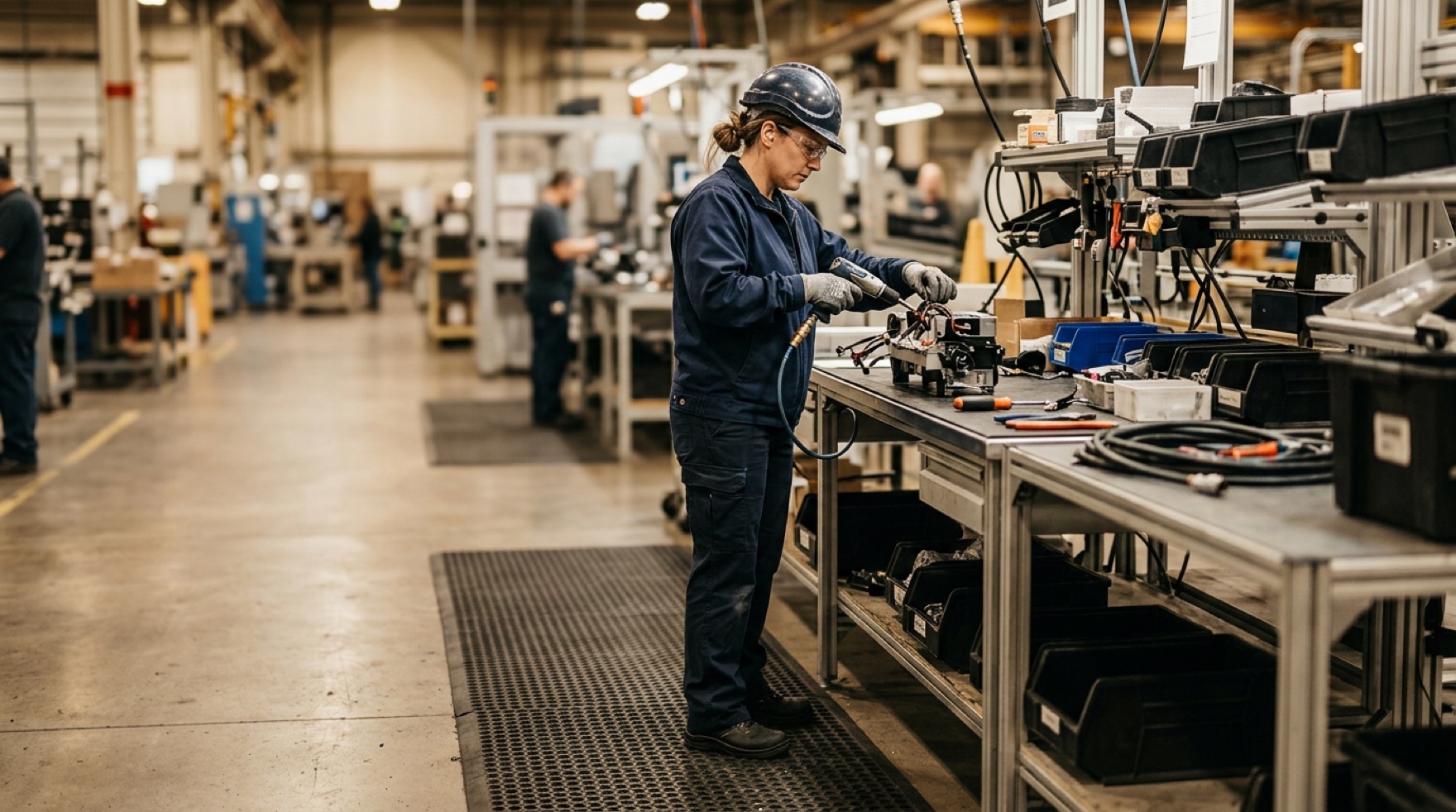
Anti-Fatigue Matting for Standing Assembly Stations
Anti-fatigue mats are the most visible answer to a standing-fatigue complaint, and often the first one bought. They help, but a mat sits near the bottom of the controls that reduce standing fatigue, below removing the static standing and redesigning the station. Here is what a mat does, what it does not do, and how it compares with the alternatives.
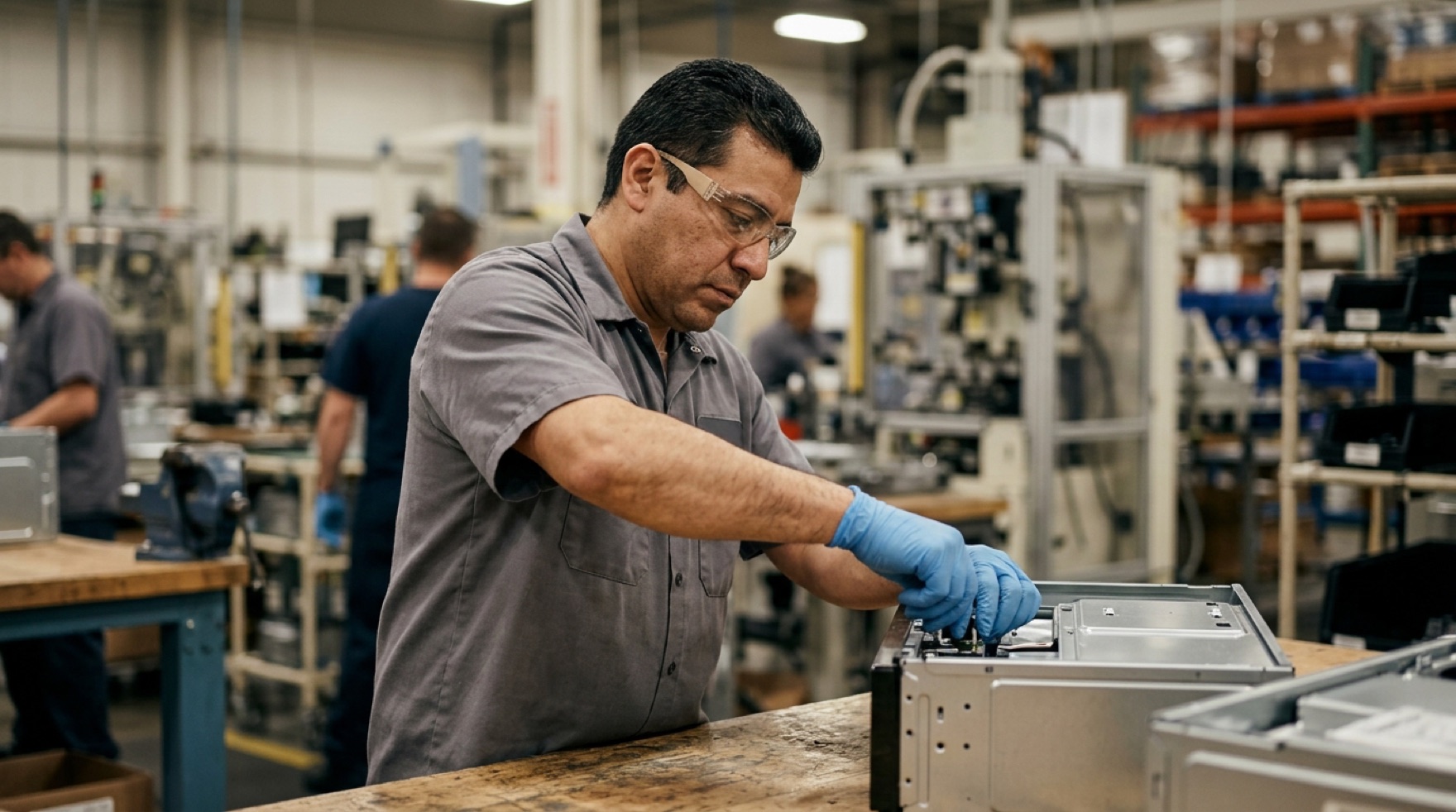
Repetitive Strain & Upper-Limb Disorders in Assembly
Upper-limb repetitive strain injuries build silently across thousands of cycles, then present as a reported wrist, elbow, or shoulder disorder that pulls a trained operator off the line. The ACGIH Threshold Limit Value for Hand Activity turns that risk into two numbers you can measure a job against. Here is what the limit means, whether it is enforceable, and how to bring a task back under it.

Hand & Torque Tool Safety on the Line
Hand tools and powered torque tools are the quietest hazards on an assembly line: no guarding conversation, no lockout, just a nutrunner, an air line, and a worker doing the same fastening motion all shift. OSHA still holds the employer responsible for those tools, sets a hard rule for the air line, and the ergonomic cost of torque reaction is real. Here is what to control.
Assembly ergonomics self-assessment
Screen your stations for the repetition, force, and posture risks that drive cumulative-trauma claims on the line.
Start the assessment →Ergonomics and guarding guides
Practical guidance on workstation design, job rotation, and point-of-operation guarding for assembly work.
Browse the guides →
Stay ahead of safety.
New articles, free templates, and regulatory updates in your inbox. No spam — unsubscribe anytime.