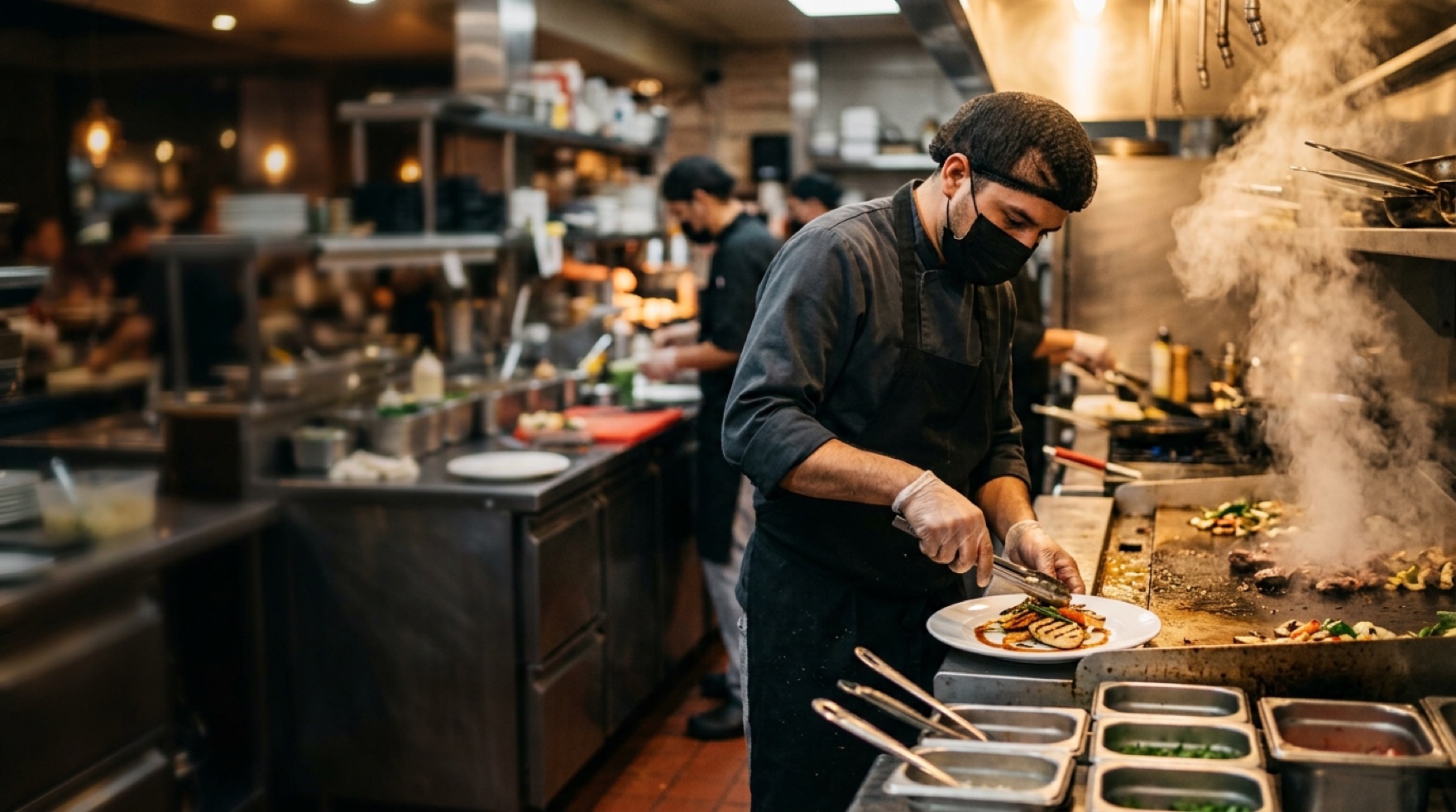
Commercial Kitchen Line
Wet floors, open flame, hot oil, and sharp steel in a space measured in inches.
The commercial kitchen line packs slip, burn, cut, and fire hazards into a hot, fast, crowded space. Same-level falls on wet and greasy floors lead the injury log, alongside burns from fryers and flat-tops, knife lacerations, and the grease fire that the kitchen hood and suppression system exist to control.
The floor is the most common source of injury on the line. Grease, water, and dropped food make the quarry tile slippery, and cooks move fast through a tight space carrying hot and sharp things, so a slip is rarely just a slip. Same-level falls dominate the kitchen injury record, and the practical controls are drainage, slip-resistant flooring measured against the wet dynamic coefficient of friction, mats at wet stations, and footwear rated for greasy floors.
The heat and the steel add the acute injuries. Fryers, flat-tops, and salamanders cause contact and splash burns, knives and slicers cause lacerations, and grease-laden vapor in the hood system is a fire waiting for ignition, which is why hood cleaning and a suppression system are non-negotiable. The program treats each hazard directly: engineer the floor for traction, shield and train around the heat, keep knives sharp and handled safely, and maintain the hood and suppression system that stands between a flare-up and a structure fire.
The hazards, and the controls that move the needle
Ordered by the hierarchy of controls — eliminate and engineer first, then treat matting, footwear, and PPE as the layers that catch what remains.
Slips on wet and greasy floors
Grease, water, and dropped food make kitchen floors slippery, and cooks move fast carrying hot and sharp items. Same-level falls are the most frequently recorded kitchen injury, and their consequences are worse when the worker is holding a pan of hot oil.
- Design drainage and slope to clear water and grease
- Specify slip-resistant flooring measured against the wet DCOF threshold
- Use drainage matting and duckboards at wet stations
- Clean spills immediately and maintain a cleaning cycle
- Provide slip-resistant footwear rated for greasy floors
Burns from fryers, flat-tops, and hot oil
Fryers, flat-tops, and salamanders cause contact and splash burns, and hot oil is especially dangerous to move. Burns are among the most frequent line injuries.
- Position equipment to reduce reaching over heat
- Filter and move hot oil with proper equipment when cooled
- Provide heat-resistant gloves, sleeves, and dry towels
- Keep traffic paths clear of hot-surface handoffs
- Train safe handling of hot pans and oil
Knife and slicer lacerations
Knives, mandolines, and powered slicers cause cuts during prep and service. Dull knives and rushed handling raise the risk of serious lacerations.
- Guard powered slicers and lock out for cleaning
- Keep knives sharp and use cut-resistant gloves for prep
- Cut on stable, non-slip surfaces with proper technique
- Store and pass knives safely, never in a sink of water
- Train safe use of mandolines and slicers
Grease fire and hood-system ignition
Grease-laden vapor accumulates in the hood and duct system and can ignite into a fast-spreading fire. The hood, duct, and suppression system are the primary defense.
- Clean hoods, ducts, and filters on a maintained schedule
- Maintain the automatic suppression system over cooking equipment
- Keep portable extinguishers rated for cooking fires at hand
- Never move or fight a grease fire with water
- Train staff on suppression activation and evacuation
The programs that anchor the floor
Floor traction and housekeeping
Slip-resistant flooring, drainage, mats, and immediate spill cleanup keep a wet kitchen from becoming a fall hazard. Footwear and matting are surface-level layers chosen against the actual floor condition, not a substitute for cleaning.
Hood cleaning and fire suppression
The hood, duct, and suppression system are cleaned and maintained on schedule, because grease-laden vapor is the fuel for the fire the system exists to stop. Extinguishers rated for cooking fires and trained staff complete the defense.
Knife and slicer safety
Sharp knives, cut-resistant gloves, and stable cutting surfaces reduce lacerations, and powered slicers are guarded and locked out for cleaning. The dull knife and the rushed cut are where the serious injuries come from.
In-depth guidance
View all 3 →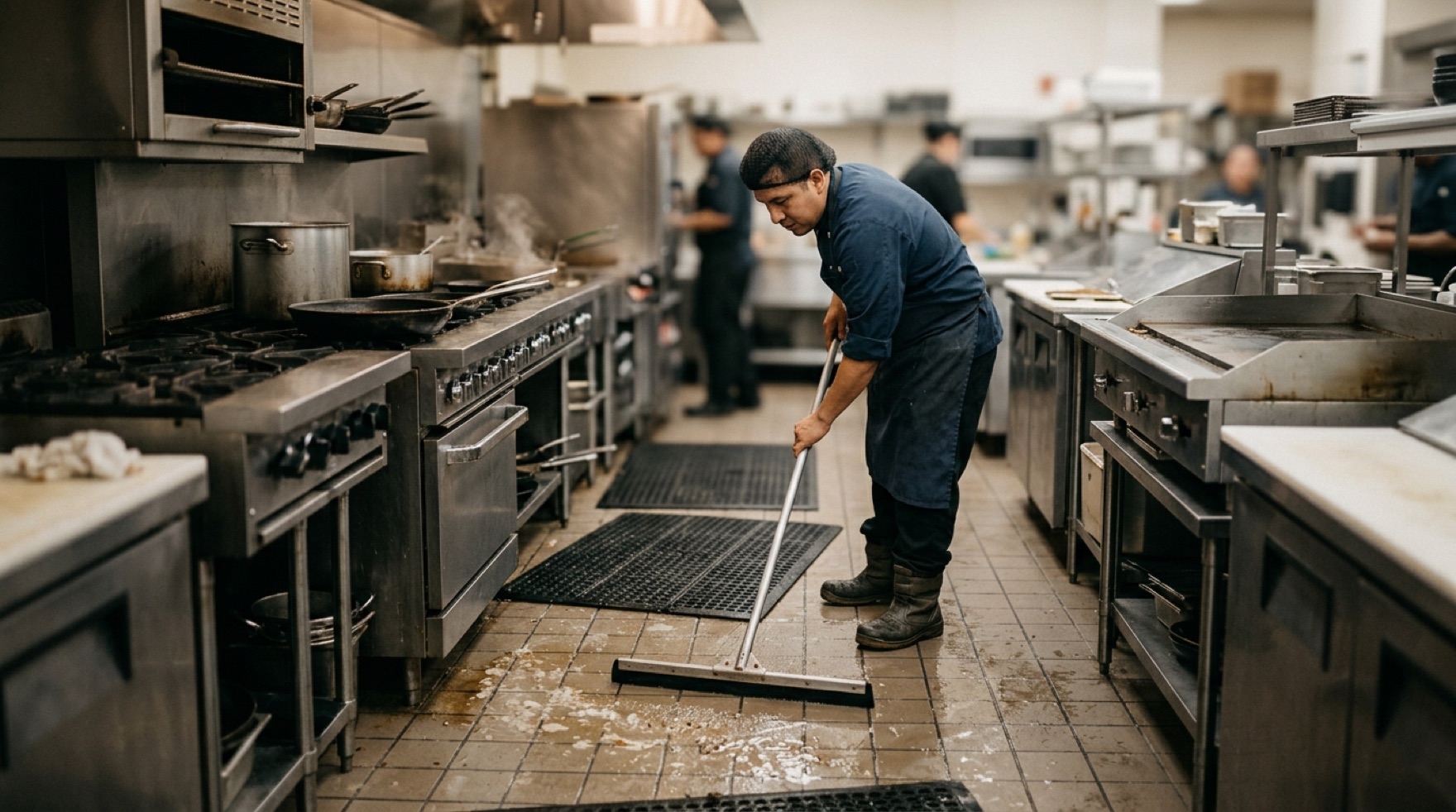
Slips & Falls on the Kitchen Line: Grease, Water & Mats
A commercial kitchen floor is one of the most reliably slippery surfaces a worker stands on all day: water from the dish pit, grease-laden vapor settling out of the hood, and food debris underfoot. OSHA's walking-working surface rule and the ANSI A326.3 friction thresholds tell you what the floor has to do, and where mats actually help. Here is how to build slip resistance in the right order.
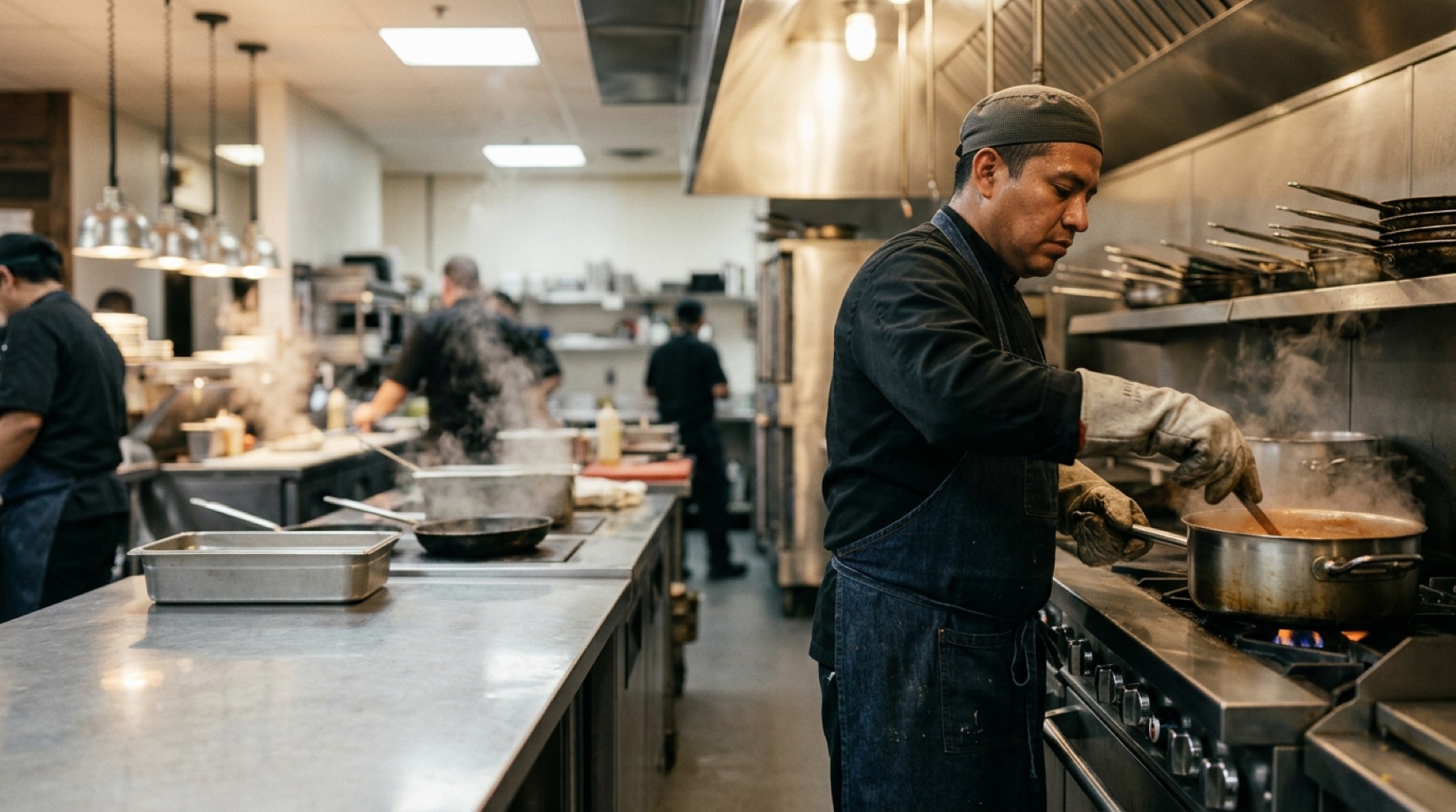
Burns & Thermal Hazards on the Cook Line
Cooking oil holds heat near 350 degrees Fahrenheit, water scalds a worker in a second at line temperature, and there is no OSHA standard written specifically for kitchen burns. What governs them is the General Duty Clause and a set of thermal thresholds worth knowing. Here is what the numbers say and how to design the burns out of the cook line.
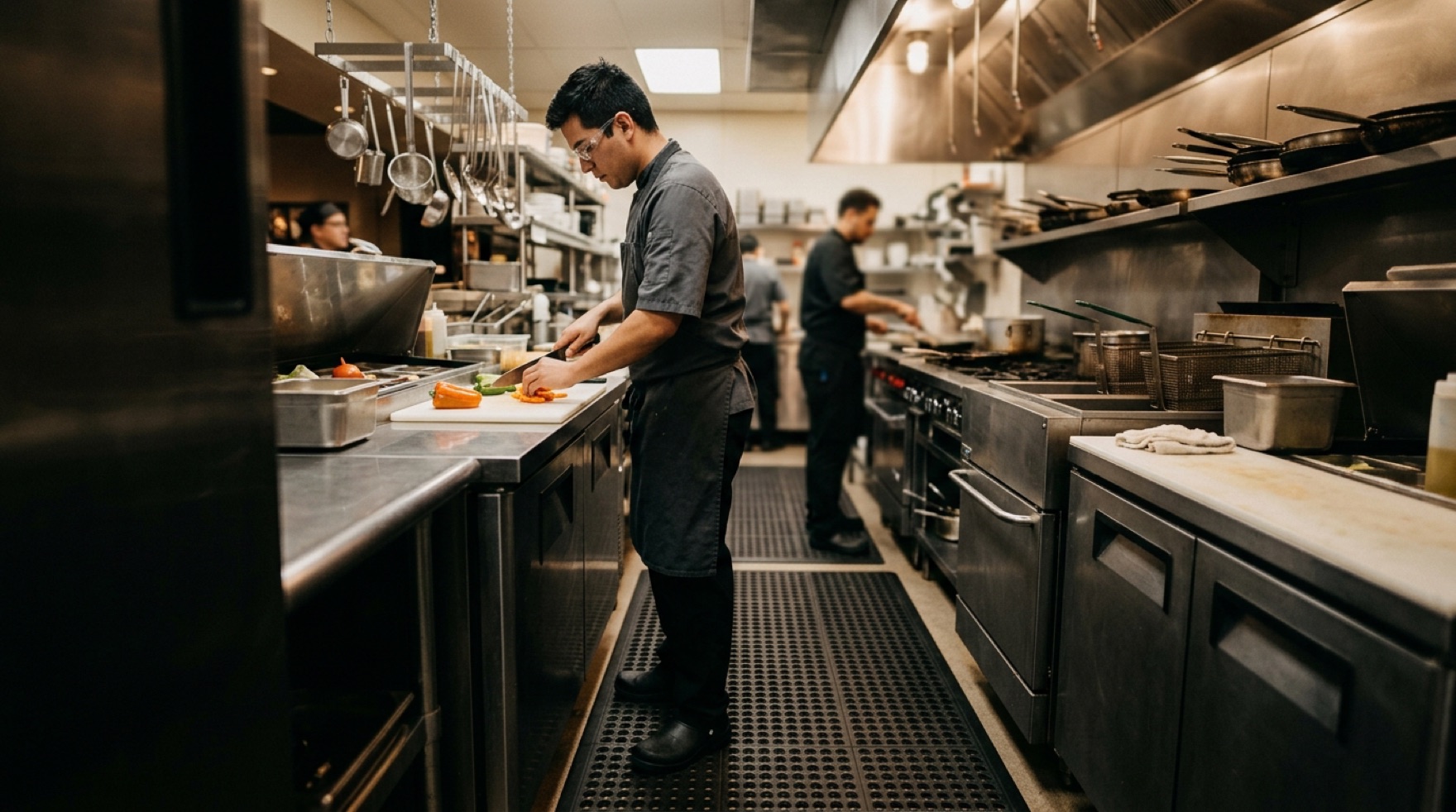
Anti-Fatigue & Drainage Mats for the Kitchen Line
Kitchen matting is asked to do two different jobs: drain a wet, greasy floor and keep footing on it, and ease the fatigue of standing on quarry tile for a twelve-hour shift. Those are not the same mat, and comfort is the second priority, not the first. Here is how to match mat type to zone, what the specs mean, and where matting sits in the larger fix.
Kitchen hazard self-assessment
Check your floor traction, burn controls, knife safety, and hood-system maintenance against the kitchen-line hazard pattern.
Start the assessment →Kitchen safety guides
Practical guidance on slip-resistant flooring, burn prevention, and grease-fire control for the commercial kitchen.
Browse the guides →
Stay ahead of safety.
New articles, free templates, and regulatory updates in your inbox. No spam — unsubscribe anytime.