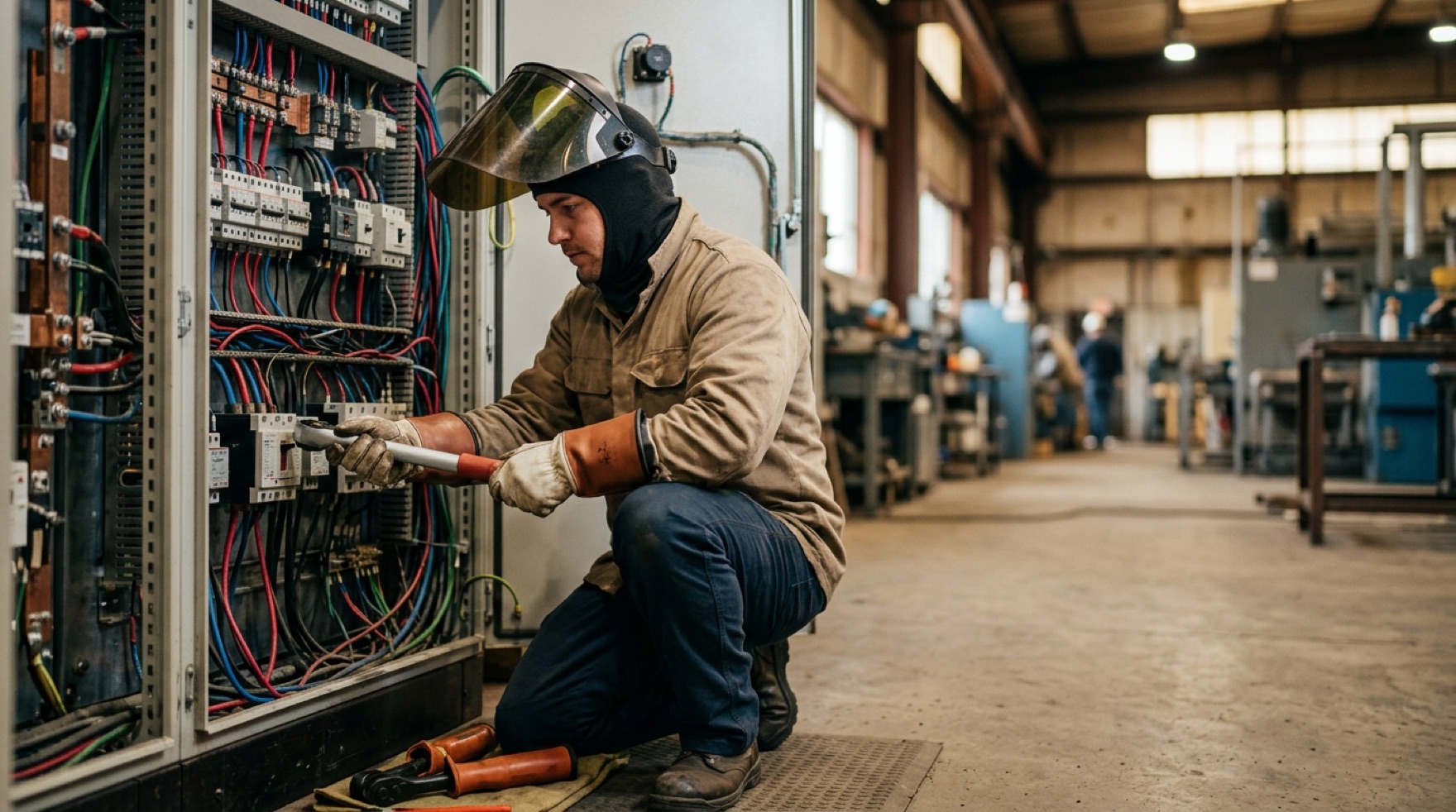
Electrical Installation
The circuit that looks dead is the one that has to be proven dead.
Electrical installation exposes workers to the two faces of electrical energy: shock from contact with live conductors, and arc flash, the explosive release that can burn and injure from a distance. Falls from ladders and heights and the control of hazardous energy during work round out a job where a single assumption about a de-energized circuit can be fatal.
Electrical work is governed by a simple discipline that is easy to shortcut: treat every conductor as live until it is tested dead. Shock and electrocution happen when someone assumes a circuit is de-energized without verifying, and arc flash happens when a fault turns a panel into an explosion of heat and pressure. NFPA 70E organizes the response around establishing an electrically safe work condition, and where that is not feasible, around the boundaries, PPE, and permits that manage energized work.
The trade also works at height and in awkward positions. Ladders, lifts, and elevated platforms add fall exposure to the electrical risk, and lockout/tagout governs the mechanical and electrical energy released during installation and connection. The order of protection is clear: de-energize and verify first, use the incident-energy analysis to set boundaries and arc-rated PPE only when energized work cannot be avoided, and never let production pressure turn a de-energization into an assumption.
The hazards, and the controls that move the needle
Ordered by the hierarchy of controls — eliminate and engineer first, then treat matting, footwear, and PPE as the layers that catch what remains.
Electric shock and electrocution
Contact with an energized conductor drives current through the body, and even low voltages can be fatal under the wrong conditions. Most electrocutions trace back to work on a circuit assumed, but not proven, to be dead.
- Establish an electrically safe work condition before work
- Test for absence of voltage with a verified meter
- De-energize and lock out the source, then verify zero energy
- Use insulated tools and rated gloves for any energized exposure
- Follow safe approach boundaries for qualified persons
Arc flash and arc blast
A fault in energized equipment can release an arc flash of intense heat and an arc blast of pressure that burns and injures from a distance. The incident-energy analysis sets the boundaries and PPE for any energized work.
- Avoid energized work; de-energize wherever feasible
- Use the incident-energy analysis to set the arc flash boundary
- Require an energized electrical work permit where justified
- Provide arc-rated PPE matched to the incident energy
- Maintain approach boundaries and safe work distance
Falls from ladders and heights
Installation work happens on ladders, lifts, and elevated platforms, often with both hands occupied. Falls from height are a leading cause of serious injury in electrical work.
- Use lifts and platforms rather than ladders where feasible
- Provide fall protection for work at height
- Inspect and use ladders within their duty rating
- Maintain three-point contact and avoid overreaching
- Plan material staging to keep hands free for climbing
Hazardous energy during connection
Connecting equipment exposes workers to stored electrical and mechanical energy in motors, capacitors, and drives. Lockout/tagout keeps that energy isolated until work is complete.
- Apply lockout/tagout to all energy sources before connection
- Discharge stored energy in capacitors and drives
- Verify isolation before touching conductors or terminals
- Coordinate group lockout on shared systems
- Confirm safe re-energization procedures after work
The programs that anchor the floor
Electrically safe work condition
The default is to de-energize, lock out, and verify absence of voltage before work. Establishing and proving that condition is what separates a routine job from an electrocution, and it is not optional under production pressure.
Energized work permit and arc flash PPE
When energized work cannot be avoided, an incident-energy analysis sets the arc flash boundary and the arc-rated PPE, and an energized electrical work permit documents the justification. Arc rating in cal/cm² is matched to the calculated exposure.
Fall protection at height
Ladder and elevated work is planned with lifts, platforms, and fall protection rather than improvised reach. The electrical hazard does not remove the fall hazard, so both are controlled together.
In-depth guidance
View all 4 →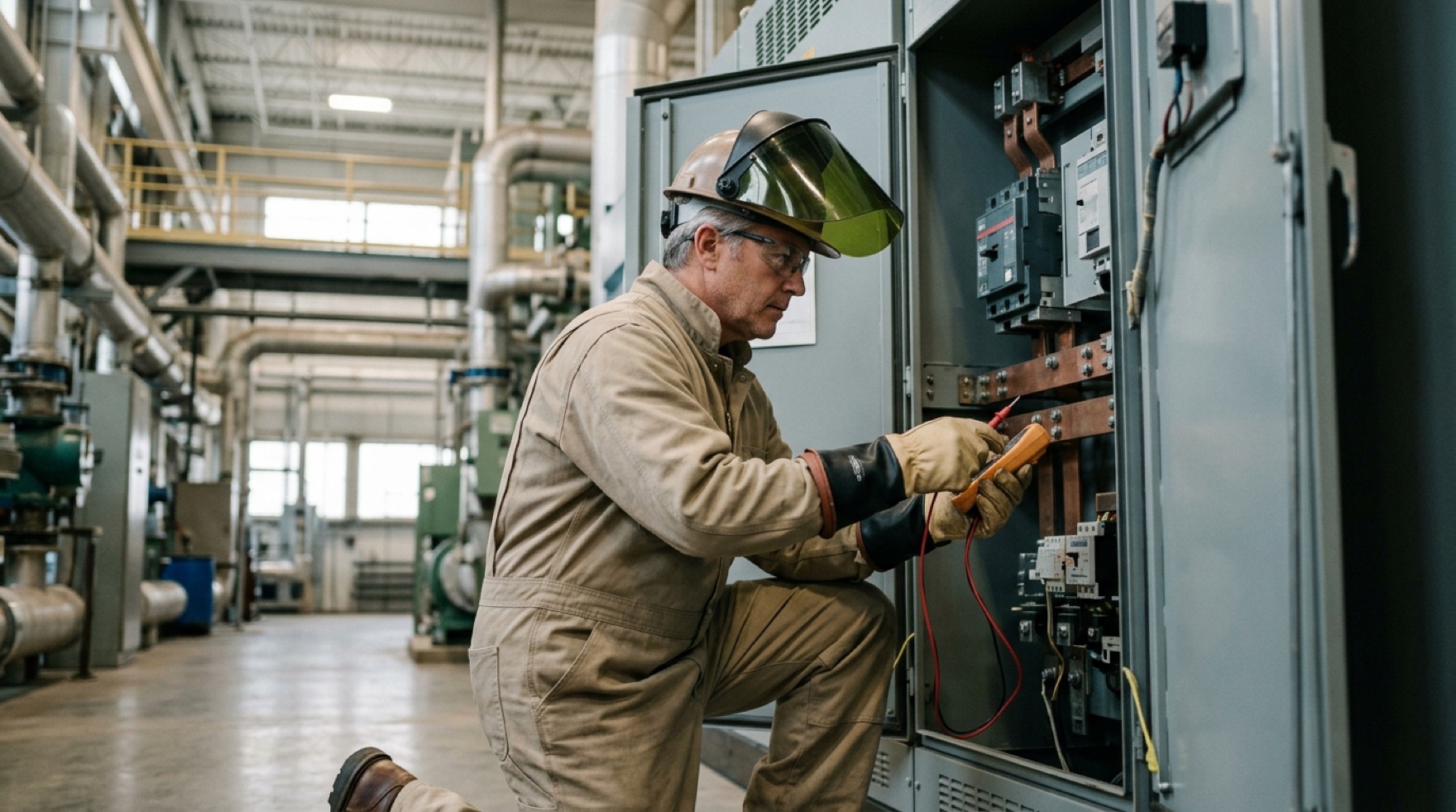
Building an NFPA 70E Electrical Safety Program
NFPA 70E is the consensus standard that turns electrical safety from a set of habits into a documented program: work deenergized by default, assess the risk when you cannot, control it by the hierarchy, and prove your people are qualified. It is not itself an OSHA regulation, which is exactly why so many employers misunderstand where its authority comes from. Here is how the program fits together, and how OSHA enforces it.
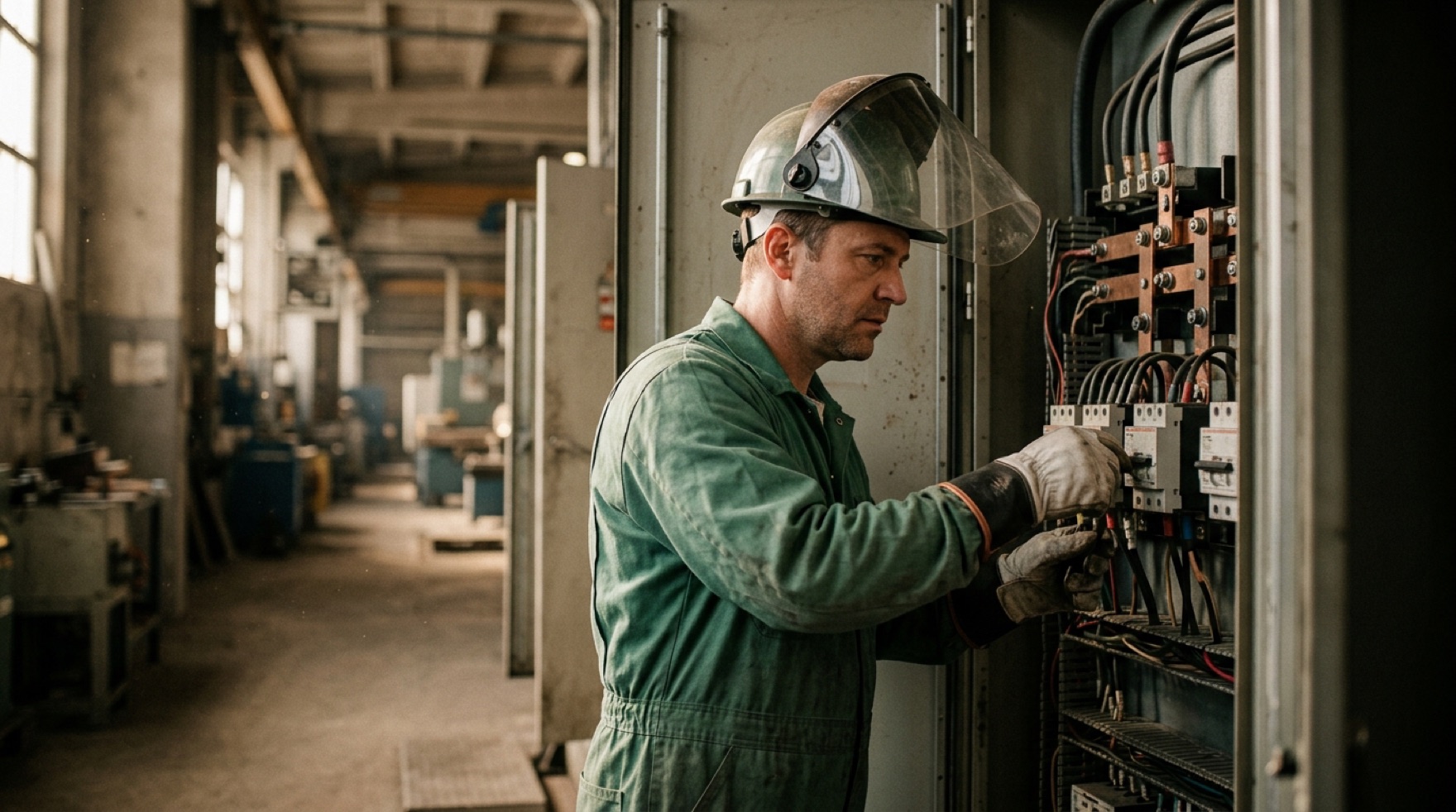
Arc-Flash PPE & Category Selection (NFPA 70E)
There are two legitimate ways to pick arc-flash PPE under NFPA 70E, and mixing them is where programs go wrong. The incident-energy analysis gives you a number in cal/cm² and you match arc-rated clothing to it; the PPE category table gives you a category from 1 to 4 for a defined task. Here is how each method works, what the categories require, and the precision point that trips up most selections.
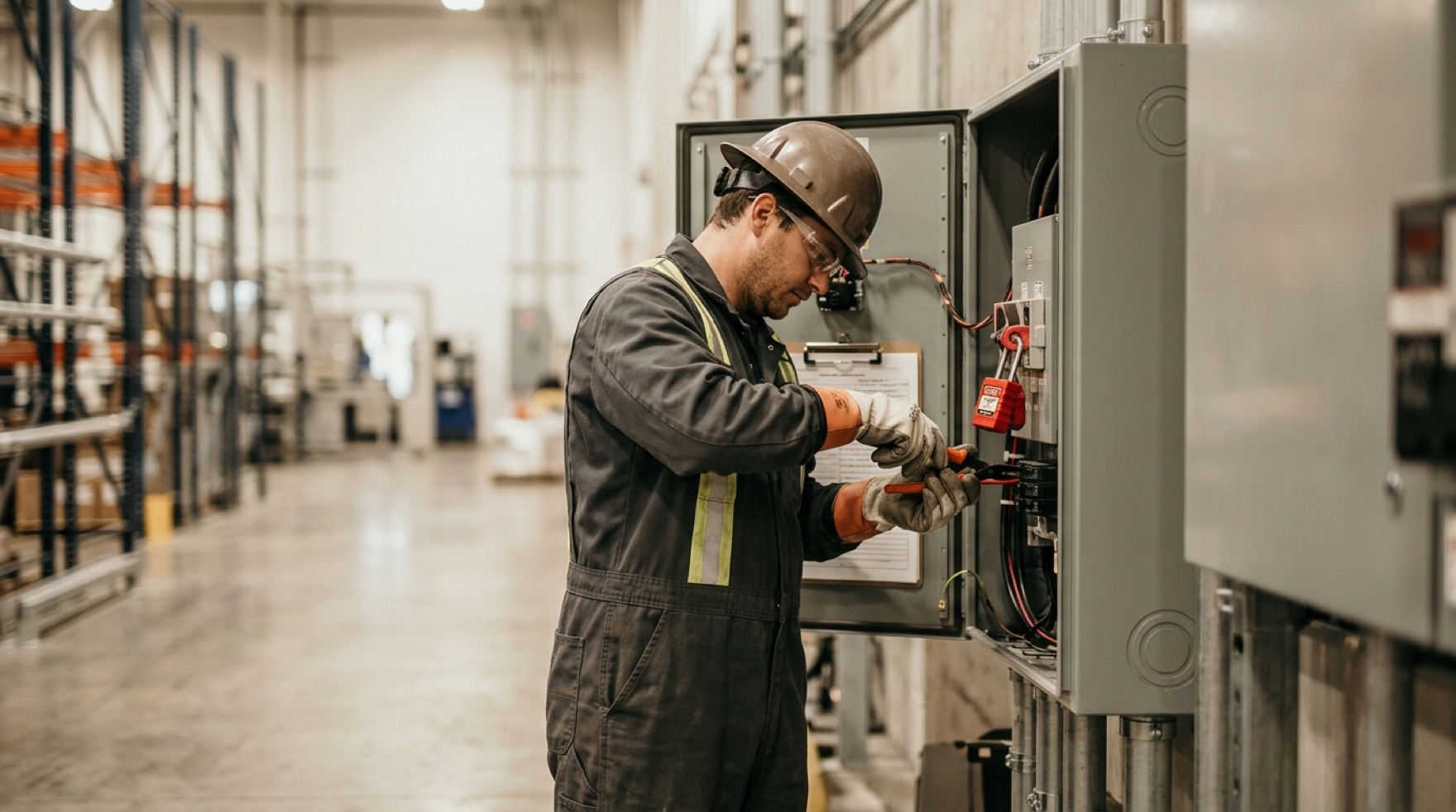
Energized Electrical Work Permits & Lockout
The safest energized electrical work is the work you turn into deenergized work. When you cannot, OSHA and NFPA 70E build a gate in front of the task: an energized electrical work permit that forces justification, assessment, and management sign-off, plus a lockout and a verified test that the circuit is actually dead. A documented fatality shows what happens when the lockout is partial and the verification is skipped.
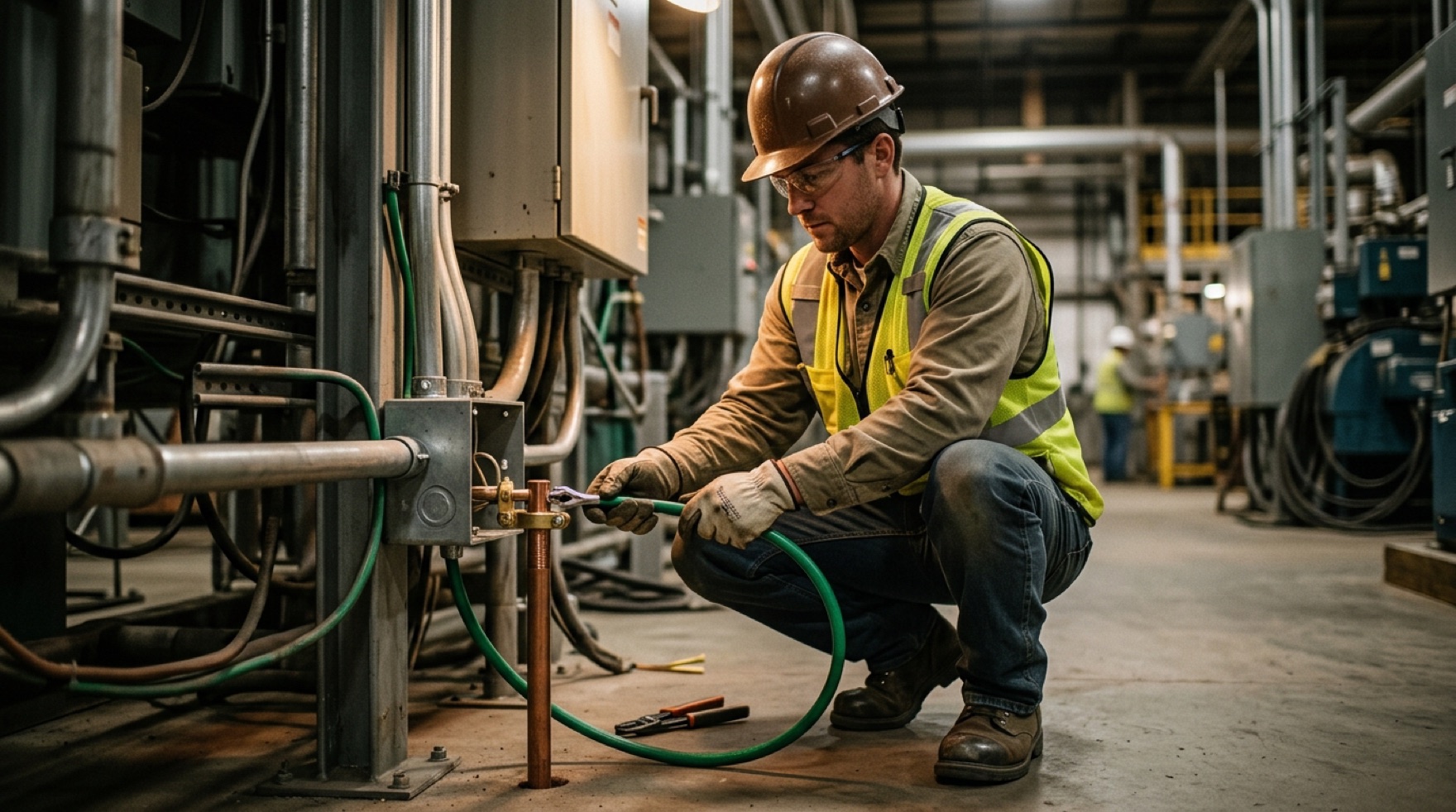
Grounding & Bonding Fundamentals (NFPA 70 / NEC)
Grounding and bonding are used interchangeably on most job sites, and getting them confused is how installations end up unsafe. Grounding connects a system to earth. Bonding ties metal parts together to create a low-impedance path that clears a fault. The earth itself is not that path. Here is the distinction NEC Article 250 draws, and why it decides whether a breaker trips or a metal enclosure stays energized.
Electrical safety self-assessment
Check your energy-control, verification, arc flash, and fall-protection practices against the electrical-work hazard pattern.
Start the assessment →Electrical safety guides
Practical guidance on establishing a safe work condition, arc flash boundaries, and energized-work permits.
Browse the guides →
Stay ahead of safety.
New articles, free templates, and regulatory updates in your inbox. No spam — unsubscribe anytime.