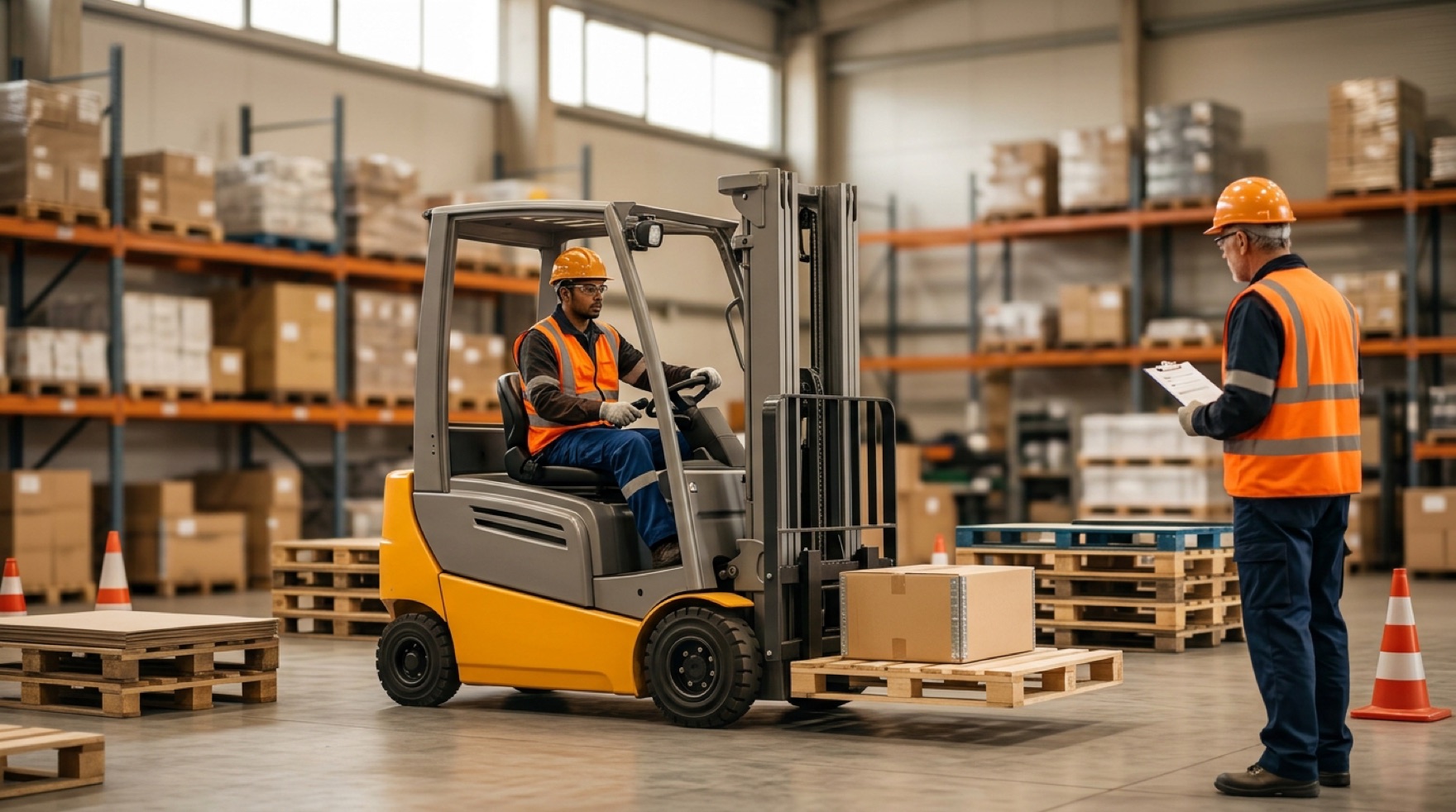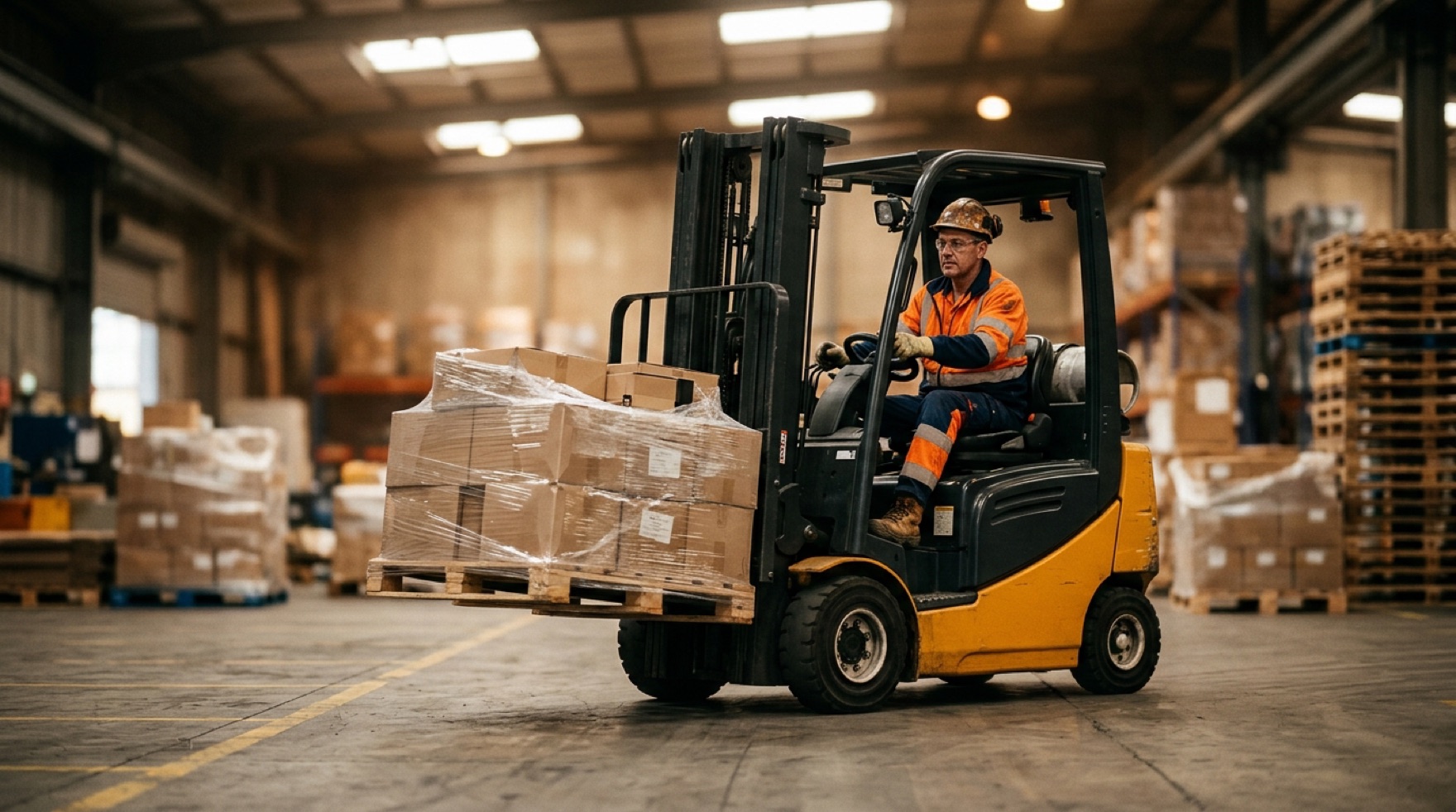
The short answer: The most reliable way to stop forklifts from striking people is to keep them physically apart, then add engineering aids where paths must cross, and only then rely on rules and behavior. A forklift on foot is one of the most common causes of forklift-related fatalities, so separation should be designed like any other control: elimination and engineering first, administrative measures second. OSHA's operating rules in 29 CFR 1910.178 govern how trucks travel around people, but the durable fix is a traffic plan that removes the conflict rather than asking a driver and a walker to avoid each other in the moment.
Why do forklifts keep striking people on foot?
Struck-by incidents happen because a truck and a person occupy the same space at the same time, usually where a load blocks the driver's view or a pedestrian enters a travel path unseen. It is one of the most common causes of forklift-related fatalities, and the pattern is remarkably consistent across investigations: an obstructed sightline, an unexpected pedestrian, and no physical separation to catch the error. The driver's attention and the walker's attention are the last defenses, and they fail routinely.
An Oregon FACE investigation captures the mechanism. In report OR 2006-44-1, an 18-year-old receiving clerk was killed when a narrow-aisle stand-up forklift backed down a warehouse aisle and pinned him against metal shelving. The certified operator was looking toward the load to judge his clearance, and by the time he looked in the direction of travel the clerk was already in the aisle. The truck had no mirror, back-up alarm, or flashing light, and a near-miss a week earlier, when the same clerk had walked up behind an operator unnoticed, was never reported to management. The investigation pointed to looking in the direction of travel, keeping pedestrians clear of operating trucks, and closely supervising new workers. The transferable lesson is that the fatal factor was not one bad decision but the absence of separation and warning at a predictable conflict point.
What is the most reliable way to separate forklifts and pedestrians?
Rank the controls the way you would for any hazard: remove the conflict first, engineer it down next, and use rules last. The further up this list a control sits, the less it depends on a driver or a pedestrian getting it right in the moment, which is exactly where struck-by incidents originate.
- Separate the paths physically (most reliable). Dedicated pedestrian walkways marked and, where feasible, protected by guardrails or bollards; separate personnel doors away from truck routes; barriers at the ends of racking aisles; and staging lanes that keep foot traffic out of the forklift's working envelope. Physical separation is the only control that still works when everyone is distracted.
- Engineer the crossings that remain. Overhead dome mirrors at blind corners; one-way aisle layouts to remove head-on and backing conflicts; clear floor markings and, where used, blue spotlights or red floor-zone lights that show a truck's approach; and speed management in mixed areas. These do not remove the conflict, but they buy the sightline and the seconds that a driver needs.
- Set and enforce right-of-way rules. Under 29 CFR 1910.178(n), operators must keep a clear view of the path of travel and, where the load blocks that view, travel with the load trailing; they must slow down and sound the horn at cross aisles and other blind locations. Build on that with a rule that pedestrians signal intent and get the operator's acknowledgement before entering a truck's area, and that the operator stops while people are in the hazardous zone.
- Reinforce behavior and supervision (least reliable alone). High-visibility clothing, pedestrian-awareness training, close supervision of new and young workers in their first weeks, and a near-miss reporting habit that surfaces the unsafe pattern before it becomes an incident. These matter, but a program that leads with them, while the walkway and the blind-corner mirror are still missing, is leaning on the weakest layer.
Notice that warning devices and horns sit in the middle of that list, not the top. They are worth fitting, and the Oregon truck had none, but a back-up alarm is an alert, not a barrier. The strongest programs use it to support separation, not to substitute for it.
Does OSHA require pedestrian separation or a back-up alarm?
OSHA's forklift standard does not mandate a specific separation distance or require back-up alarms on every truck, but it does impose enforceable travel rules that a traffic plan is built to satisfy. 29 CFR 1910.178(n) requires operators to keep a clear view, yield the right of way, slow and sound the horn at blind crossings, and not drive up to anyone standing in front of a fixed object. Where the standard is silent on a specific engineering control, the employer's duty to address a recognized struck-by hazard still applies, which is why investigators consistently recommend separation, mirrors, and warning devices even though 1910.178 does not list each one by name.
That gap is the point for safety leaders. Compliance with 1910.178(n) is the floor, and it is written around operator behavior. Reducing the actual struck-by risk means closing the conflict with the layout, because the standard's travel rules only work if the driver can see and stop in time, which is the assumption that fails in the incident reports.
How do you make the traffic plan hold on the floor?
Walk the site and map every place a truck path crosses a foot path, then fix the highest-traffic blind conflicts first. Prioritize dock approaches, aisle ends, doorways, and the pinch point at the dock where trucks, trailers, and people converge. Assign each crossing a control from the top of the ranked list rather than defaulting to a sign, and re-walk the map whenever the layout, the racking, or the product flow changes.
Then treat near-misses as the leading indicator they are. The Oregon case turned on a warning that was never reported, and that is common: the unsafe interaction almost always happens more than once before it becomes a fatality. Give new workers extra supervision in their first month, make it easy to report a close call without blame, and feed every report back into the traffic map. Separation that is designed, audited, and adjusted is what keeps trucks and people apart when attention lapses, which it always eventually does.