The short answer: A hand truck or dolly is safer when the load is stacked low and secured, the operator pushes rather than pulls, and the route is checked for ramps, thresholds, and door swings before the load moves. OSHA's materials-handling guidance sets the target push force at less than 50 pounds, keeps the hands in the power zone, and keeps the load below eye level so the path stays in view, while NIOSH treats wheeled aids as a way to cut the manual lifting that drives back injury. The equipment only helps when the wheels roll freely, the load is within the rated capacity, and the operator never rides it or lets it get ahead of them on a slope.
When should you use a hand truck instead of carrying?
Use a wheeled aid whenever a load is heavy, bulky, or moved repeatedly, because the point of the equipment is to remove the manual lift that causes back injury. NIOSH's approach to manual material handling is to engineer the lift out where possible, and a hand truck, dolly, or platform cart does exactly that by carrying the weight on wheels instead of on the operator's spine. The decision is not about pride or speed: a load that is awkward to carry two aisles over is a load that belongs on wheels.
Match the tool to the job. A two-wheel hand truck suits stacked boxes and drums that can be tilted back onto the toe plate; a four-wheel dolly or platform cart suits heavier or wider loads that should not be tilted; and a powered or stair-climbing unit is the answer where stairs cannot be avoided. Choosing the wrong tool, a two-wheeler for a load that needs a flat platform, is where many strains start, because the operator ends up muscling a load the equipment was never meant to balance.
How do you load a hand truck safely?
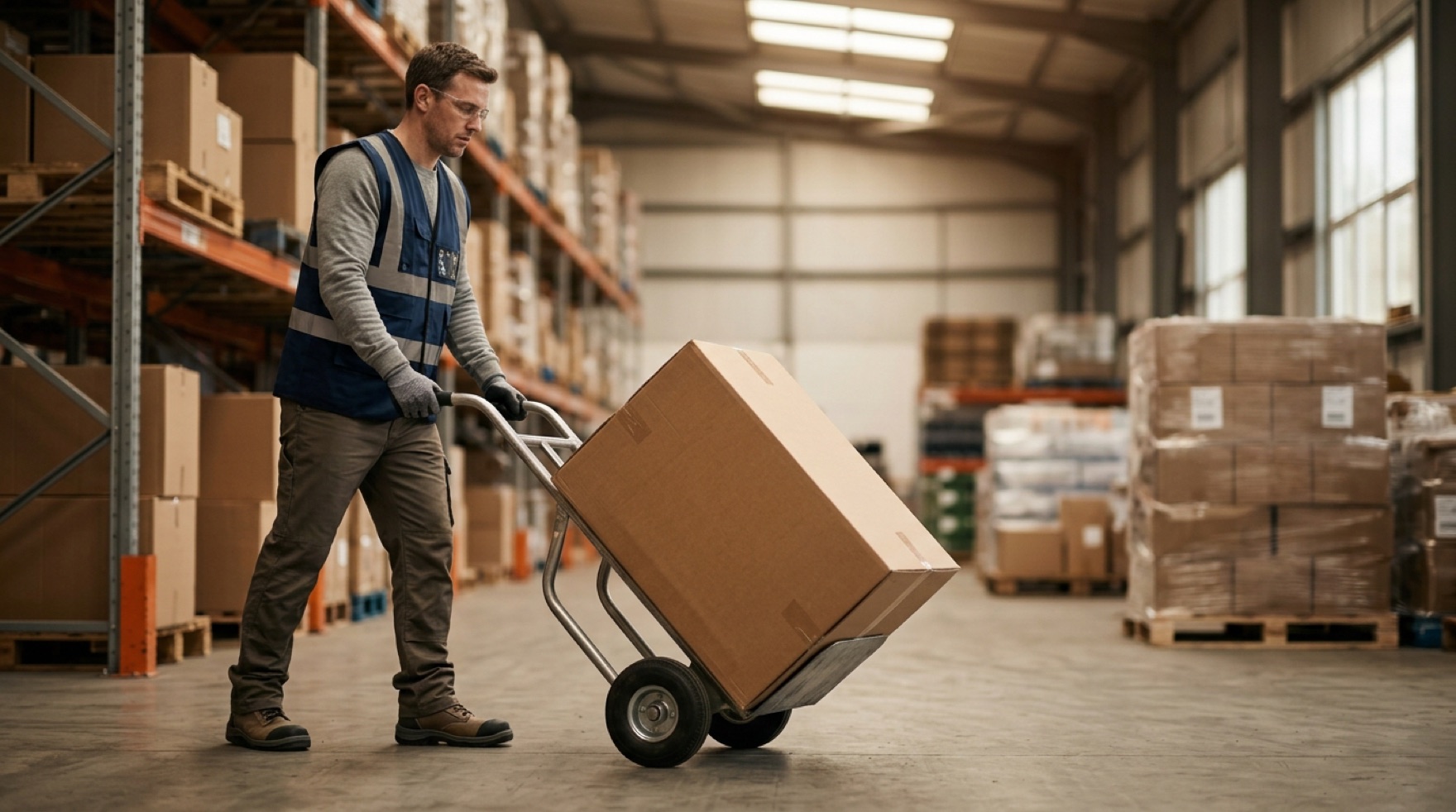
Load heavy items low and against the frame, then secure the load before moving. A low center of gravity keeps the hand truck stable and keeps the weight off the operator's arms, and a strap or restraint stops the top of the stack from shifting or falling when the truck is tilted or turned. Loading heavy on top or leaving a stack loose is what turns a routine move into a dropped load on a foot.
- Place the heaviest items at the bottom, resting on the toe plate and against the frame.
- Keep the load below eye level so you can see over it and the path stays visible, as OSHA's materials-handling guidance advises.
- Secure the load with a strap on tall or unstable stacks so nothing shifts on the tilt or the turn.
- Stay within the hand truck's rated capacity; an overloaded truck is both hard to control and prone to tipping.
- Tilt the loaded two-wheeler back onto its wheels so the wheels, not your back, carry the weight before you move.
Push or pull: what is the right technique?
Push a hand truck or dolly rather than pull it whenever you can. OSHA's guidance is explicit that pushing generally takes less effort than pulling because your body weight assists the exertion, and that pulling risks the cart striking your shins or ankles and puts the load behind you where you cannot see it. Pushing keeps the load in view, keeps your posture neutral, and keeps the equipment from running into your heels.
Keep the force manageable and the hands in the power zone, the space in front of the body between mid-thigh and mid-chest where the arms have the most strength. OSHA's materials-handling guidance sets the target so the push force stays under 50 pounds, and CCOHS puts the recommended force lower still for sustained pushing: no more than about 230 newtons for men and 130 newtons for women in continuous motion, with somewhat higher forces allowed only to get a stationary load moving. If a load needs more than that to move or to keep moving, the answer is a lighter load, better wheels, or a powered unit, not a harder shove. Grip the handles at a comfortable height, CCOHS recommends fixed handles between roughly 91 and 112 centimeters off the floor, keep your back straight, and use your legs and body weight rather than your lower back to start the load.
How do you handle ramps, thresholds, and stairs?
Slopes and steps are where a hand truck turns dangerous, so control the descent and never let the load get ahead of you. On a decline the load wants to run, and a loaded truck that gets in front of the operator can drag them down, pin them, or crush a foot at the bottom. Keep the load on the uphill side of you, move slowly, and stop if you cannot control it rather than trying to catch it.
- On a ramp, keep yourself above the load on a downgrade so the weight is never pulling you downhill.
- Use curb ramps to cross curbs and thresholds so the truck rolls over the lip instead of jarring to a stop and throwing the load forward.
- Do not take a standard two-wheel hand truck down stairs by force; use a stair-climbing unit or get help, because a loaded truck on stairs is a struck-by and crushing hazard for the operator and anyone below.
- Watch for door swings, blind corners, and other people on the route; a load below eye level and a planned path are what keep a push from becoming a collision.
What maintenance keeps a hand truck safe?
A hand truck is only as safe as its wheels, so keep them rolling freely and replace them when they fail. OSHA's guidance is to replace wheels when they become wobbly or uneven and to keep pneumatic tires filled to the recommended pressure, because a truck with a seized, flat, or unevenly inflated wheel forces the operator to exert far more push force and puts that strain on the arms, back, and legs. A wheel that will not turn is not a minor annoyance; it is the reason a manageable push becomes an overexertion.
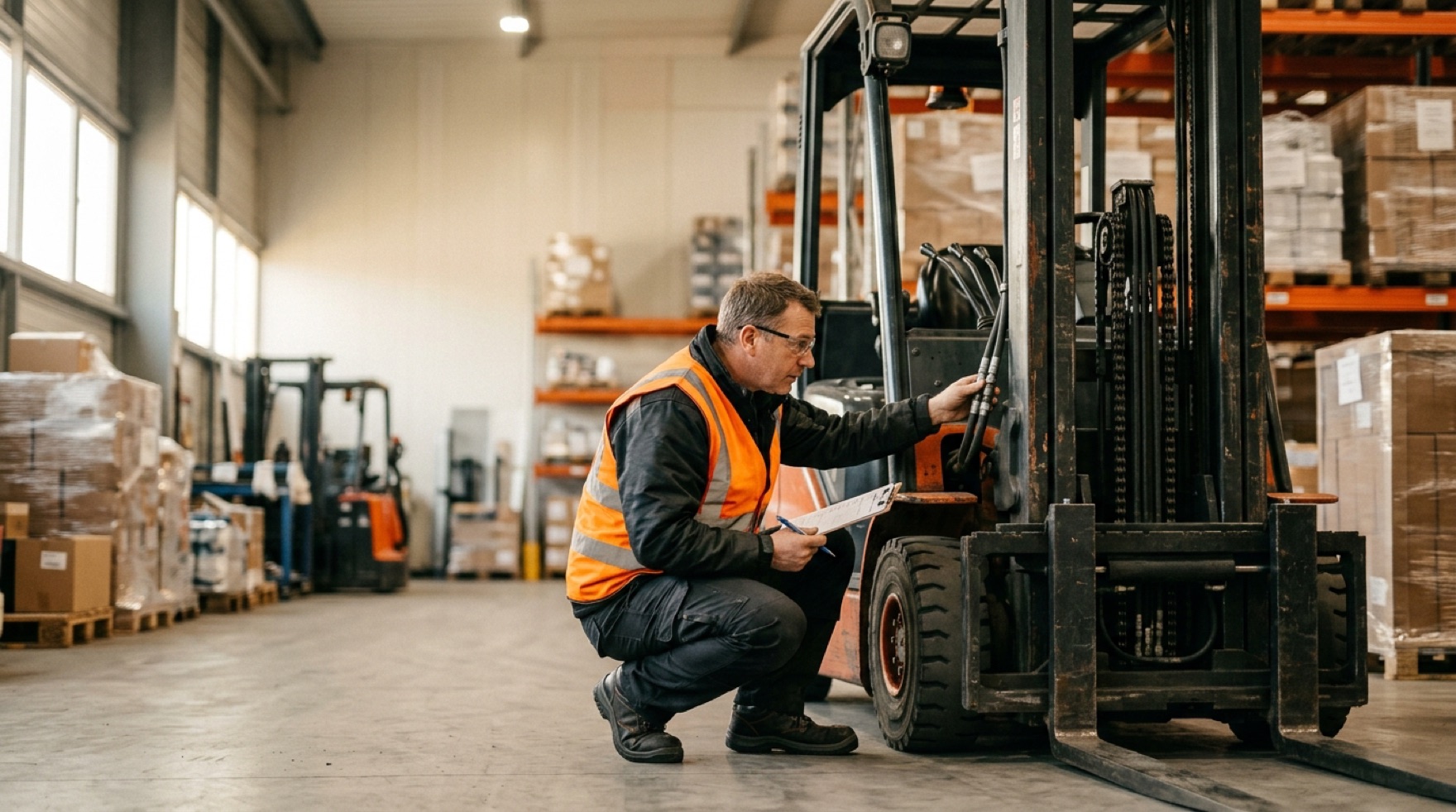
Check the rest of the frame on the same habit. Confirm the handles and grips are intact so the hands stay in a secure position, the toe plate is not bent, and the frame is not cracked, and take a hand truck with a real defect out of service until it is repaired. Matching the right, well-maintained tool to the load, loading it low and secured, pushing it in the power zone, and controlling the route are what let a hand truck do the job it exists for: keeping the weight off the worker.