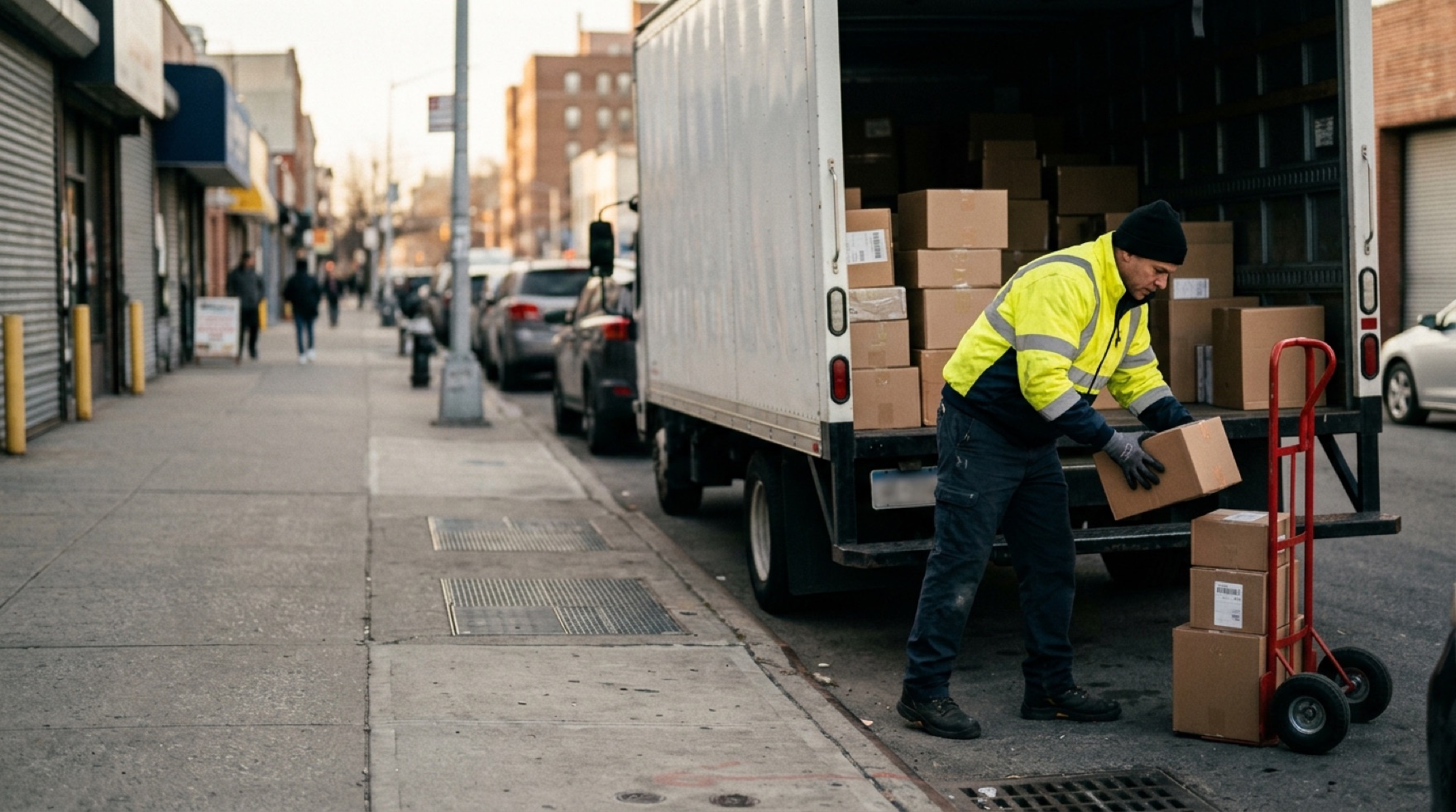
Delivery Driver & Route Sales
The road, the tailgate, and the customer step are three different injuries.
Delivery and route-sales driving pairs the highest-fatality event in the working world, the roadway crash, with the repeated manual handling of a mover and the slip risk of climbing in and out of a vehicle dozens of times a day. The result is a job where the most serious risk is on the road and the most frequent injuries happen at the tailgate and the customer door.
The defining fact of this job is that transportation incidents are the most frequent fatal event in the American workplace, and drivers carry that exposure for their whole shift. Roadway risk is shaped by fatigue, distraction, weather, and other drivers, so the controls are as much about scheduling, vehicle condition, and policy as about the individual behind the wheel.
Away from the road, the injuries shift to the body. Route drivers lift, carry, and maneuver product into buildings that were never designed for delivery, and they climb in and out of the cab and cargo area hundreds of times a week. Overexertion and same-level falls dominate the non-crash injury log, and the practical controls are load design, powered handling aids, three-point contact discipline, and footwear matched to the surfaces a driver actually meets.
The hazards, and the controls that move the needle
Ordered by the hierarchy of controls — eliminate and engineer first, then treat matting, footwear, and PPE as the layers that catch what remains.
Roadway crashes and traffic exposure
Transportation incidents are the most frequent fatal work event, and delivery drivers spend most of the shift exposed to them. Fatigue, distraction, and other road users make the roadway the job's highest-consequence hazard.
- Route and schedule to reduce driving hours and time pressure
- Maintain vehicles and use collision-avoidance and telematics systems
- Enforce seatbelt use and a no-handheld-device policy
- Manage fatigue with hours-of-service limits and realistic stops
- Train defensive driving and adverse-weather decision making
Lifting and carrying product on the route
Drivers move cases, kegs, and parcels into buildings with stairs, thresholds, and no dock. Repeated lifting and long carries make overexertion the leading non-crash injury.
- Provide hand trucks, powered stair-climbers, and ramps
- Design loads and packaging to a manageable weight with handholds
- Screen route handling with the NIOSH Lifting Equation
- Plan delivery sequence to shorten and level carries
- Train handling technique as a supporting layer
Slips and falls at the cab and cargo area
Climbing in and out of the cab and cargo box hundreds of times a week, often onto wet or icy ground, produces frequent same-level and short-height falls. Jumping down rather than using the steps is a common injury mechanism.
- Provide and maintain steps, grab handles, and non-slip surfaces
- Require three-point contact entering and exiting the vehicle
- Prohibit jumping from the cab or cargo area
- Provide slip-resistant footwear for outdoor and seasonal conditions
- Keep the cab floor and steps clear of debris and ice
Backing and curbside work
Backing into tight sites and working at the curb puts the driver and others near a moving vehicle and passing traffic. Backing incidents and struck-by at the roadside are recurring severe events.
- Reduce backing with pull-through parking and route planning
- Use backing cameras, sensors, and a spotter where available
- Set the brake, chock, and secure the vehicle before unloading
- Wear high-visibility apparel at the roadside
- Position the vehicle to shield the work area from traffic
The programs that anchor the floor
Fatigue and hours management
Realistic routes, hours-of-service limits, and honest scheduling do more for roadway safety than any in-cab reminder. Fatigue degrades reaction time the way alcohol does, so the schedule is a safety control, not just a logistics decision.
Vehicle inspection and maintenance
A pre-trip inspection and a maintained vehicle keep brakes, tires, lights, and mirrors reliable. Defects are reported and corrected before the vehicle returns to the route.
Three-point contact and safe egress
Entering and exiting the vehicle with three points of contact, and never jumping down, is the control for the most frequent injury on the route. Steps and handles are maintained so the safe method stays the easy one.
In-depth guidance
View all 2 →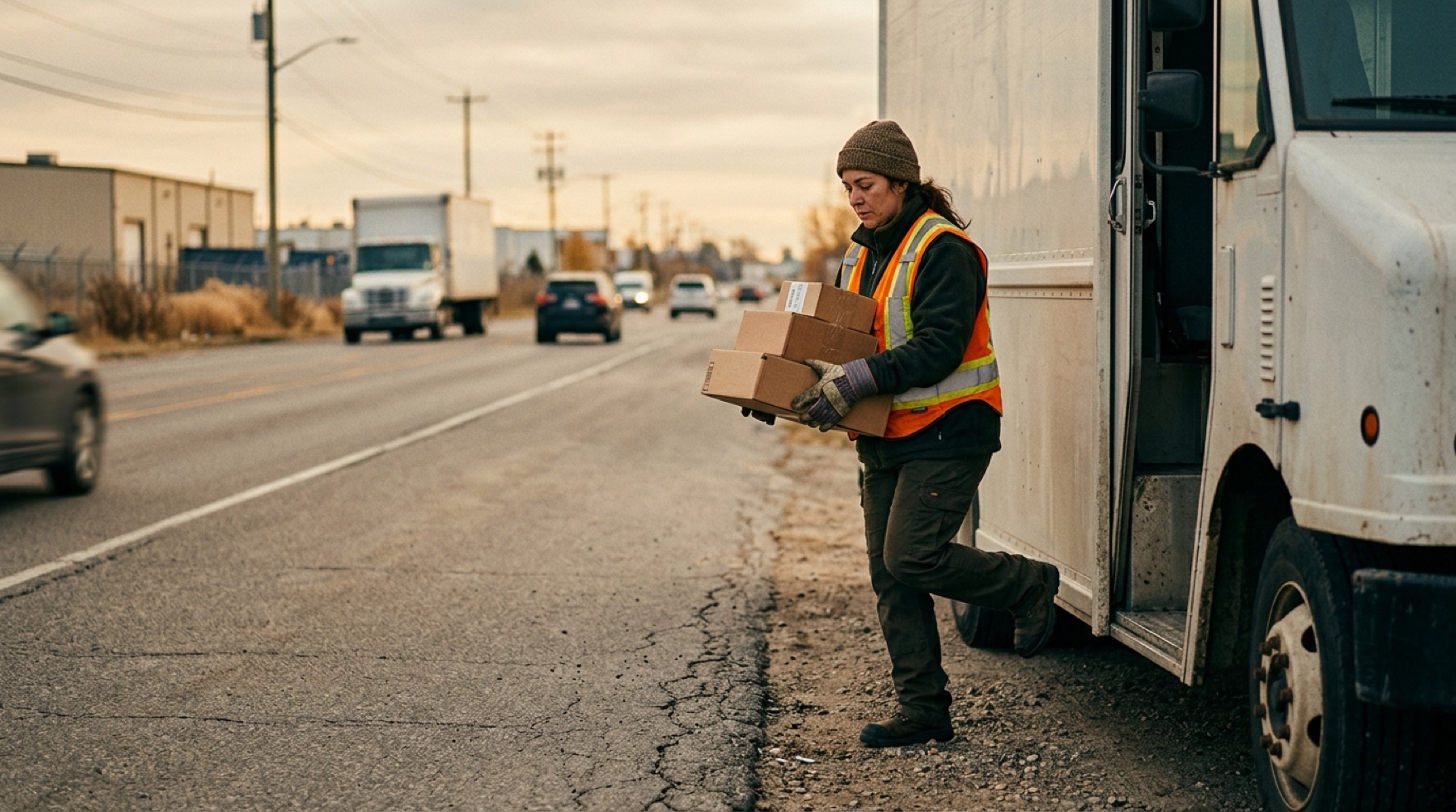
Delivery Driver Safety: Vehicle & Roadside Exposure
For a delivery or route-sales driver, the freight is rarely what causes the fatal injury. The vehicle and the roadway around it are. Transportation incidents are the single largest cause of work-related death, and the controls that matter most keep the driver belted in a maintained vehicle, out of the path of moving traffic on foot, and clear of a truck that can roll. Here is how that exposure breaks down and where the controls have to sit.
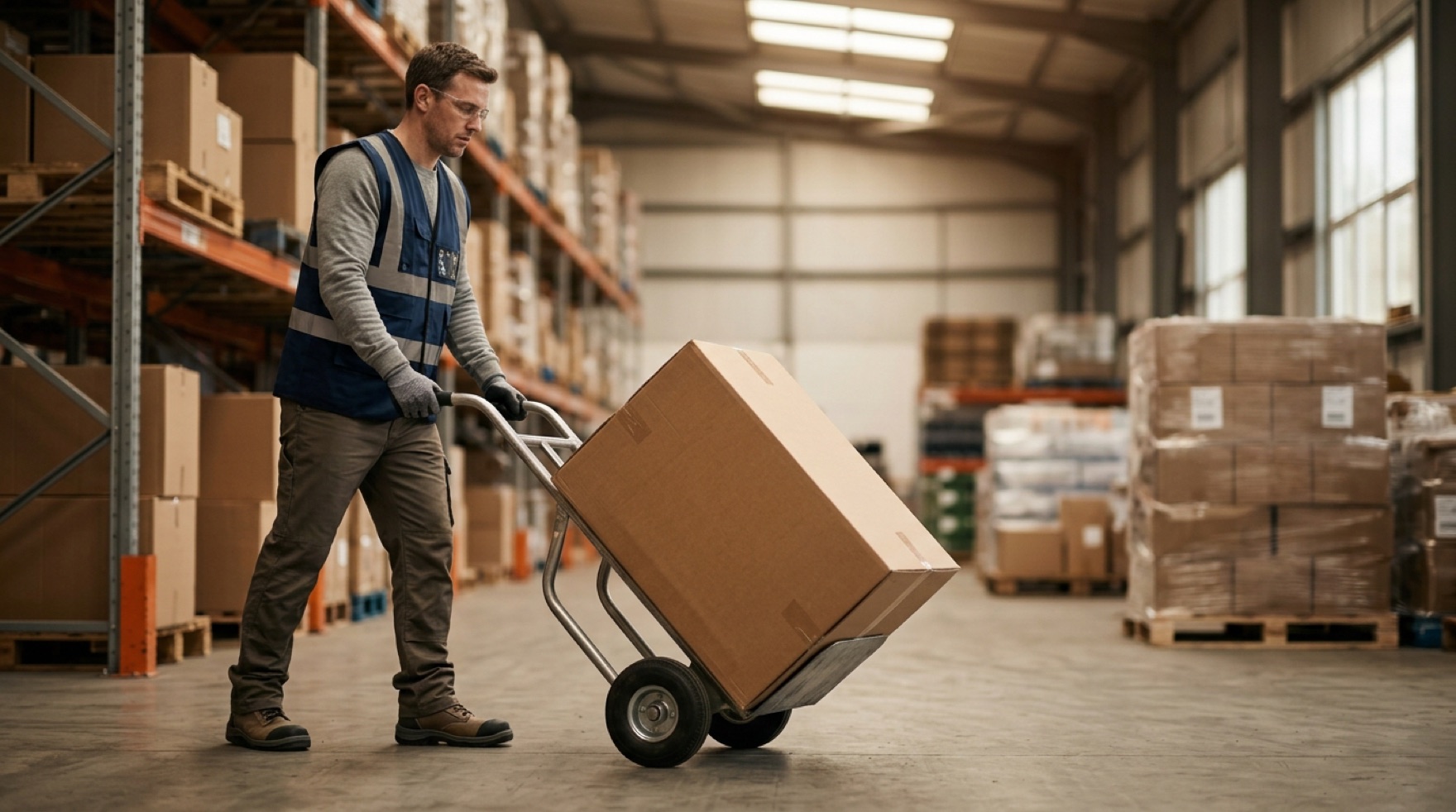
Safe Use of Hand Trucks & Dollies: A Step-by-Step Guide
A hand truck or dolly exists to keep a load off your back, but used badly it trades a lifting injury for a strain, a crushed foot, or a runaway load on a ramp. The technique that keeps it safe is specific: stack low and secured, push instead of pull, keep the force manageable, and control the route. Here is how to do each step.
Driver and route self-assessment
Review roadway, handling, and egress risks across your routes against the crash and overexertion patterns that dominate driver injuries.
Start the assessment →Driver safety guides
Practical guidance on fatigue management, safe egress, and cutting manual handling on the route.
Browse the guides →
Stay ahead of safety.
New articles, free templates, and regulatory updates in your inbox. No spam — unsubscribe anytime.