Woodworking & Millwork
The blade, the dust, and the dust cloud are three separate hazards.
Woodworking and millwork run table saws, jointers, shapers, and sanders that amputate and throw kickback, inside an environment loaded with wood dust. That dust is not just a nuisance: certain hardwood dusts are carcinogenic to the respiratory tract, and accumulated fine dust is a combustible-dust explosion hazard. Machine contact, respiratory exposure, and dust explosion are three distinct problems.
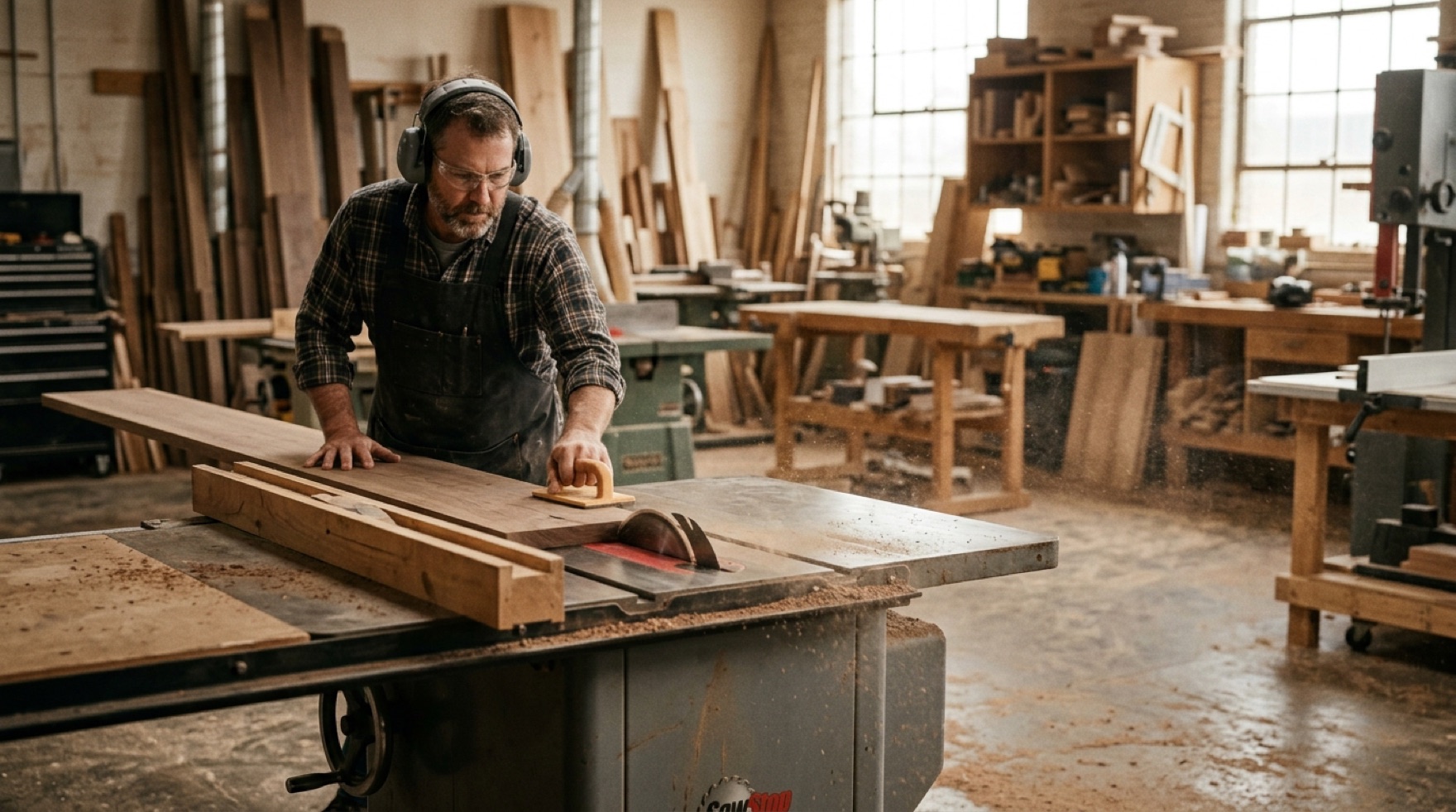
The cutting machines define the acute risk. Table saws, jointers, and shapers expose the operator to blade contact and to kickback, where stock is thrown back at the worker faster than they can react. Guarding, riving knives, feather boards, and push sticks keep hands and stock under control, and the injuries cluster where those aids are removed to make an awkward cut easier.
The dust defines the chronic and catastrophic risk. Wood dust is classified by IARC as a Group 1 human carcinogen linked to nasal cancers, so dust collection is a health control, not just housekeeping. Accumulated fine dust is also combustible, and a primary deflagration can loft settled dust into a far larger secondary explosion, which is why the fire codes require a dust hazard analysis. Add sustained noise from the machines, and the program has to control the blade, the airborne dust, the dust that settles, and the noise as separate lines of defense.
The hazards, and the controls that move the needle
Ordered by the hierarchy of controls — eliminate and engineer first, then treat matting, footwear, and PPE as the layers that catch what remains.
Blade contact and kickback
Table saws, jointers, and shapers expose hands to the blade and can throw stock back at the operator as kickback. Amputations and severe lacerations are the defining injuries of the woodshop.
- Keep blade guards, riving knives, and anti-kickback pawls in place
- Use push sticks, feather boards, and jigs to keep hands clear
- Consider saws with active blade-contact detection technology
- Maintain sharp, correctly set tooling to reduce kickback
- Train stock control and safe technique for each machine
Carcinogenic wood-dust inhalation
Wood dust is classified by IARC as a Group 1 human carcinogen associated with nasal cancers. Cutting, sanding, and shaping release respirable dust into the breathing zone continuously.
- Capture dust at the source with tool-mounted and machine collection
- Maintain an effective dust-collection system across the shop
- Substitute processes and tooling that generate less fine dust
- Provide respiratory protection where collection is insufficient
- Monitor dust exposure and keep housekeeping continuous
Combustible-dust explosion
Accumulated fine wood dust is combustible, and a primary deflagration can loft settled dust into a much larger secondary explosion. The fire codes require a dust hazard analysis to find and control these conditions.
- Complete a dust hazard analysis under the combustible-dust standards
- Contain and collect dust to prevent accumulation on surfaces
- Control ignition sources near dust-handling equipment
- Fit explosion protection on collection systems where required
- Use safe housekeeping methods that do not create dust clouds
Noise exposure from machines
Saws, planers, and routers generate sustained high noise that causes permanent hearing loss. A hearing conservation program applies at or above the 85 dBA action level.
- Reduce noise at the source with tooling and enclosures
- Isolate the noisiest machines and limit exposure time
- Run a hearing conservation program at the action level
- Provide hearing protection matched to the exposure
- Monitor noise and conduct audiometric testing
The programs that anchor the floor
Guarding and stock control
Blade guards, riving knives, and push sticks stay in use, and awkward cuts are set up with jigs rather than by removing the aids. Kickback and blade contact happen in the moments those controls are bypassed.
Dust collection and dust hazard analysis
Dust collection is a health and explosion control at once. A dust hazard analysis under the combustible-dust standards identifies where accumulation and ignition can combine, and drives containment, collection, and explosion protection.
Finish and solvent safety
Stains, lacquers, and solvents are applied with ventilation and the right respiratory protection, and flammable finishes are stored and handled to control ignition. Hazard communication covers the specific products in use.
In-depth guidance
View all 2 →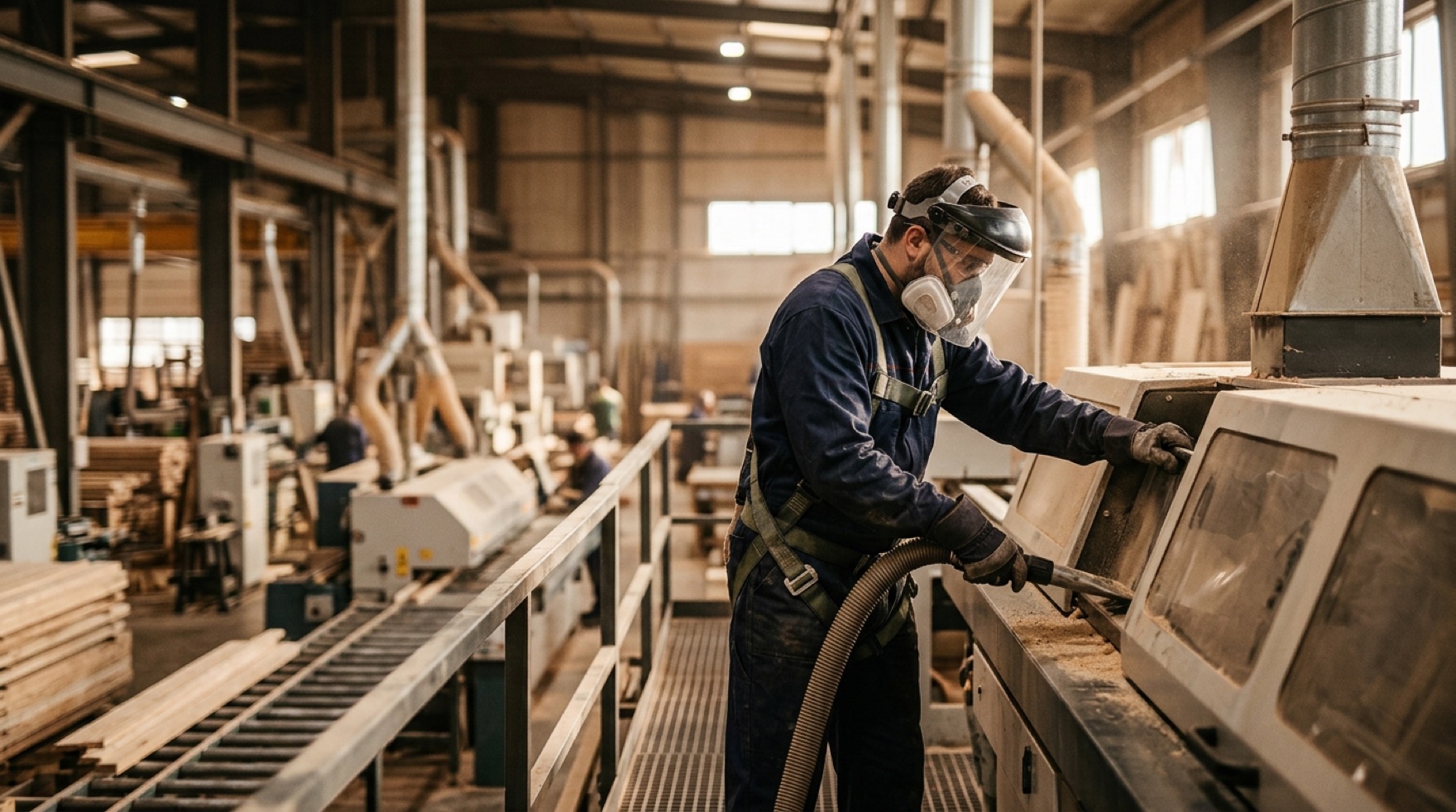
Combustible Wood Dust: NFPA 664 & Explosion Control
The dust that settles on rafters, ductwork, and light fixtures in a woodworking shop is not just a housekeeping nuisance. A layer thicker than an eighth of an inch is fuel, and the first small fire is rarely what kills anyone: the blast that shakes that layer loose and ignites it is. Here is how NFPA 664, NFPA 652, and OSHA's enforcement fit together, and what actually reduces the risk.
Woodworking Machine Guarding: Saws & Jointers (1910.213)
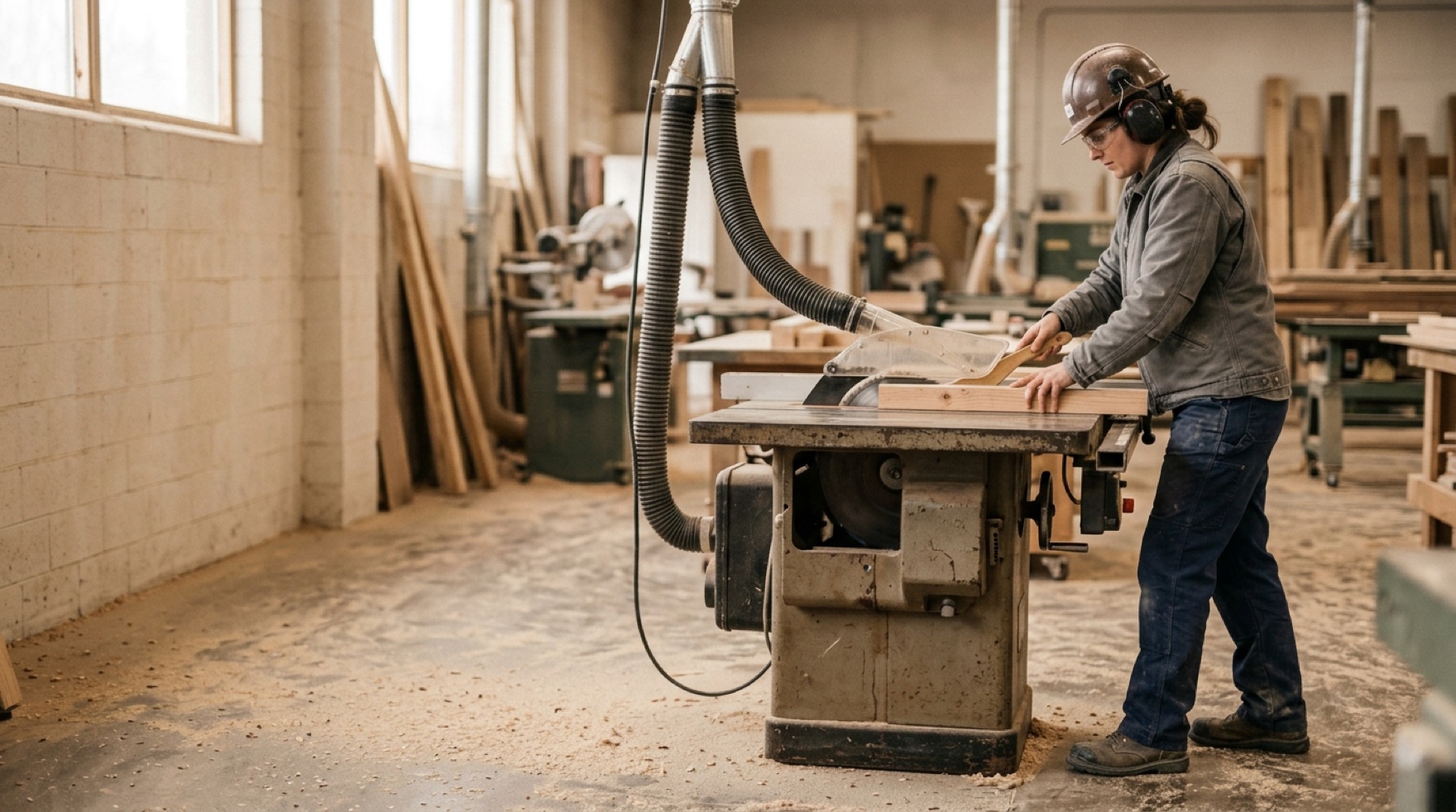
OSHA writes the guarding rules for woodworking machines one machine at a time. A table saw needs a hood, a spreader, and anti-kickback fingers; a jointer needs an automatic guard over the cutterhead and a knife projection held within an eighth of an inch. This is the machine-by-machine reference to 29 CFR 1910.213, and the one rule that ties them together.
Woodshop hazard self-assessment
Check your machine guarding, dust collection, combustible-dust controls, and noise program against the millwork hazard pattern.
Start the assessment →Woodworking safety guides
Practical guidance on saw guarding, dust collection, and combustible-dust management for woodworking shops.
Browse the guides →
Stay ahead of safety.
New articles, free templates, and regulatory updates in your inbox. No spam — unsubscribe anytime.