Painting, Coating & Finishing
Isocyanates, solvent vapor, and a flammable atmosphere in the spray booth.
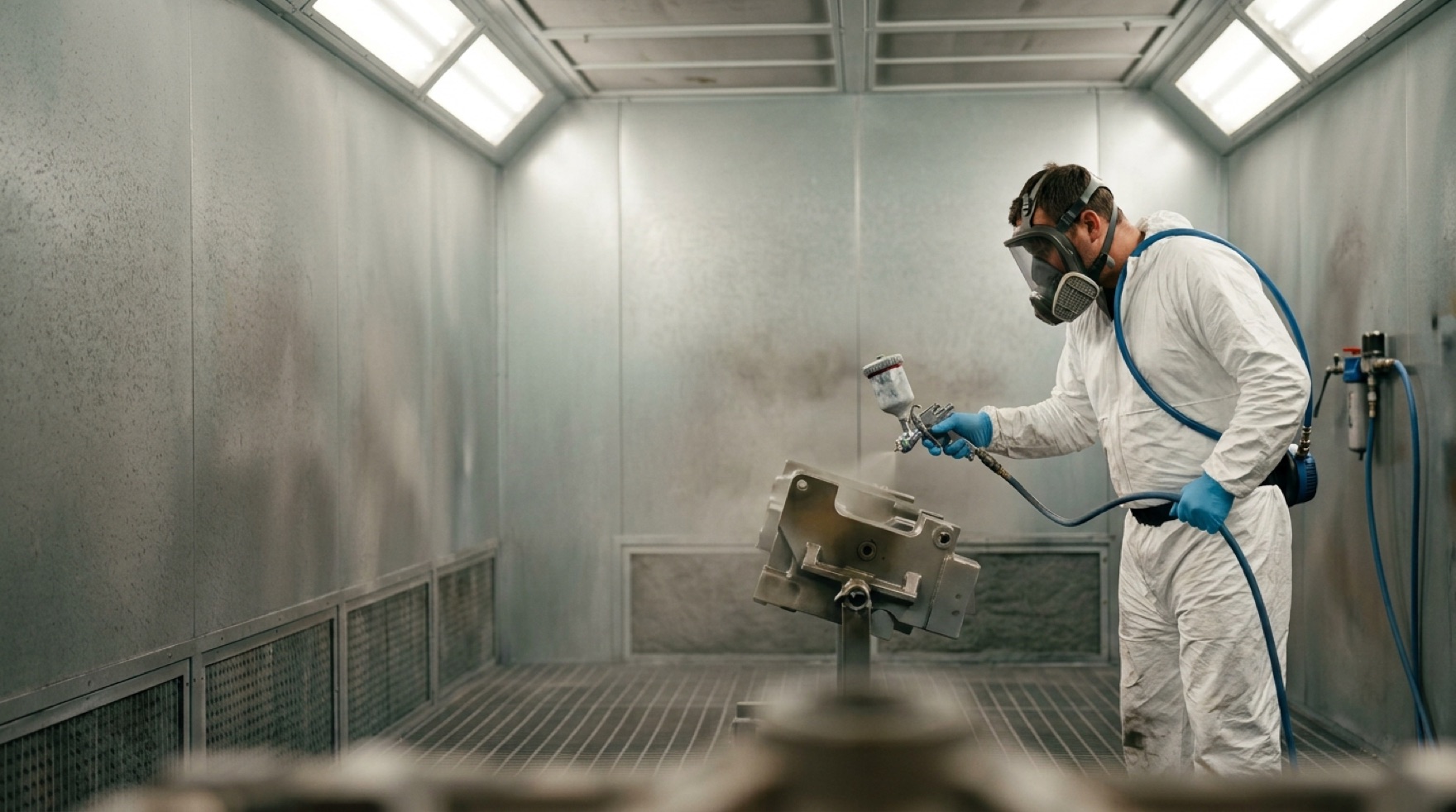
Industrial painting and coating expose workers to isocyanate hardeners and solvent vapors that sensitize the airway and irritate the skin, inside a spray environment that is flammable by nature. Respiratory protection and ventilation lead the program, alongside fire control in the booth and the chemistry of paint strippers used in refinishing.
The defining exposure in finishing is respiratory. Two-component coatings cure with isocyanate hardeners, which are potent respiratory sensitizers: once a worker is sensitized, even very low exposures can trigger occupational asthma. Solvent vapors add central-nervous-system and irritation effects. Because spraying generates a fine aerosol and vapor cloud, engineering ventilation and supplied-air respiratory protection carry the program, not a dust mask.
The booth environment adds fire and, in some work, a second chemical hazard. Atomized coating and solvent vapor create a flammable atmosphere that spray-finishing standards manage through booth design, ventilation, and ignition control. Paint strippers used in refinishing may contain methylene chloride, whose OSHA permissible exposure limit is 25 ppm as an 8-hour time-weighted average and which has caused fatalities in poorly ventilated stripping work. The order of protection is substitution and ventilation first, with respiratory protection sized to the residual exposure.
The hazards, and the controls that move the needle
Ordered by the hierarchy of controls — eliminate and engineer first, then treat matting, footwear, and PPE as the layers that catch what remains.
Isocyanate sensitization and asthma
Isocyanate hardeners in two-component coatings are among the leading causes of occupational asthma. Once sensitized, a worker can react to exposures far below any general limit, so prevention is the only reliable protection.
- Substitute lower-hazard coatings and curing systems where feasible
- Spray only in a ventilated booth with capture of overspray
- Provide supplied-air respiratory protection for spraying
- Protect skin, which is also a sensitization route
- Run medical surveillance for sensitization
Flammable spray atmosphere
Atomized coating and solvent vapor form a flammable atmosphere in and around the spray area. An ignition source in that atmosphere causes flash fire or explosion.
- Confine spraying to a compliant booth with adequate airflow
- Control ignition sources and bond and ground equipment
- Maintain booth ventilation, filters, and interlocks
- Store and handle flammable coatings to limit vapor
- Provide fire suppression appropriate to the operation
Methylene chloride in paint strippers
Some paint strippers contain methylene chloride, which is metabolized to carbon monoxide and has caused fatalities in enclosed stripping work. The OSHA permissible exposure limit is 25 ppm as an 8-hour time-weighted average.
- Substitute methylene-chloride-free strippers where possible
- Provide strong local exhaust ventilation for stripping
- Never strip in an enclosed space without engineered ventilation
- Provide appropriate respiratory protection and monitor exposure
- Train the specific hazards and symptoms of the product
Solvent-vapor inhalation and skin contact
Thinners and cleaning solvents release vapors that irritate the airway and affect the nervous system, and contact defats and irritates the skin. These are the routine background exposures of finishing work.
- Substitute lower-volatility, lower-toxicity solvents
- Provide ventilation at mixing, cleaning, and application points
- Supply solvent-resistant gloves and skin protection
- Keep containers closed and manage solvent waste
- Maintain safety data sheets and train under the HazCom standard
The programs that anchor the floor
Ventilation-first respiratory protection
Booth ventilation and overspray capture come first, and supplied-air respiratory protection covers the residual exposure during spraying. With isocyanates, prevention of sensitization is the goal, because a sensitized worker reacts below any limit.
Spray-booth fire safety
The booth is designed and maintained to keep the flammable atmosphere within limits and free of ignition sources. Filters, airflow, and interlocks are maintained because the fire risk depends on them working.
Stripper chemical management
Methylene chloride strippers are substituted where possible and never used in an enclosed space without engineered ventilation and monitoring. The product has caused deaths in exactly the confined, under-ventilated conditions workers are tempted to accept.
In-depth guidance
View all 2 →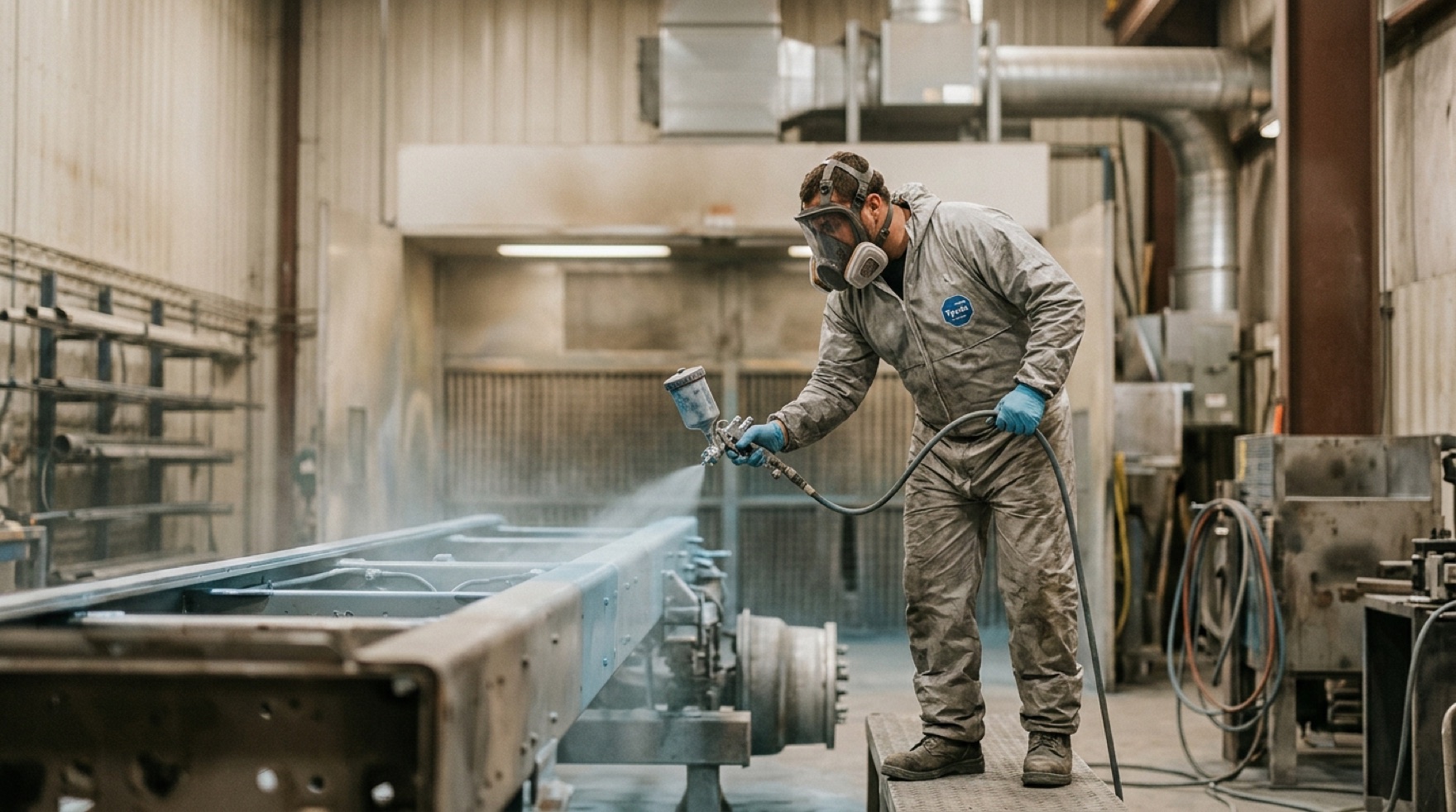
Isocyanate Exposure in Spray Painting & Coating
Isocyanates are the hardener in almost every two-component polyurethane coating sprayed in a finishing shop, and they are potent respiratory sensitizers. Once a worker is sensitized, an exposure far below any exposure limit can trigger an asthma attack. Here is what the limits actually are, why the number on the data sheet is not a safe target, and the controls that keep sprayers from becoming sensitized in the first place.
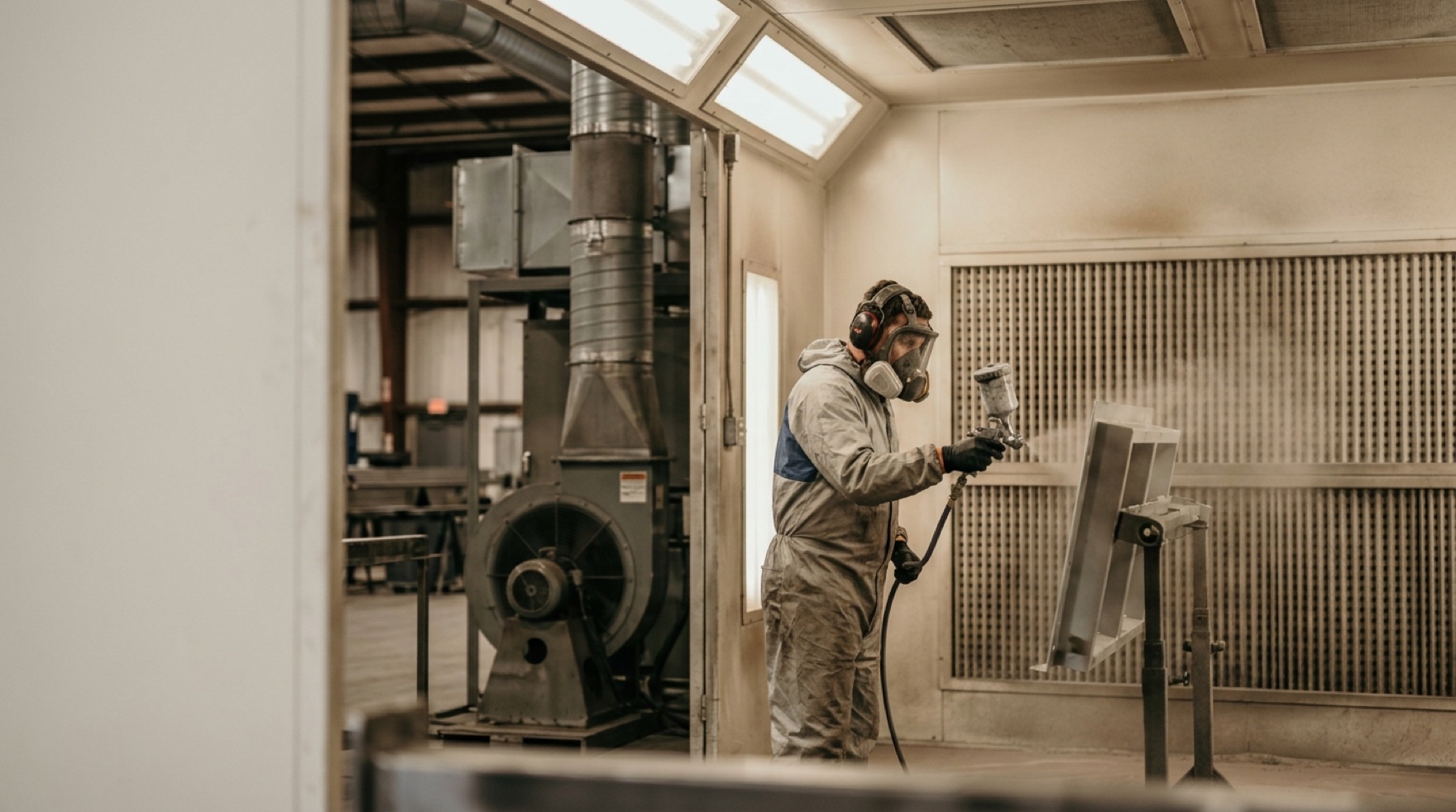
Spray-Booth Ventilation & Fire Control (29 CFR 1910.107)
A spray booth is a fire-control device first and a finishing tool second. 29 CFR 1910.107 pulls three levers at once: it dilutes flammable vapor with ventilation, keeps ignition sources out of the vapor, and stops combustible residue from building up. This is the clause-by-clause map of what the standard requires and why each rule is there.
Finishing hazard self-assessment
Check your ventilation, respiratory protection, booth fire controls, and stripper chemistry against the finishing hazard pattern.
Start the assessment →Finishing safety guides
Practical guidance on isocyanate control, spray-booth fire safety, and safer stripping for finishing operations.
Browse the guides →
Stay ahead of safety.
New articles, free templates, and regulatory updates in your inbox. No spam — unsubscribe anytime.