Machining, CNC & Toolmaking
Rotating spindles, hot chips, and coolant mist in the same breathing zone.
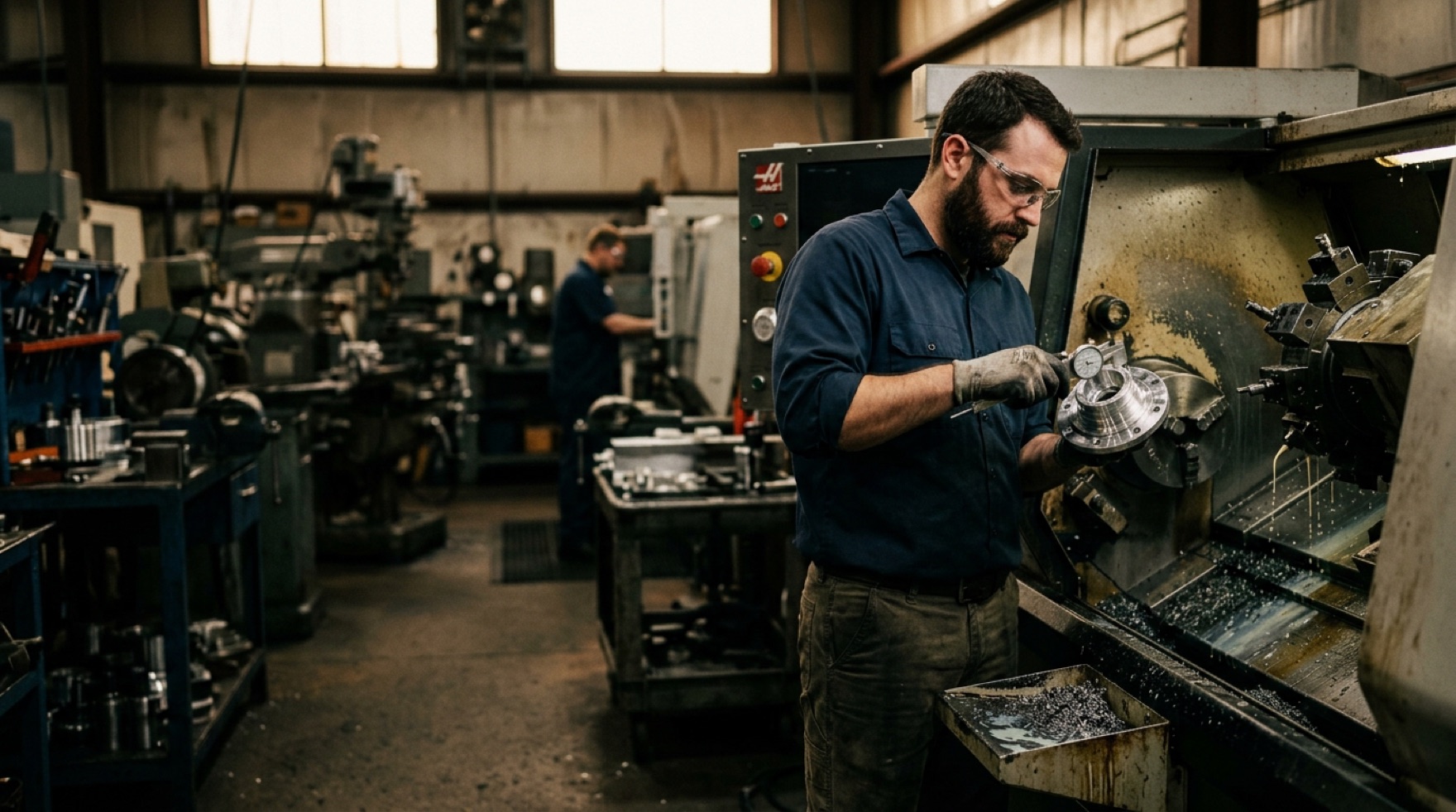
Machining and toolmaking put workers next to rotating spindles, chucks, and cutting tools that entangle and lacerate, alongside abrasive wheels that can burst. The chronic exposures matter as much as the acute ones: metalworking-fluid mist in the breathing zone, sustained noise, and the handling of sharp, hot swarf.
The rotating spindle is the signature hazard of the machine shop. Loose clothing, gloves, jewelry, or a rag caught in a turning chuck or cutter pulls a hand or arm into the machine before the operator can react, which is why entanglement is treated so seriously and why guarding and clothing rules are non-negotiable at the lathe. Abrasive wheels add a burst hazard that ring-testing, guarding, and correct mounting control.
Less visible but just as real is the coolant. Metalworking-fluid mist carries into the breathing zone during high-speed cutting and is linked to respiratory effects and dermatitis, and the NIOSH recommended exposure limit for the mist is 0.4 mg/m³ as a thoracic-fraction time-weighted average. Sustained noise drives hearing loss, and swarf and chips create laceration and burn hazards during clearing. The controls follow the hierarchy: enclose and ventilate the operation, maintain the fluid, manage the noise at the source, then use PPE for the residual exposure.
The hazards, and the controls that move the needle
Ordered by the hierarchy of controls — eliminate and engineer first, then treat matting, footwear, and PPE as the layers that catch what remains.
Entanglement at the spindle and chuck
A rotating spindle, chuck, or cutter catches loose clothing, gloves, or a rag and pulls the operator in faster than they can pull back. Entanglement is the most severe injury mechanism at the lathe and mill.
- Guard rotating parts and interlock access doors on CNC machines
- Prohibit gloves, loose clothing, and jewelry at rotating machinery
- Stop the spindle before measuring, cleaning, or adjusting
- Use brushes and hooks, never hands, to clear chips
- Train the specific entanglement hazards of each machine
Abrasive-wheel burst
A cracked or wrongly mounted grinding wheel can burst at operating speed and throw fragments with lethal energy. Ring-testing, guarding, and correct mounting keep the wheel intact.
- Ring-test wheels before mounting and inspect for damage
- Keep wheel guards in place and set the tool rest gap correctly
- Match wheel rating to the machine speed
- Let a new wheel run at speed before use, standing aside
- Provide face and eye protection for grinding
Metalworking-fluid mist exposure
High-speed cutting aerosolizes coolant into a mist that reaches the breathing zone and is linked to respiratory effects and dermatitis. The NIOSH recommended exposure limit for the mist is 0.4 mg/m³ as a thoracic time-weighted average.
- Enclose operations and provide mist collection at the machine
- Maintain fluid concentration, pH, and biocide to limit mist and bacteria
- Substitute lower-mist fluids and cutting strategies
- Provide skin protection and respiratory protection where needed
- Monitor mist exposure and maintain safety data sheets
Noise exposure at the machine
Cutting, grinding, and material handling produce sustained noise that drives permanent hearing loss. A hearing conservation program is required at or above the 85 dBA action level.
- Reduce noise at the source with tooling and speed selection
- Isolate or enclose the noisiest operations
- Run a hearing conservation program at the action level
- Provide hearing protection matched to the exposure
- Monitor noise and conduct audiometric testing
The programs that anchor the floor
Rotating-machinery clothing and guarding rules
No gloves, loose sleeves, or jewelry at a rotating spindle, and the spindle is stopped before any measurement or cleaning. Chips are cleared with tools, never hands, because the entanglement injury happens in a fraction of a second.
Metalworking-fluid management
Fluids are maintained for concentration and microbial control, and mist collection keeps the aerosol out of the breathing zone. This protects both the respiratory system and the skin, measured against the NIOSH recommended limit.
Setup lockout
Tool changes and setup that expose the operator to hazardous energy start with lockout and verification. The convenience of leaving a machine energized during setup is not worth the crush and entanglement risk.
In-depth guidance
View all 2 →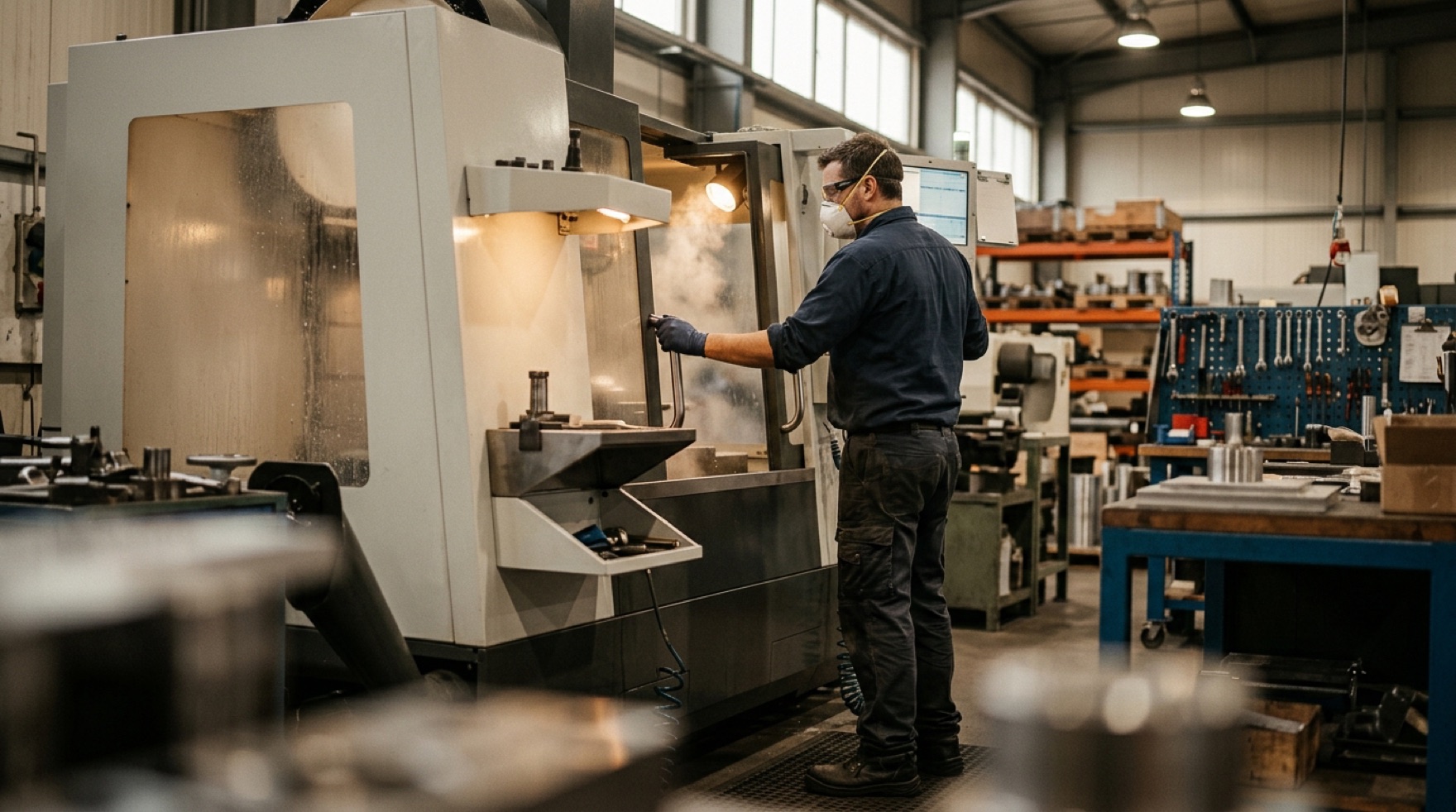
Metalworking Fluids & Coolant Mist Control on CNC
Flood coolant and through-spindle delivery keep a CNC cutting, but they also throw a fine aerosol into the operator's breathing zone all shift. There is no OSHA exposure limit written specifically for metalworking fluids, which leaves a wide gap between the enforceable oil-mist PEL and the far lower level NIOSH recommends. Here is what the numbers actually are, what the mist does to the lungs, and how to control it in the right order.
CNC Guarding, Swarf & Chip Hazards
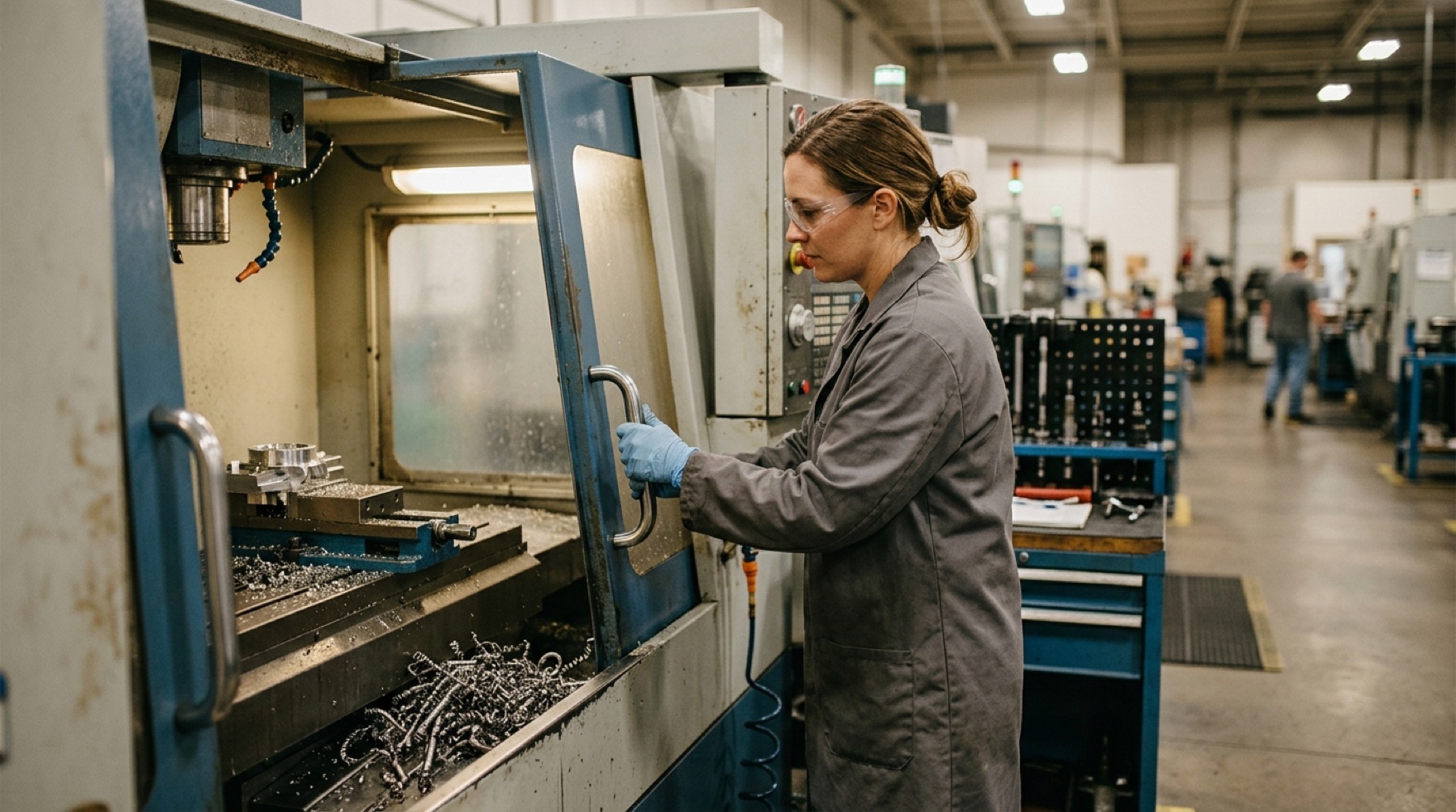
A CNC turning center hides its most serious hazard behind a closed door: a rotating chuck and workpiece that will entangle anything that touches them. Add hot, razor-edged swarf streaming off the tool and a chip conveyor moving under power, and the guarding question is not decorative. Here is what 29 CFR 1910.212 and the ANSI B11 machine-tool standards require, and why clearing chips by hand is where operators get hurt.
Machine-shop self-assessment
Check your rotating-machinery guarding, coolant mist controls, and noise program against the machining hazard pattern.
Start the assessment →Machining safety guides
Practical guidance on entanglement prevention, metalworking-fluid management, and abrasive-wheel safety.
Browse the guides →
Stay ahead of safety.
New articles, free templates, and regulatory updates in your inbox. No spam — unsubscribe anytime.