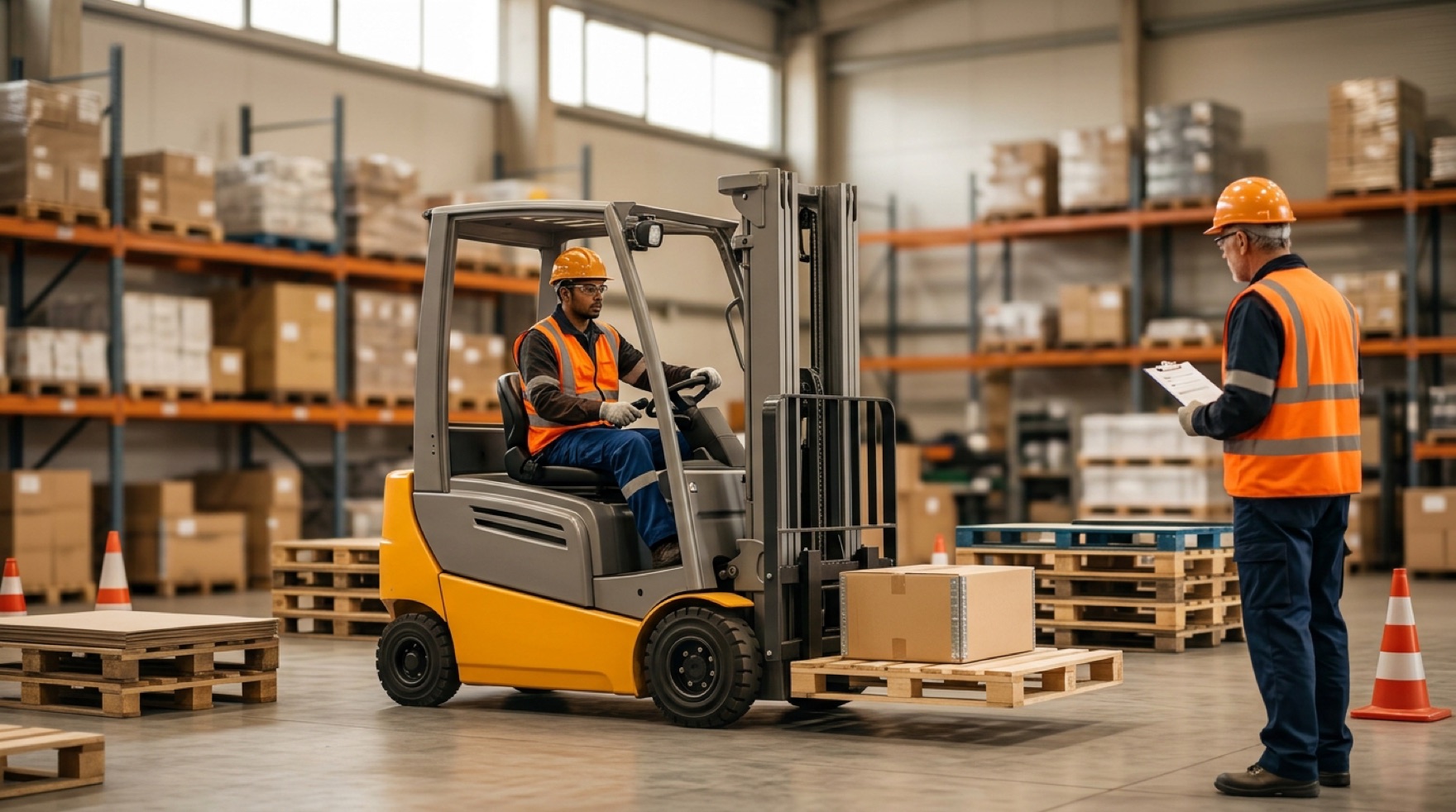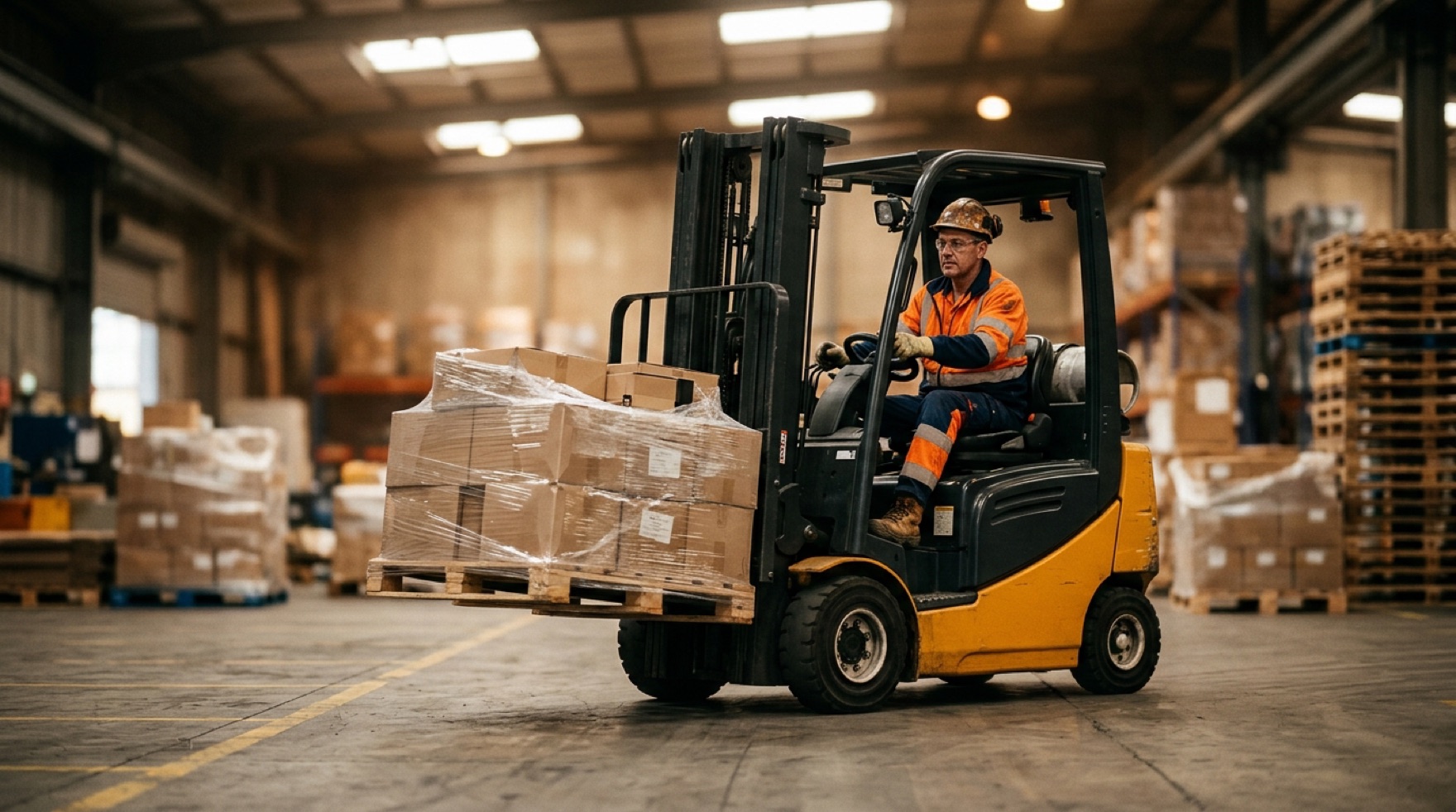
The short answer: The most reliable way to stop a forklift from striking a worker on foot is to keep them physically apart, then add engineering aids where paths must cross, and only then rely on rules and behaviour. Canada has no single national forklift rule: most workplaces fall under a province's or territory's OHS act and regulations, while federally regulated workplaces follow the Canada Labour Code Part II and the COHSR. Those regulations require the employer to organise the workplace so powered mobile equipment and pedestrians do not endanger each other, and CCOHS translates that duty into a concrete traffic-management approach.
Who sets the rules for forklift and pedestrian traffic in Canada?
The duty comes from the jurisdiction that governs the workplace, not from one national standard. Provincial and territorial OHS regulations require employers to plan and organise the movement of powered mobile equipment so that workers on foot are not endangered, and federally regulated employers carry an equivalent duty under the Canada Labour Code Part II and the COHSR. The lift-truck safety program itself is generally built around CSA B335-15 (R2020), "Safety standard for lift trucks." CCOHS provides the practical guidance, but it is guidance, not law: the enforceable requirement is whatever your provincial, territorial, or federal regulator sets. The starting point in every jurisdiction is a workplace-specific hazard assessment that maps where trucks and people actually meet.
What is the most reliable way to separate forklifts and pedestrians?
Rank the controls the way you would for any hazard: remove the conflict first, engineer it down next, and use rules last. The further up this list a control sits, the less it depends on a driver or a pedestrian getting it right in the moment, which is exactly where struck-by incidents originate.
- Separate the areas physically (most reliable). CCOHS recommends clearly defining separate areas for forklifts and pedestrians, including pedestrian exclusion zones and forklift exclusion zones, and enforcing them with physical barriers such as bollards or fences. Physical separation is the only control that still works when everyone is distracted.
- Engineer the crossings that remain. Where routes must cross, use designated crossing points, convex mirrors at blind intersections, and warning lights in the area. Set speed limits and the boundaries of exclusion zones with the braking distance of a loaded truck, the distance a load could fall, and forklift stability in mind. These aids do not remove the conflict, but they buy the sightline and the seconds a driver needs.
- Fit warning and sensing devices to the truck. CCOHS points to reversing alarms, proximity-sensing devices, cameras, communication radios, mirrors, and warning lights on the equipment itself. These are alerts, not barriers, so they support separation rather than replace it.
- Set traffic rules and reinforce behaviour (least reliable alone). Establish rules for pedestrians: walk only in designated areas, follow the right-of-way at intersections, make eye contact with the driver, and understand how a lift truck moves and stops. Add high-visibility clothing for anyone on foot in the operating area. Rules and PPE matter, but a program that leads with them while the walkway and the blind-corner mirror are still missing is leaning on the weakest layer.
Does Canadian law require a set separation distance or a reversing alarm?
There is no single national number. Whether a specific separation distance, speed limit, signalling method, or reversing alarm is mandatory depends on the province, territory, or federal regime that governs the site, and the details differ from one jurisdiction to the next. What is consistent is the underlying duty: the employer must organise the workplace and control the movement of powered mobile equipment so pedestrians are not endangered, and must act on the hazards its own assessment identifies. That is why CCOHS recommends separation, mirrors, and warning devices even where a given regulation does not list each one by name. Treat the CCOHS guidance as the practical floor, then confirm the enforceable traffic-control and signalling requirements with the OHS regulator for your jurisdiction.
How do you make the traffic plan hold on the floor?
Walk the site and map every place a truck path crosses a foot path, then fix the highest-traffic blind conflicts first. Prioritise dock approaches, aisle ends, doorways, and the pinch point where trucks, trailers, and people converge. Assign each crossing a control from the top of the ranked list rather than defaulting to a sign, and re-walk the map whenever the layout, the racking, or the product flow changes. Feed near-misses back into that map: the unsafe interaction almost always happens more than once before it becomes an injury, so a close-call report is the leading indicator that a crossing needs a stronger control.
| Control layer | Canada (per CCOHS guidance) | Reliability |
|---|---|---|
| Physical separation | Pedestrian and forklift exclusion zones enforced with bollards or fences | Highest (works when attention lapses) |
| Engineering at crossings | Designated crossings, convex mirrors, warning lights, speed limits set to braking distance | High (buys sightline and time) |
| Truck-mounted devices | Reversing alarms, proximity sensors, cameras, mirrors, warning lights | Moderate (alert, not a barrier) |
| Rules and PPE | Designated walking areas, right-of-way, eye contact, high-visibility clothing | Lowest alone (depends on behaviour) |
The practical takeaway for a Canadian employer is to design separation from a site hazard assessment, layer engineering aids and truck devices onto the crossings that remain, and then confirm the enforceable speed, signalling, and separation rules with the provincial, territorial, or federal OHS regulator that governs the workplace. Separation that is designed, audited, and adjusted is what keeps trucks and people apart when attention lapses, which it always eventually does.