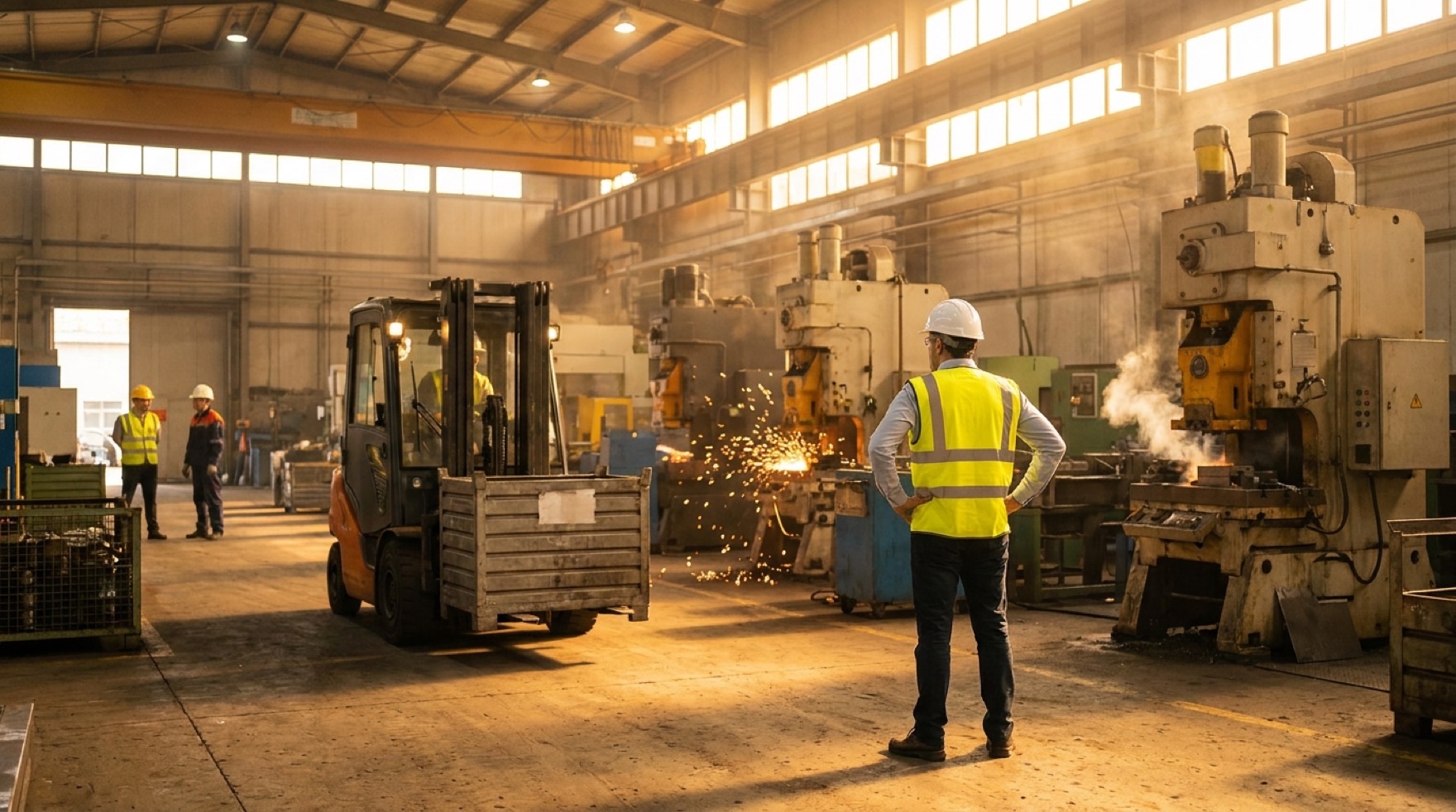
The short version: Frequency and severity are two different problems. A workplace can post a low injury count for years while a handful of high-energy hazards, the ones with enough force to seriously hurt someone, sit under-controlled. Energy-based safety flips the question. Instead of spreading equal attention across every minor first-aid case, it asks where the dangerous energy is and puts the strongest, most reliable controls there.
Ask most safety teams how they are doing and they will quote an injury rate. It is the number everyone knows, and for a long time it has been falling. That is real progress worth being proud of.
But a falling injury count answers one question, not two. It tells you minor injuries are getting rarer. It does not tell you whether the few things that can end a career are handled.
A low injury count can hide your worst exposures
Over the past two to three decades, recordable injury rates across industry have dropped sharply. Fatality rates have not moved the same way. The gap is the whole reason energy-based safety exists.
The Bureau of Labor Statistics recorded 5,283 fatal work injuries in the United States in 2023. Transportation incidents were the single largest category at 36.8 percent, and falls, slips, and trips accounted for 885 of the total. Those are releases of high energy, not paper cuts.
The events that seriously hurt people tend to come from a different place than the events that fill an injury log. Research summarized by the Campbell Institute and similar bodies found only a weak link between frequent minor injuries and serious ones, because they involve different hazards and different failure paths. An organization can carry an enviable injury rate and still be exposed to a fatality.
So a quiet log is good news about one thing. It is not proof the worst exposures are under control.
What "high energy" actually means
Every injury is contact between a person and a release of energy. Small releases leave a bruise. Large releases change a life.
Researchers led by Matthew Hallowell put a practical number on the line between the two. When a hazard carries roughly 500 foot-pounds of energy or more, contact tends to produce a serious injury or fatality rather than a minor one. For scale, a single cinder block dropped from one story reaches about 532 foot-pounds.
The "energy wheel" sorts these hazards into a short list: gravity (falls and falling loads), motion (vehicles and moving equipment), mechanical and stored energy, electrical, pressure, temperature, and chemical. Practitioners have a blunter name for them, the stuff that can kill you.
The list is short on purpose, and that is the useful part. Most of what fills a typical injury log, a scrape, a strain, a minor burn, sits well below that line. The high-energy sources are few enough to name on one page and watch closely.
Aim the strongest controls at the short list
Naming high energy pays off because it tells you exactly where to point your best work. The tool for that is a direct control: a safeguard that passes three tests. It targets the specific energy source, it reduces or removes exposure to that energy, and it keeps working even when someone makes a mistake.
| High-energy source | Everyday example | A direct control that passes the test |
|---|---|---|
| Gravity | Load lifted overhead, work at height | Rigging rated for the load and kept out from underneath; a guardrail or tied-off fall arrest |
| Motion | Forklift or vehicle near people on foot | Hard barriers and separated walkways, not paint and a spotter alone |
| Electrical | Energized panel or line | Verified de-energization and lockout before hands go in |
| Mechanical and stored | Machine that can cycle or spring back | Energy isolation and blocking before anyone reaches inside |
| Pressure and temperature | Pressurized line, hot surface or fluid | Depressurize and isolate before opening; shielding and distance for heat |
Notice the pattern. These controls remove or block the energy itself rather than asking a worker to stay perfectly alert for an entire shift. That reliability is the point, and it is what separates a direct control from a warning sign.
How to shift the focus
Start by counting exposures, not just incidents. Walk the site and tally how often people work near one of those energy sources, because a hazard you have never counted is one you cannot rank. The result is a plain map of where a bad day would actually come from.
Then check the controls on the top few, not all hundred risks. Pick the handful of high-energy tasks that show up most often and confirm each one has a direct control in place, because effort spread evenly across every minor risk leaves the lethal ones under-served. You end up protecting people from the events that carry the worst outcomes.
Make high-energy work visible in the numbers you report. Track the share of high-energy tasks that have a verified direct control, because what gets reported gets resourced. Leaders start funding the controls that prevent serious harm instead of only watching the recordable rate tick down.
Keep celebrating the small wins, and do not mistake them for the whole picture. A falling minor-injury count is worth recognizing, because it shows people are engaged and paying attention. Pairing it with a high-energy measure keeps a quiet log from being read as a finished job.
None of this means minor injuries do not matter. It means severity and frequency are two separate problems, and only one of them ends careers. Name the few sources of energy that can seriously hurt someone, put your best and most reliable controls there, and measure whether those controls are actually in place. A site that does that is not only quieter. It is safer where it counts most.