The short answer: Under 29 CFR 1910.242(a), the employer is responsible for the safe condition of all hand and portable powered tools used by employees, including tools the employees own and bring themselves. The one hard numerical rule in the standard is 1910.242(b): compressed air used for cleaning must be reduced to less than 30 psi and used only with effective chip guarding and personal protective equipment, and OSHA has stated it should never be used to clean a person or their clothing. Beyond the regulation, the recurring line-side hazards are torque reaction from powered fastening tools and the grip and posture strain of repetitive hand work, both controlled by tool selection, suspension, and reaction fixtures rather than by a clause.
Who is responsible for hand and power tool safety on the line?
The employer is, for every tool in use, including the ones workers bring from home. 29 CFR 1910.242(a) states that each employer shall be responsible for the safe condition of tools and equipment used by employees, including tools and equipment which may be furnished by employees, per the text of 1910.242. There is no carve-out for a personal screwdriver or an operator's own pliers: if it is used for the work, its condition is the employer's duty.
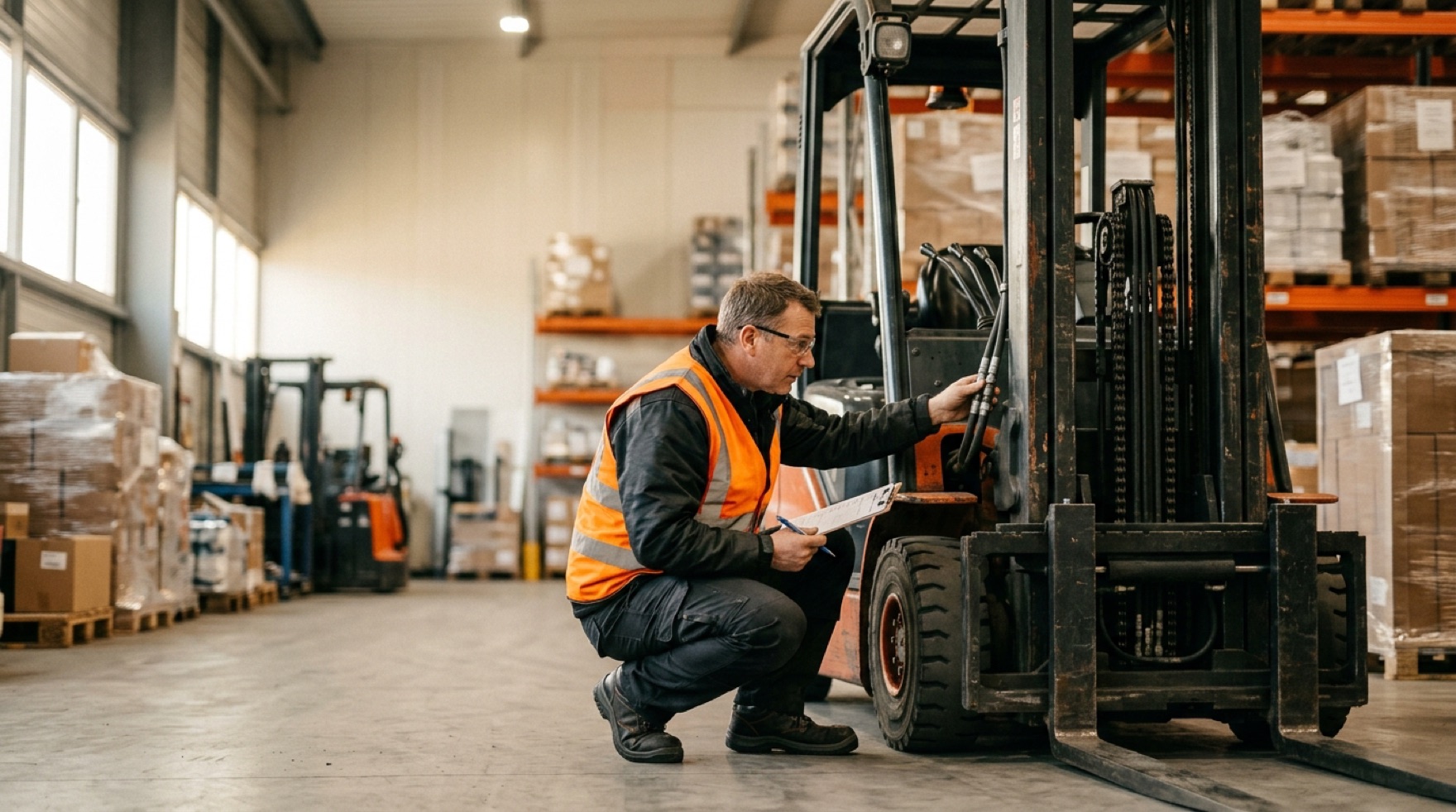
The operational meaning is that a tool-control program has to cover the whole population of tools at the station, not just the ones on the asset register. That means inspecting hand tools for mushroomed heads, split handles, and worn jaws, taking damaged tools out of service, and setting a policy for personal tools brought onto the line so a cracked or modified tool does not become the employer's uncontrolled hazard. The standard makes tool condition an owned responsibility, which is what turns an informal tool box into a maintained one.
What are the rules for compressed air at the workstation?
Compressed air for cleaning must be delivered at less than 30 psi and used with chip guarding and PPE, and it must never be aimed at a person. 29 CFR 1910.242(b) requires that compressed air shall not be used for cleaning purposes except where reduced to less than 30 psi, and then only with effective chip guarding and personal protective equipment, again per the standard text. The under-30-psi rule limits the pressure that can be driven into the skin or eyes if the nozzle is dead-ended.
OSHA has applied that rule directly to the common shop habit of blowing dust off clothing or skin. In a 1994 letter of interpretation, OSHA stated that employers should not allow employees to use compressed air for cleaning themselves or their clothing in general industry, because the practice risks injury to the eyes and other body parts including the respiratory system, and noted that maritime standards prohibit it outright as good practice for all industries. The transferable point for an assembly line is specific: the air line at the station is for the process, chip guarding and eye protection are conditions of using it for cleaning at all, and it is never a way to blow swarf or dust off an operator. Treat the air gun as regulated equipment, not a convenience.
How do you control torque reaction and grip strain from powered tools?
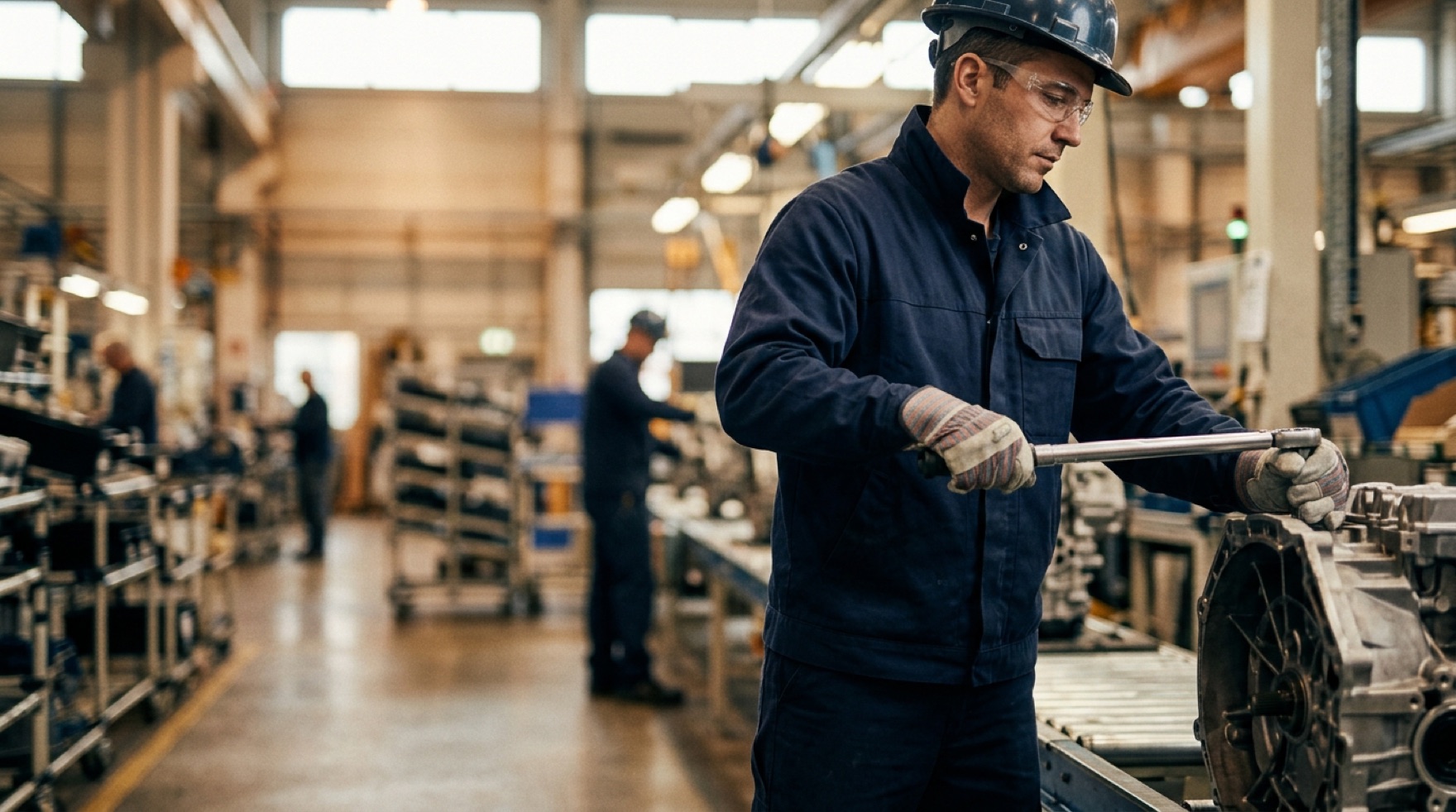
Control the reaction force with fixtures and suspension, and control grip strain with tool and handle design, because a powered fastening tool loads the operator every cycle even when it never fails. When a nutrunner or air wrench reaches torque, that torque reacts back through the operator's hand and wrist, and on a repetitive line that reaction is a forceful exertion repeated hundreds of times a shift. The strongest control is to take the reaction out of the hand: torque-reaction arms and fixtured tool holders absorb the reaction into the structure rather than the wrist, and tool balancers or articulating arms carry the tool's weight.
Handle and trigger design carry the rest. CCOHS hand-tool guidance recommends selecting tools so you bend the tool, not the wrist, keeping the wrist out of flexion, extension, or deviation, and using a power-grip handle rather than a pinch grip, with a longer trigger that lets two or three fingers activate the tool to cut the strain that drives trigger finger, per CCOHS hand-tool design guidance. It also advises supporting heavier tools, roughly those over 1.4 kg used in one hand or 2.3 kg used away from the body, with a counterbalance, holder, or articulating arm rather than the operator's arm. Those measures reduce the force and awkward posture that the ACGIH Hand Activity threshold scores, which is where the tool hazard and the repetitive-strain hazard on the line become the same problem.