A mat is usually the first thing bought when someone complains about standing all day, because it is the easiest thing to buy. It belongs in the mix, but it is also the most oversold control in the building. The Canadian Centre for Occupational Health and Safety (CCOHS) sets out both what matting does and where it stops. In this article, we'll look at the two different jobs matting does, why the mat is the last layer against standing fatigue, how to choose one that helps, how to keep it from becoming a hazard of its own, and where to learn more.
Two Different Mats for Two Different Jobs
Matting quietly does two things at once, and crews tend to buy for one and forget the other. One job is footing: keeping a foot on a wet, greasy floor. The other is the ache — the leg swelling and low-back fatigue that comes from standing on a hard floor all shift. The CCOHS ties prolonged standing to sore feet, leg swelling and varicose veins, muscle fatigue, and low-back pain.
Treating them as one purchase is the mistake. A soft comfort mat at a greasy fryer, or a solid anti-fatigue pad where liquid needs to drain, is the wrong tool for the spot. Where it is wet, footing is the sharper risk, because a slip by the fryer becomes a burn, so drainage and grip lead and comfort follows. Walk the area and match the mat to what the floor is actually doing:
- Wet, greasy zones (fryer, wet cook line, dish pit, wash-down): a grease-resistant drainage mat or duckboard with a grit top, nitrile rubber, drainage holes, and a wet grip around 0.55 or better. Keep the drains under it clear or water pools on top.
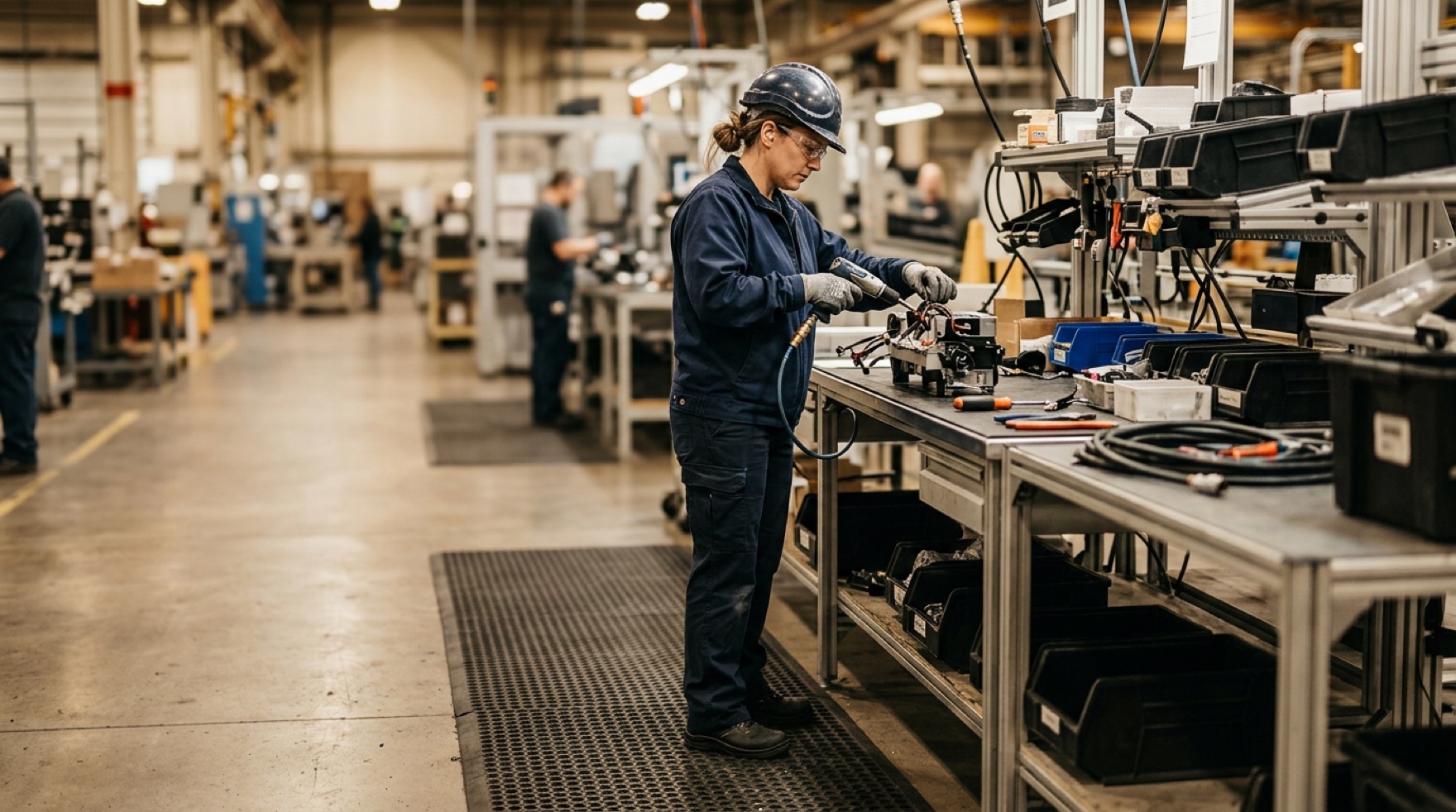
- Dry standing stations (assembly bench, prep table, gauging bench, salon chair): a cushioned anti-fatigue mat with a beveled border. This is where comfort leads.
For Fatigue, the Mat Is the Last Layer
Standing all shift wears people down because the legs stay locked and blood pools, not because the floor is hard. A mat softens one part of that, but it does nothing about the fact that the worker never gets to change posture. So on a dry standing job, work the stronger controls first and treat the mat as the finish rather than the answer.
- Break up the standing. A sit-stand option, or rotating between standing and seated tasks, removes the static load instead of padding it. This is the single biggest win.
- Fix the station. Set bench or chair height to the task and add a footrail to shift weight onto, so the worker can move rather than stand frozen.
- Mind the reach, not just the feet. At a salon chair the load is static standing plus arms-up, leaning-over reach, which is why the ache lands in the feet, shoulders, and low back at once. A mat cannot touch the reach; rotating tasks and a stool for seated portions can.
- Then flooring, footwear, and the mat. Resilient flooring and supportive shoes spread the load wider than one mat, and the anti-fatigue mat is the point-of-use comfort layer once the rest is set.
Our piece on assembly-line ergonomics covers the station side in full.
Picking a Mat That Helps
Once you know which job the spot needs, the selection target is controlled springiness for comfort mats and grip for drainage mats, not maximum plush. Run down this list:
- Firm, not plush. Softer and thicker is not better. Too soft and the legs work overtime to stay stable, which adds fatigue. Aim for something you can stand and pivot on without wobble.
- Sized to the working area. Big enough that the worker is not stepping on and off an edge every cycle, and kept clear of pedals and foot controls.
- Sloped, beveled edges and a non-slip underside. A square edge is a toe-catch; beveled edges also let carts roll over them. In wet zones, add drainage holes and a grease-rated top surface.
Maintenance, or the Mat Becomes the Hazard
A curled corner is the trip hazard you were trying to avoid, and a drainage mat that is never lifted and washed turns into a greasy, sliding hazard of its own. Put the mats on the same walk as everything else: lift and clean them on a schedule, keep the drains beneath them clear, and pull any mat that is curling, worn smooth, or sliding. Get this wrong and the mat trades foot fatigue for a same-level fall.