Commercial Baking
Flour dust sensitizes the lungs while the mixer and the oven wait for a hand.
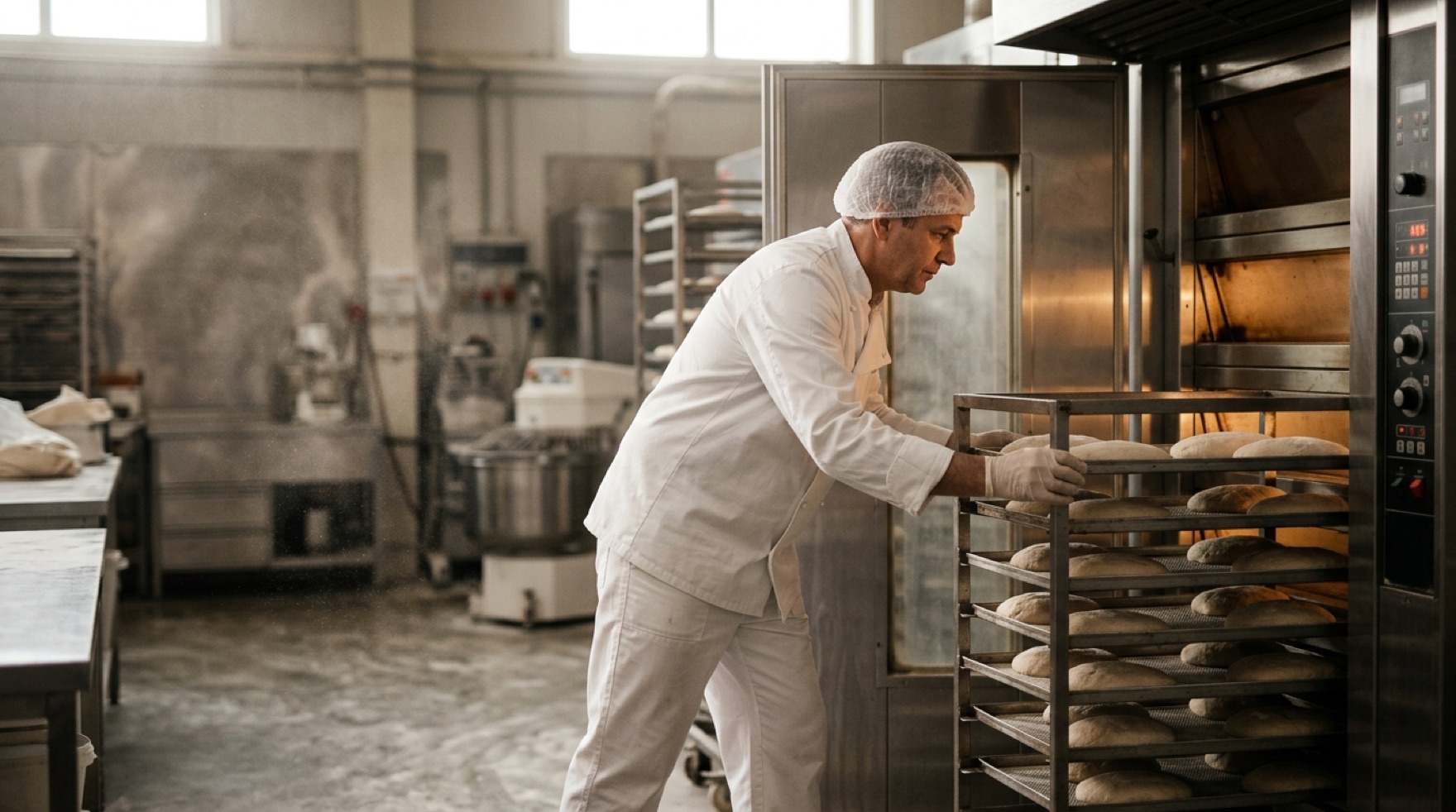
Commercial baking pairs a respiratory sensitizer, airborne flour dust, with powered dough mixers and dividers that carry amputation hazards, in a hot environment built around ovens. The result is a combination of baker's asthma, machine-contact injuries, thermal burns and heat strain, and the repetitive handling of dough, pans, and racks.
Flour dust is the exposure people underestimate. Repeated inhalation of flour and enzyme additives sensitizes the airway and causes baker's asthma, one of the most common forms of occupational asthma. Because it develops over time and looks like ordinary dust, the risk is easy to dismiss until a worker can no longer tolerate the bakery. The ACGIH threshold limit value for inhalable flour dust is 0.5 mg/m³, and dust control at tipping, sifting, and mixing is the practical protection.
The machines and the heat add acute hazards. Spiral mixers, dividers, and moulders carry amputation and caught-in energy, and the injuries cluster during cleaning and clearing, when guards come off. Ovens, proofers, and hot pans cause contact burns, and the ambient heat adds strain, though there is no federal OSHA heat standard, so the General Duty Clause and a heat-illness plan apply. Repetitive lifting of dough, pans, and rack trolleys rounds out an injury profile that spans the lungs, the hands, and the back.
The hazards, and the controls that move the needle
Ordered by the hierarchy of controls — eliminate and engineer first, then treat matting, footwear, and PPE as the layers that catch what remains.
Flour-dust sensitization and baker's asthma
Repeated inhalation of flour and enzyme additives sensitizes the airway and causes baker's asthma. The ACGIH threshold limit value for inhalable flour dust is 0.5 mg/m³, and sensitized workers react at low exposures.
- Substitute low-dust flour handling and pre-weighed ingredients
- Provide local exhaust at tipping, sifting, and mixing
- Use dust-controlled dispensing and gentle handling methods
- Provide respiratory protection where dust control is insufficient
- Run health surveillance for respiratory sensitization
Dough-machine amputation and caught-in
Spiral mixers, dividers, and moulders carry amputation and caught-in energy at the bowl and rollers. The severe injuries cluster during cleaning and clearing, when guards are removed.
- Interlock bowl guards and roller access on dough machines
- Lock out energy before cleaning or clearing a jam
- Design for tool-free cleaning without reaching into hazards
- Prohibit reaching into a bowl or nip while the machine can run
- Train operators and cleaners on machine-specific hazards
Oven heat, burns, and heat strain
Ovens, proofers, and hot pans cause contact burns, and the ambient heat around the oven line adds heat strain. There is no federal OSHA heat standard, so the General Duty Clause and a heat-illness plan apply.
- Shield hot surfaces and provide heat-resistant handling tools
- Provide heat-resistant gloves and arm protection for oven work
- Ventilate and cool the oven area to reduce ambient heat
- Schedule hydration and recovery under a heat-illness plan
- Train recognition and response for burns and heat illness
Repetitive lifting of dough, pans, and racks
Handling dough troughs, sheet pans, and rack trolleys through the shift loads the back and shoulders. Overexertion and repetitive strain accumulate in production baking.
- Provide lift assists, tippers, and height-adjustable equipment
- Design rack and pan handling to reduce reach and load
- Rotate tasks and build in recovery time
- Provide well-maintained trolleys with good casters
- Train handling technique as a supporting layer
The programs that anchor the floor
Flour-dust control
Dust control at tipping, sifting, and mixing is the primary protection against baker's asthma, measured against the ACGIH limit. Because sensitization is often irreversible, keeping exposure low protects a worker's whole career, not just the shift.
Dough-machine lockout
Cleaning and clearing mixers and dividers start with lockout of energy. The bowl and rollers hold the amputation risk, and it is realized in the moment a hand goes in while the machine can still move.
Heat and burn management
With no federal heat standard, a heat-illness plan under the General Duty Clause covers hydration, recovery, and acclimatization, while shielding and heat-resistant PPE address contact burns from ovens and pans.
In-depth guidance
View all 1 →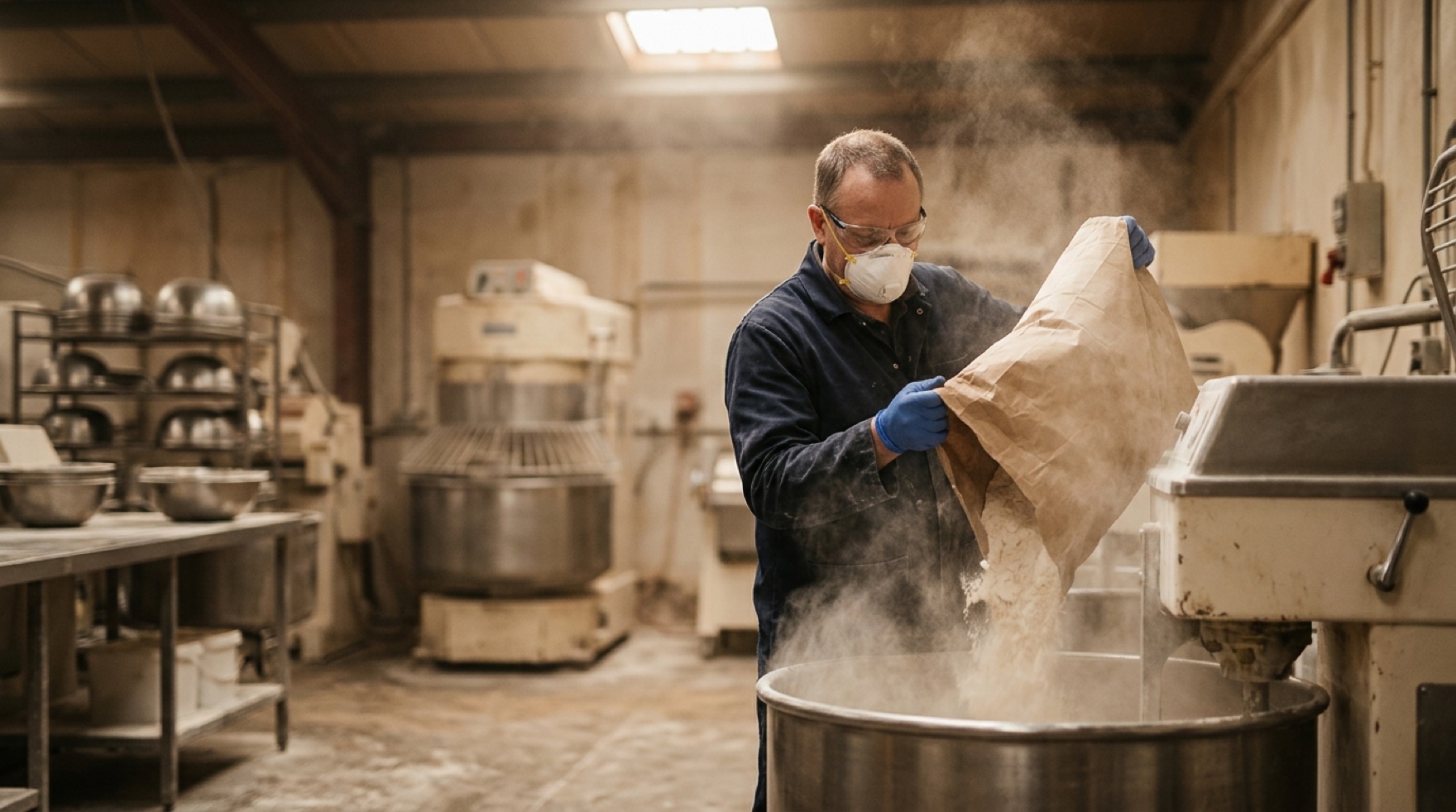
Bakery hazard self-assessment
Check your flour-dust control, dough-machine guarding, and heat management against the production-baking hazard pattern.
Start the assessment →Bakery safety guides
Practical guidance on flour-dust control, machine lockout, and heat management for commercial bakeries.
Browse the guides →
Stay ahead of safety.
New articles, free templates, and regulatory updates in your inbox. No spam — unsubscribe anytime.