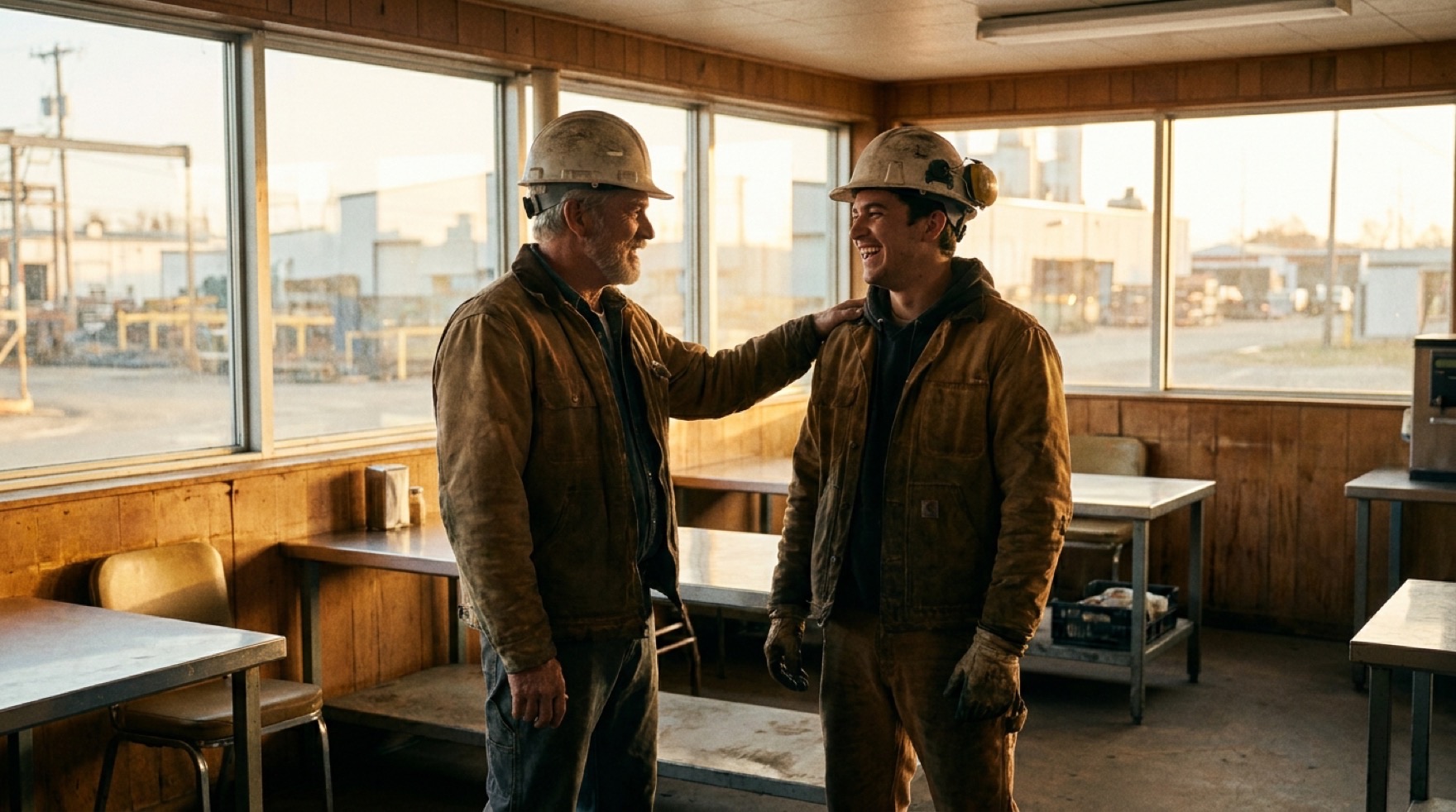
The short version: A mind that is exhausted, grieving, or stretched thin makes the same kind of slips a tired body does, which is why mental health belongs inside the safety conversation and not off to one side of it. You do not need clinicians on the floor to make a difference. You need leaders who talk about it plainly, supervisors trained to notice and ask, help that is easy to find and genuinely private, and enough trust that people speak up before things get heavy.
On a busy floor, attention is a safety control. It is the thing keeping fingers out of pinch points and feet clear of the forklift aisle. We already respect what fatigue does to a body. We are slower to admit that grief, a money worry, or a rough stretch of sleep pulls attention somewhere else just as hard.
This is not a soft topic bolted onto the real work. It is part of the real work.
A distracted mind is a safety issue too
The scale is bigger than most crews assume. The World Health Organization estimates that about 15 percent of working-age adults live with a mental health condition, and that depression and anxiety alone cost roughly 12 billion working days a year worldwide.
Those are not people somewhere else. They are on the shift now, doing the job, mostly doing it well. The point is not that a struggling worker is a hazard. It is that a mind carrying a heavy load has less to spend on the task in front of it, and the task in front of it often has moving steel in it.
NIOSH makes the same connection through its Total Worker Health approach, which treats protection from workplace hazards and the promotion of worker well-being as one integrated effort rather than two programs that never talk. It also names work itself, the hours, the workload, the pace, as a real influence on health. Safety and well-being are the same conversation.
Why people stay quiet in these settings
Industrial and skilled-trades culture runs on showing up, pushing through, and not making a fuss. That is a genuine strength. It is also, quietly, a reason people keep hard things to themselves.
When toughness is the currency, admitting a rough patch can feel like handing over a weakness. People worry about being seen as unreliable, about losing hours, about the next promotion going to someone who never flagged a problem. So they say nothing, and the struggle rides in on the next shift anyway.
Stigma is the thing keeping the door shut. The good news is that stigma responds to what a workplace does out loud.
Leaders talking about it plainly
The cheapest, fastest move costs nothing but nerve: a supervisor or a plant manager saying, in normal words, that having a hard time is normal, that it does not make you a liability, and here is exactly where to get help.
NIOSH points leaders in the same direction, encouraging non-stigmatizing language and noting that leaders who are willing to share a bit of their own story help normalize the subject faster than any poster. Small habits matter here. Talking about a person who has depression, rather than labeling someone as their condition, keeps the person in view and the judgment out of it.
When the message comes from the top of the floor, not just the HR portal, people believe it.
Training supervisors to notice and ask
Supervisors are closest to the work, which means they usually see a change in someone long before anyone in an office does. The quiet person who goes quieter. The reliable one who starts missing things. They are not there to diagnose. They are there to notice a change, ask a plain and private question, and know where to point.
That skill can be taught, and it does not take much. In one randomized trial, a single day of manager training measurably reduced knowledge-based stigma toward mental illness. One day moved the needle. Worth being honest about the limits, though: that same training improved attitudes without lowering the managers' own stress, so a workshop works best paired with real attention to workload, not used as a substitute for it.
Making help easy to find, and truly confidential
Help that is hard to reach or feels exposed is help nobody uses. The fixes are practical and low-cost.
| Gets in the way | Makes help usable |
|---|---|
| Resources buried in an intranet nobody opens | Numbers posted where the work is: break room, hard-hat sticker, the back of the badge |
| Reaching out has to go through your boss | A private line a worker can use without asking permission |
| Quiet fear that using it costs you hours | Said plainly, more than once: a confidential conversation will not be held against you |
| Help offered only in English on an English-first crew | Options in the languages people actually speak |
None of that requires a new budget line. It requires deciding that the path to help should be as short and as private as the path to a first-aid kit.
Building trust where people speak up
Everything above lives or dies on one thing: what happens the first time someone speaks up. If a worker says they are struggling and gets met with a little flexibility instead of a mark against their name, word travels. If they get a cold shoulder, that travels faster.
It is the same muscle a good near-miss program builds. People report the small thing when they trust the response to the small thing. A crew that talks openly about a heavy week is not a weaker crew. It is one that is paying attention to the whole worker, which is the whole point of keeping people safe.