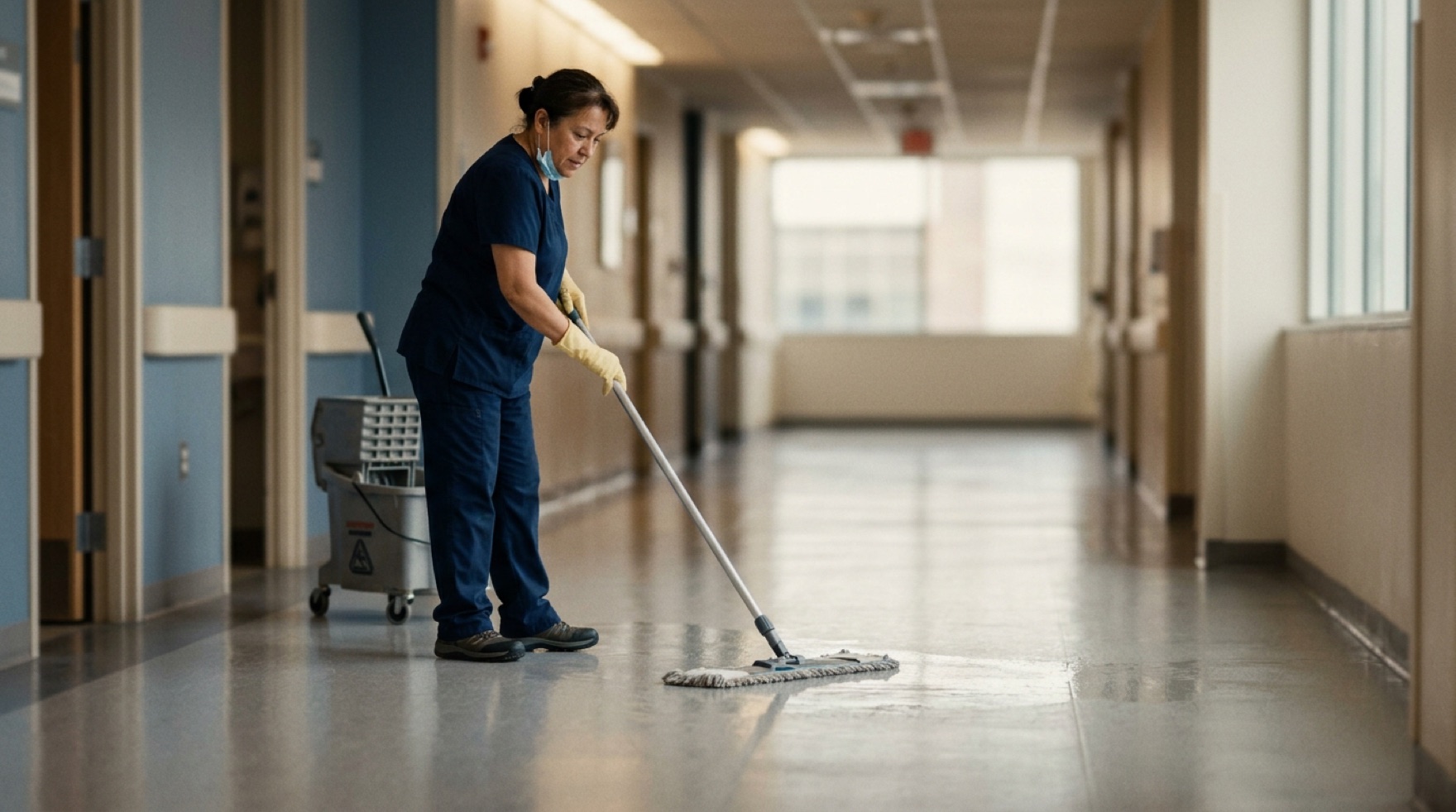
The short answer: 29 CFR 1910.22 requires employers to keep walking-working surfaces clean, orderly, and, to the extent feasible, dry, to provide drainage and dry standing places where wet processes are used, and to keep surfaces free of hazards such as spills and leaks. On a clinical floor the recurring slip hazards are spilled fluids, water tracked from sinks and showers, and surfaces left wet during terminal cleaning, so the standard's real work is fast spill response, drainage and mats where water is constant, slip-resistant footwear, and the right floor material.
What does OSHA require for clinical floors?
29 CFR 1910.22(a) sets three basic duties for any walking-working surface, and they map directly onto a clinical unit. 1910.22(a)(1) requires surfaces to be kept in a clean, orderly, and sanitary condition; 1910.22(a)(2) requires the floor of each workroom to be maintained in a clean and, to the extent feasible, a dry condition, and where wet processes are used, drainage must be maintained and, to the extent feasible, dry standing places such as false floors, platforms, and mats provided; and 1910.22(a)(3) requires surfaces to be kept free of hazards such as sharp or protruding objects, loose boards, corrosion, leaks, spills, snow, and ice. These are general-industry duties, and a hospital corridor or med room is a walking-working surface like any other.
The standard also builds in an upkeep obligation. 1910.22(d) requires walking-working surfaces to be inspected regularly and as necessary and maintained in a safe condition, with hazardous conditions corrected or repaired before an employee uses the surface again. That turns floor safety from a passive expectation into an active duty to find and fix, which is the part clinical settings most often let slip.
Why are same-level falls so common on clinical floors?
Because clinical floors are wet more often than most workplaces, and staff cross them fast while their hands and attention are on the patient. Spilled IV fluids, blood, and irrigation solution, water tracked from handwashing sinks and patient showers, and corridors left damp after mopping during terminal cleaning all create low-friction surfaces, and nurses and aides move across them carrying supplies, pushing isolation carts, or responding to an alarm. A same-level fall on a wet floor is the predictable result of those two conditions meeting.
The consequence is not trivial. A same-level fall can produce a wrist fracture, a knee injury, or a back injury that puts an experienced caregiver on restricted duty or days away from work, draining the unit's staffing at the same time it raises workers' compensation cost. Treating slips as bad luck misses the point: the wet floor and the hurried crossing are recurring, engineerable conditions, which is exactly why 1910.22 frames them as hazards to control rather than accidents to absorb.
What controls keep a clinical floor from becoming a slip hazard?
The controls that hold up are the ones that keep the floor dry and the wet areas visible and drained. 1910.22(a)(2) makes the dry-condition duty explicit and names false floors, platforms, and mats as the accepted means where wet processes are used, which sets the order of controls for a clinical setting:
- Clean up spills immediately. A spill is a stop-and-correct event under 1910.22(a)(3), not an end-of-shift task. The fastest control is a culture where whoever sees the spill owns it until it is dry or guarded.
- Signal and contain wet floors. Wet-floor signs during and after mopping, and mopping one side of a corridor at a time so there is always a dry path, keep the hazard visible while it exists.
- Provide drainage and mats where water is constant. At handwashing sinks, ice machines, sluice and utility rooms, and shower thresholds, mats and drainage give the dry standing place the standard calls for.
- Specify slip-resistant footwear. Slip-resistant soles are the control that travels with the worker across every wet spot the housekeeping schedule misses.
- Choose the right floor material. Seamless welded vinyl and sheet flooring with coved edges are easier to keep clean and dry than tile with open grout lines, and a slip-resistant finish holds traction when the surface is wet.
Notice that mats and signage sit below keeping the floor dry, not above it. A wet-floor sign warns of a hazard that immediate cleanup would have removed, so it supports the dry-floor duty rather than satisfying it. The strongest programs use signage and mats to manage the water they cannot eliminate, while treating every spill as something to correct at once.
Who inspects clinical floors, and how often?
1910.22(d) requires walking-working surfaces to be inspected regularly and as necessary and maintained in a safe condition, with hazardous conditions corrected or repaired before an employee uses the surface again. In a clinical setting that means two things run in parallel: environmental services and clinical staff catch and correct transient hazards, spills and tracked water, in real time, and facilities maintenance handles the durable defects, worn slip-resistant finish, lifting floor coving, and a leaking fixture, through the work-order system. A spill is corrected in seconds; a failing floor is a scheduled repair.
Make the reporting path frictionless, because the standard's inspect-and-correct duty only works if the person who spots the hazard can trigger the fix. A nurse who notices a recurring wet patch by an ice machine should be able to raise a work order as easily as environmental services mops a spill. Keeping floors clean, dry, and drained is a shared, continuous task, and 1910.22 makes it an obligation rather than a courtesy: the surface has to be safe before the next caregiver walks it carrying a patient's medication.